The Wonder Of It All: Paul McCartney’s Solo Years (Part 4-The 21st Century)

Over the course of 2020, my friend Matthew Restall, author of the brilliant Blue Moves book in the 33 1/3 series & I (Hope) started spontaneously breaking down Paul McCartney’s entire post-Beatle discography as if we were writing an actual essay (like you do, if you are a nerd). Well, turns out we were. Welcome to The Wonder Of It All, a 4-part series featuring our endlessly unspooling, unhinged, proudly contrarian, ridiculous & heartfelt correspondence regarding the Macca solo catalog. Ram On…

It’s A Fine Line: Just a note on the format of this essay, Matthew and I are going to be taking turns spilling our McCartney guts and our names will appear before our respective comments. Our album rating system is the classic best of 10, the pinnacle being 10 (it’s brilliant), the bottom being 1 (it’s terrible). Our opinions will diverge at points but we are as one in our love of Macca.

2000-2020: Driving Rain to III…

MATTHEW: Cliche alert: happy artists make trite art, and the best stuff is made by miserable bastards. Happy Adele? Snore. Broken-hearted Adele? Now we’re talking. Yet I never believed that Macca had a silly love songs problem in the ’70s, ’80s, and ’90s. Nor did I imagine that the root of such a problem, had it existed, was his long and happy marriage. After all, I love “Silly Love Songs.” But then Paul’s happy streak hit some unimaginably tough twists and turns. In the decade following Flaming Pie, his “Lovely Linda” lost her hard-fought cancer battle, George Harrison died, and Paul’s new marriage ended after just a few years. Was there enough misery in there to temper the silly love and inspire some stirring new songs? Oh yes. Three albums of them. Three great albums. Three of his best.

And that wasn’t all. Sir Paul’s creative output this century has been extraordinary. And considering these are his senior years (he turned the Fab age of 64 in 2006), his productivity seems superhuman. We may be less enamored of his ‘10s than his ‘00s pop albums, but we’re still bowled over by the sum total.

Driving Rain (2001)

MATTHEW: Driving Rain (2001), 9/10: When Paul released his Pure compilation in 2016, Paul Sinclair of Super Deluxe Edition took a look back at Macca’s solo career; I usually agree with Sinclair’s opinions, but he judged Driving Rain as “frankly awful,” the worst album in the catalogue, with not one good track on it. I was stunned. Because I LOVE this album. I still remember the first time I played the CD, in my car; I sat in the parking lot at work unable to bring myself to stop listening. Macca was channeling his grief over Linda’s passing and his joy over meeting Heather through his well-honed pop filter, and the result was totally captivating. For me then, and now, there’s not a duff song on here. And despite its length, it doesn’t tail off at the end, only getting better. The sole blemish is the hidden extra track, recorded and added at the last minute in response to 9/11 (“Freedom” is indeed “frankly awful”). I don’t remember Rain getting bad reviews when it came out, but I do recall it selling poorly, and scathing reviews of it are not hard to find (Ultimate Classic Rock, like the aforementionedSDE, ranks it as Macca’s worst, #21 of 21). I guess there’s no accounting for taste; in this case, mine. I hear an hour of strong, intimate, engaging tunes, and I honestly feel bad for those who don’t.

HOPE: Driving Rain (2001), 8/10: Driving Rain remains one of the most hated and maligned albums of Paul’s solo years. And let’s be frank, whether or not people want to admit it, the disdain for the album has less to do with the actual songs than the person who inspired their creation, Paul’s then new wife Heather Mills. To which I say, who cares. He was in love and this album has some absolutely kick ass songs; why should it matter who the source of inspiration was? If you are craving sticky and swoon-some style melodies like the kind that dominated most Macca albums in the ‘70s and early ‘80s then you should absolutely spend some time with Driving Rain. It is full of fabulous hooks, from the punchy loved-up title track to the gloriously Nilsson-esque “Your Loving Flame” to the rainy day balladry of “From A Lover To A Friend” to the Wings flavored “Magic”. Point is, there’s a lot to love here, a helluva a lot more than there is on the far more heralded Flowers in the Dirt. And for historical purposes, I will concur with Matthew in regards to “Freedom” and state that while it has genuinely good intentions it is also unequivocally terrible.

Chaos and Creation in the Backyard (2005)

HOPE: Chaos And Creation In The Backyard (2005), 7/10: Chaos And Creation is one of the most traditionally Beatle-esque albums of Paul’s solo career, its best tracks sounding like not so distant relations of Macca’s White Album contributions. It is also home to a straight-up, deep cut classic and what I regard as Paul’s absolute finest 21st century track. “Riding To Vanity Fair” is a clear-eyed, pragmatic and world weary ballad that’s flexible enough to accommodate the story of a friendship ending or the inability to be friends after a relationship has imploded. Either way, it’s an unadulterated, underrated beauty in the tradition of mist-inducing ballads like “Dear Friend” and “Love In Song” and I still swoon when it enters the room. While the album’s opening track and first single “Fine Line” is supremely bouncy and features an undeniably nifty piano based hook, the best tracks on Chaos are the ones with the most mournful melodies (“At The Mercy” and “How Kind Of You”). Chaos is a cloudy, wanting and lovely thing.

MATTHEW: Chaos And Creation In The Backyard (2005), 10/10: Paul has said that during the period of this great trio of albums (Rain, Chaos, and Memory), he never tossed out a song because his personal life had taken a new turn. So the songs take us to various points on his emotional roller coaster, but we cannot always be sure which ones; we can only guess at whom or what he is mourning, which love he is giddy over, what loss he is processing. For me, that—plus Paul’s undying gift for melody—makes Chaos one of his very best albums. As Hope says, it’s Beatle-esque, with all the praise that implies. Ten of its tracks are in my Macca Top 100, and I might as well have put the whole album in. Without the eccentricities that made most of his previous albums either annoyingly or charmingly quirky (depending on your taste or feelings for the record), this one is consistent, coherent, and compelling. Mature Macca’s masterpiece.

Memory Almost Full (2007)

HOPE: Memory Almost Full (2007), 5/10: When you listen to a new Macca album, whether you mean to or not, you are subconsciously comparing it to everything that’s come before. And if you are a crazy Macca-head you are also instantly attempting to put it into context. When I listened to Memory Almost Full for the first time, my matchmaking mind almost instantly honed in on its closest sonic relative, the less than stellar Press To Play. Go on and play them back to back. It’s all of a sudden gotten very 1986 in here right ? And while Memory is never boring, it never genuinely shines. Its best moments by far are where Paul gets weird. Both “House of Wax”, an eccentric, epic, slow moving cousin to Speed of Sound’s “Beware My Love” and “222”, a spiralling hypnotic sketch of song replete with tempo changes and the always welcome Macca falsetto, are fascinating and super fine slabs of oddball Paul.

MATTHEW: Memory Almost Full (2007), 7/10: I thought Chaos was just as good as Rain, but I was aware by the time Memory came out that the first was generally considered to be rubbish and the second great. So this third album of the decade was going to be rubbish, right? Not so much. Far from rubbish, it is a dozen strong songs, lots of melodic hooks, no unfinished fragments or self-indulgences of the kind that marred some other Macca albums. It’s in my McTop Ten. That said, it is a step away from the confessional intimacy of Rain and Chaos, and a step towards the so-so modern pop of Paul’s 2010s albums. It is best when it sounds more like a sibling to Chaos—for example, in “You Tell Me,” “Vintage Clothes,” “That Was Me,” “Feet in the Clouds,” “The End of the End.” I didn’t realize until a few years ago that all those songs were written and demo-recorded BEFORE Chaos was made. It shows. Perhaps if those demos are included in the Archive Collection reissue, whenever that comes, they’ll underscore how much this album might have been a Chaos twin. That said, I’d not want the final five tracks (which Paul has called a medley) to be any different (I’m generously pretending the album ends with “End,” not the 2-minute back-alley dentist visit that is “Nod Your Head”).

New (2013)

HOPE: New (2013), 6/10: New is an unpredictable and blessedly weird creature with moments that bring to mind everyone from Queen to The Killers to MGMT. It’s a dirty window of an album with a fair amount of “riffing” and “shredding” and ultimately more about sounds than songs. The Macca voice goes down an octave, the amps get turned up and things get wonderfully eccentric. You couldn’t call it outright Indie Paul, but there is something distinctly off-kilter in the construction of songs like the pounding “Road”, fuzzy singalong “Queenie Eye” and electro-peculiar “Appreciate”. You don’t necessarily see what’s coming, the hooks aren’t obvious and the instrumentation isn’t rote ( it should be noted that two of the aforementioned songs are co-writes with esteemed producer Paul Epworth). The song that best personifies New’s accessible weirdness for me is “Looking At Her” with its incongruous, where the hell did that come from synth-line. It’s the aural equivalent of giant neon brick being thrown through your living room window and is just yes, yes, yes.

MATTHEW: New (2013), 6/10: The modern pop tendencies of Memory Almost Full are almost fully realized on New (and are fully so on its sequel). The tortured Paul of the previous decade was gone, and while I’m happy for him, it meant the return of playful Paul—and songs that were more fun to create than they are to hear. If that makes it a hard album to love, one to pull songs for mixes more than to enjoy from start to finish, it also makes it endlessly interesting. Hope puts it perfectly: its the sounds, rather than the songs, that surprise and bewitch. “Alligator” and “Appreciate” are just the right balance of weird and melodic. The hidden 13th track, which sounds right out of the Rain/Chaos era, always arrives as an odd but welcome twist (and much better hidden after “Road” on the original release, instead of after the dispensable extra tracks on the so-called Deluxe Edition).

Egypt Station (2018)

MATTHEW: Egypt Station (2018), 4/10: I heard a couple of damning reviews of this, Macca’s 22nd studio album of originals, when it first came out. I tried to ignore them but I was put off by “Come on To Me” and “Fuh You,” which seemed just plain bizarre coming from a 76-year-old; the latter sounds like Coldplay production with Enrique Iglesias lyrics, but sung by an old geezer who refuses to do a clean version. I concluded that the slow downward trajectory from Chaos to Memory to New had continued with Egypt. Two years later, I still think there has been diminishing returns since Chaos. But my reaction to the two singles mentioned above smacks of ageism. Surely he’s earned the right to sing “I just wanna fuh you” to anyone who wants to hear it, regardless of how old he is! Besides, there’s one GREAT song on here (“I Don’t Know” is an instant Macca classic), and there are some pretty good ones scattered throughout the full Egypt sessions, enough to fill two sides of vinyl. The fact that one has to wade through an hour and a half of music (the original album’s hour, plus the bonus tracks and follow-up singles) to find one’s fine forty minutes is, well, all part of the pleasure and privilege of having access to so much Paul pop. He’s been doing it for six decades, and shows no sign of stopping. Let’s hope he never does.

HOPE: Egypt Station (2018), 3/10: I concur with Matthew heartily on multiple points; “I Don’t Know” is a freakin’ great song, vintage melodic Macca. And yes, the album is too damn long ( thanks streaming, you bastard). As far as the ageism, well, guilty here too…but then again is there such a thing as age appropriate music, should there be ? Rock stars are forever young right ? “Fuh You” does have a bit of a Grandpa posting stuff on TikTok vibe but it feels much truer to who Paul is at his core than something like Kisses On The Bottom ( his standards album which we discuss in the side projects section below). Still if Egypt Station makes one thing abundantly clear, it is that Indie Paul as heard on its predecessor New is infinitely more listenable than Modern Day Pop Paul as heard on a number of tracks here. There’s a fair amount of filler but the quirky, weirdness of electro-chant ”Back in Brazil” is pretty winning. And the bizarro “Caesar Rock”, a marriage of the sludgy and yes “Soily” sound of early ‘70s Wings and Talking Heads is a head-spinning and ridiculously fun melange.

McCartney III (2020)

MATTHEW: McCartney III (2020), 5/10: We had already written on all 22 studio albums above, when Paul announced that during “rockdown” he’d hammered out another totally-solo album—entirely written, performed, and produced by him, in the vein of 1970’s I and 1980’s II. As you can imagine, and no doubt like you and many thousands of others, we were excited, intrigued, apprehensive. So how did it turn out? Well, exciting and intriguing. There are some genuine new gems here; I really like the “Winter Bird” tracks that open and close the album, and I love the two deeps—“Deep Deep Feeling” and “Deep Down” (the sequencing on the vinyl version has them both on Side B, making that a fine 24 minutes of mature Macca, perhaps enough to push this from a 5 to a 6/10 as it grows on me). But III is not without the quirky flaws that divide opinions on I and II (“Lavatory Lil” is music hall juvenilia of the kind that has amused Paul since Beatle days, but to my tastes is—and here am I hypocritically sinking to the same level with a predictable metaphor—a turd to be flushed). In other words, it’s a typical Macca album, both brilliant and infuriating, an imperfect but very welcome reminder of how lucky we are to still have among us the extraordinary talent of King Paul (yes, after half a century of memorable solo albums, I think he deserves a promotion).

HOPE: McCartney III (2020), 5/10: We are totally in sync on this one Matthew ! The two deeps, “Deep Deep Feeling” and “Deep Down”, the former with it’s gorgeous darkly melodic piano line reminiscent of those on Back the the Egg ( as well as Chaos classic “Riding To Vanity Fair”) and the latter with its dirty Ram style groove, are unquestionably the finest tracks on III. And my runners-up are the birds that bookend the album (“Long Tailed Winter Bird”, “Winter Bird/When Winter Comes”) both of which are sonically splattered with vintage McCartney 1 and Ram mud. Still, the good stuff is countered by a lot of just okay stuff and one dyed-in-the-wool nightmare (“Lavatory Lil”) so III is not the latter day classic some might have hoped for ( including me). Not sure why, but I was expecting III to be more akin to McCartney II, full of electronic noodling and spacey intervals, in fact I was feeling pretty open to that idea so it was kind of surprising to hear him reverting to more traditional patterns. But that’s Paul. Predictably unpredictable. Able to raise a smile or induce a tear at will. Still the uncontested forever master of melody. And of course still pumped to make music (and play drums!). It’s a beautiful thing.

Compilations, Live Albums and Side Projects (1970-2020) !

MATTHEW: Now to the hits and “best of” compilations, of which there are surprisingly only four (considering how many artists with a far smaller catalogue have squeezed far more compilations—or, more often, their labels have): Wings Greatest (1978), All the Best! (1987), Wingspan (2001), and Pure McCartney (2016). I think Paul is to be commended for not flooding and confusing the marketplace with compilations. He seems to give them thought and attention, and perhaps is mindful of the many live albums he released between 1990 and 2019.

Wings Greatest (8/10) was odd for not including all of Macca’s hits to date, but that would have required a double LP, whose cost and pricing Capitol weren’t willing to risk. Still, 5 of its 12 tracks had never appeared on a McCartney album, and it comprised 11 great hits and “Mull of Kintyre” (sorry, but I was living in England when it was #1 for 9 weeks, became the biggest selling single to date, and was inescapable; I’m still recovering). My cassette copy was fairly well flogged in the day.

By the time All The Best! (6/10) was assembled, there was no avoiding putting out a double album of 20 tracks (or 17 on CD, and a different 17 on the US vinyl and CD version). All three versions put me off a little by including the duets with Wonder and Jackson, edited versions of some songs, and (outside the US) the Rupert and the Frog soundtrack song. I made my own mix and almost never played the original compilation

By comparison, this century’s two compilations are superb. Wingspan (9/10) covers roughly the same period as All The Best! but does it so much better, its 40 tracks (yup, it has the advantage of 2 CDs) chosen, divided in two, and sequenced perfectly. I really flogged it. Finally, Pure (10/10) drew on Macca’s entire career since 1970, and by sequencing tracks non-chronologically it created some interesting juxtapositions. The 2-CD version is good but the 4-CD 67-track version is better, throwing old hits up against recent gems and surprising album cuts (like “Winedark Open Sea”). I made my own version of 100 tracks, but I actually play the Pure CDs more.

HOPE: Wings Greatest (9/10) I got this album for Xmas in 1978 and admittedly have a huge sentimental attachment to it. As far as engaging my child brain it worked effectively on many levels. It came with a poster (!). It meant I finally had the perfectly ponderous “Junior’s Farm” on vinyl (!!). I liked the whole thing meaning I could happily play both sides without skipping tracks (!!!). And the one song I most wanted to skip happened to be the last one, “Mull of Kintyre” which made things exceptionally convenient (tilt!). “Mull of Kintyre” fun fact ; when the single was first released in the U.S. it came in a plain sleeve. Imagine my dismay when only a few weeks later I saw it at Korvettes department store with a damned picture sleeve featuring a heretofore unseen photo of Paul, Linda and Denny. There was no way I was going to buy the same record again but I totally wanted the sleeve. After considerable shifting and shuffling, with 2 older sales ladies only feet away, I managed to “pour” out the 45 into the bin and pilfer the sleeve. I literally heard one say to the other as I casually toddled off, “did she take something?”. I did and let me offer my sincerest apologies to both of you ladies wherever you are. If it’s any consolation I still have and treasure it.

All the Best! (5/10) My rating on this is retroactive because I admittedly didn’t buy it upon release ( bad fan). By that point I was obsessed with making mixtapes and so the only thing I really coveted off of it was the new song it included “Once Upon a Long Ago” (which irritatingly was not included on the American version of the album and so I ended up having to fork out for an import version of the single). “Once Upon…” featured the classic “Paul in the ‘80s” combo of cringey lyrics married to a lustrous, unspeakably gorgeous melody. Since the latter is more important, I totally love and forgive it. As a result I only ended up getting the (U.S. version) album a few years after it came out and solely for the sake of completion. Looking back at its contents now, All the Best! was clearly constructed for the masses with its glut of single edits and is thus more straight-up product than artistic statement. At this point it’s simply an artifact of another time.

Wingspan (9/10) is an infinitely better overview and curated with far more care though I admit I was far more excited about the brand new collectibles attached to it, namely the documentary and book of the same name ( truly engaging documents both). I was working at Virgin Megastore in Times Square at the time of its release and was able to blast it over our giant sound system for a nice patch of time. Hearing “Back Seat of My Car” echoing through that cavernous space with hundreds of people milling around was as transcendently and ridiculously beautiful as it sounds. Pure (8/10) is essentially a readymade, officially sanctioned playlist. Despite the presence of a few unwelcome interlopers ( “Bip Bop”, “We All Stand Together”) it’s pretty thoughtfully laid out and the cover featuring bearded ‘70s Macca is hot. Is it necessary or essential ? No, but it’s immeasurably better having Paul make the playlist than some ignorant, emotionless algorithm.

HOPE: It was inevitable that Paul’s relentless touring would spawn some live recordings but we had no way of knowing just how many (aka too many). Apart from the precious, emotionally charged document that is Amoeba Gig (the 2007 secret show at the brilliant, legendary LA record shop) the rest of Paul’s latter day live catalog is pretty superfluous. Tripping the Live Fantastic ’90, Unplugged ’91, Paul is Live ‘93, Back in the U.S. ‘02, Back in the World ‘03 and Good Evening New York City ‘09 are cool souvenirs if you were at any of the shows, but none are truly essential or a patch on the revved-up oldie, 1976’s Wings Over America.

MATTHEW: I agree that the eight (!) live albums of 1990-2009 (that’s counting separately the two 1990 versions of Tripping the Live Fantastic) are enjoyable extras, with only the Amoeba Gig being essential listening. Tellingly, the only one I listen to regularly is GENYC, because it evokes the live shows I saw a few years before and after then. I also like how it connects the solo work to his Beatles songs (as the other live albums do, but none of the compilations do). And of course the live albums tap into the energy that mature Macca has sustained to a stunning degree.

MATTHEW: We’ve mentioned some of the classical and electronic pop projects in passing, but let’s round up everything not yet rated and summarized. After all, in addition to the 22 studio albums, 4 compilations, and 9 live albums covered above, there are 5 studio side-projects, as well as 7 classical and 5 electronica albums (according to the tally on Wikipedia)—for a grand total of 52 (in 50 years)!

The side-project albums, as I just called them, are the forgettably dodgy Thrillington (1976) instrumental album; Give My Regards to Broadstreet (1984), the ill-conceived soundtrack album that we justifiably dismissed earlier; and two albums of old rock ‘n’ roll covers. CHOBA B CCCP (1988) and Run Devil Run (1999) are interesting curiosities, no doubt adored by some fans, but not albums I ever choose over his original studio albums. As for the electronica albums, they are more varied than that genre tag suggests: experimental projects like Twin Freaks are one-listen-only curiosities; but the trio of albums made by Paul with Youth, as The Fireman, are worth exploring. I miss Paul’s quirky charm on these three albums, but it’s absence makes them more consistent. The best of the trio is Electric Arguments (2008), and it’s the closest to a Paul solo album. The most recent side project is Kisses on the Bottom (see below). My enjoyment of Pie also prompted me to buy Standing Stone, which came out the same year. It remains my favorite of Macca’s classical albums. The others are interesting and pleasant, but Stone is more original, complex, and rewarding (I particularly love the second movement with “Sea Voyage” at its heart).

HOPE: Ah yes, the dreaded “side projects”, the scourge of every completist on a budget. 1976’s Thrillington album featured instrumental, ballroom flavored versions of songs from the wondrous Ram. Unfortunately, despite its stellar source material, it sucks. Ram is a dirty, glorious mudball of an album and Thrillington conveys none of its charm. The terrible soundtrack Give My Regards to Broadstreet (1984) did possess a singular piece of precious cargo in the form of handsome mega-ballad “No More Lonely Nights” but its inclusion on the All The Best! comp a few years later stripped it of that lone virtue forever. The 2 rock oldies cover albums CHOBA B CCCP (1988) and Run Devil Run (1991) were clearly passion projects for Paul and while he sings with genuine fire on both I don’t ever feel the desire to listen to them. As a melody addict, the meat and potatoes rock of the ‘50s and early ‘60s isn’t quite tuneful enough for me. Yes, this is what happens when children are raised solely on ‘70s AM and ’80s FM radio, you get a whole generation of kids with a ridiculously large sweet tooth and no appreciation of musical history (or, okay, maybe it’s just me).

I agree with Matthew’s assessment on the electronica excursions and that Electric Arguments (2008) feels the most like an actual Macca album. He included the album’s rousing single “Sing The Changes” as part of his setlist on the ’09 tour and I can confirm it sounded shockingly good in the stadium environment, filling the impersonal space with something akin to actual joy.
The gaggle of classical albums Paul’s kicked out over the years within the decade are home to a handful of genuinely transcendent moments. Working Classical (1999) features some seriously moving orchestral versions of old classics (“Junk”, “My Love”) as well as several sweet originals (“Spiral” is lovely). But the best of the classical excursions is unquestionably Standing Stone (1997) most especially the aforementioned epic, cinematic and okay, slightly militaristic “Sea Voyage”. It remains my absolute favorite Paul-strumental, even over “Singalong Junk” or “Hot As Sun” and continues to occupy a galleon-size space in my heart.

HOPE: Kisses On The Bottom (2012), 2/10: Back in 2007, Daryl Hall gave a revealing interview to Pitchfork and said this about Rod Stewart’s string of successful standards albums; “You can be Rod Stewart, and be Clive Davis’s dog, and have a career at the expense of your artistic soul. I have nothing but negative things to say about that, because I respect him as a singer, and I hate what he does. He sold his soul. And I take that personally.” A very cutting observation there but also painfully true. And having watched the Rod do a show at MSG during that era where he donned a dinner jacket for the first hour, then reverted back to sleazy rock star for the latter half, it was clear where his heart was i.e. not in the jacket. This will sound nuts, but I didn’t want Kisses On The Bottom to be successful because I hated the idea of Paul falling into a Rod style quagmire. Of course as a songwriter who loves/lives to jam, it wasn’t likely but hey, I don’t think Rod ever saw himself heading down that path either. The album is an inessential curiosity.

MATTHEW: Kisses On The Bottom (2012), 3/10: I too feared this was the start of a whole new “standards” post-career, with multiple volumes to drive multiple nails into the coffin of Sir Paul’s credibility (a la Sir Rod). It’s certainly pointless (and even has a pointless, less-good remake of “Baby’s Request” from disrespected Egg). It’s best song, “If I Take You Home Tonight” isn’t even on here (it went to Diana Krall, who made it a stand-out track on her brilliant Wallflower album). But it isn’t terrible, it has one good new song (“My Valentine”), and I’d rather listen to it all the way through than his worst 80s-90s albums (mmm, maybe). (It’s a good way to mollify people asking for Christmas music, without having to suffer actual Christmas music; how’s that for damning with faint praise?!)

In Conclusion…

HOPE: I know. You are exhausted from reading this 4- part epic. We are too. If you are not already hammered from having a drink every time we uttered the words “Archive Collection” then please, relax and have a drink. You freakin’ deserve it for making it this far. And Thank You for indulging us, seriously, THANK YOU.

Right, because I can’t let sleeping dogs lie, I wanted to close this insanity with our personal Top 5’s for both songs and albums…but Matthew told me it would be impossible to narrow our picks down to only 5 songs. And he was right. 5 isn’t gonna do it. And so with that in mind, we now humbly offer our Top 10 songs in alphabetical order ( and our Top 5 albums in the order of all our aforementioned grades).

MATTHEW: Hope, you asked me for my Top 5 Macca songs. Too hard! I can get it down to ten (with the proviso that such a list changes from week to week—as you and any fan will understand—and this week it happens to heavy on ‘70s singles). Here’s that Top 10 in alphabetical order:

MATTHEW’s Top 10 songs

1.Arrow Through Me

2.Back Seat of My Car

3.Band On The Run

4.Beautiful Night

5.Goodnight Tonight

6.Live and Let Die

7.Maybe I’m Amazed

8.Riding To Vanity Fair

9.Silly Love Songs

10.With A Little Luck

MATTHEW: As for my Top 5 albums, many Macca fans would agree with the first and last of those five, but far fewer would understand my other picks! Yours are a similar mix, aren’t they, Hope? My Top 10 is rounded out with albums stretching from 1970 to 2007, reflecting the staggering fact that Macca has not only been churning out songs for sixty years, but most are good and many are great.

MATTHEW’S Top 5 Albums

1.Band on the Run

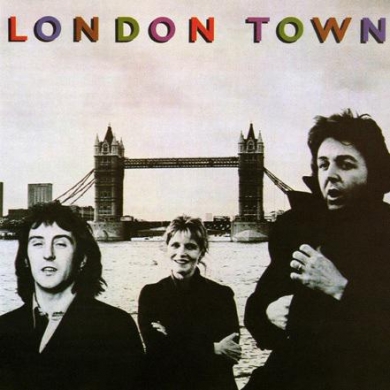
2.London Town

3.Back To The Egg

4.Driving Rain

5.Chaos And Creation In The Backyard

HOPE: While my favorite songs are generally determined by whatever headspace I am in at a given time, I will say that my picks stay relatively steady for the most part. And while I’ve listened to the ones I’m about list hundreds upon hundreds of times at this point in my life they never stop feeling like home. In alphabetical order they are…

HOPE’S Top 10 songs

1.Arrow Through Me

2.Back Seat Of My Car

3.Don’t Let It Bring You Down

4.Jet

5.Listen To What The Man Said

6.Little Lamb Dragonfly

7.Once Upon A Long Ago

8.Riding To Vanity Fair

9.Some People Never Know

10.Take It Away

HOPE’S Top 5 Albums

1.Ram

2.Back To The Egg

3.Tug of War

4.Band on the Run

5.Driving Rain

MATTHEW: We’ve tried to be critical and discerning, as well as fawning and fanatical in our reviews of his albums. That is partly to make our comments less predictable, partly because our opinions have been formed by personal experiences, and partly because the full Macca catalog is deep and wide, varied and complex, packed with experiments and surprises—some less welcome than others. Too often, the missteps have been used to dismiss the Macca legacy, when the real cause of that attitude is a lazy and unjust perpetuation of the old blame-game: blaming Paul for the Beatle breakup, for being happily married and relishing ordinary life when John offered angst and drama, for surviving when John was martyred, for making everyone else seem inadequate by being tirelessly productive. Sure, across the hundreds of songs, there are highs and lows, but the highs are scattered across the decades. This is not a tale of brief brilliance followed by slow decline. There are gems everywhere, and at any minute another one could surface. It’s extraordinary. When you add in the songs he wrote with The Beatles, the sheer magnitude of his impact on popular culture over the past six decades—his contributions to the daily lives of many millions of us—it is staggering. As Ian Leslie recently posted on The Ruffian, there are only three emotions that Sir Paul and his music most justifiably evoke: “awe, gratitude, and love.” How lucky we are to live in the Age of Macca!

HOPE: I concur with EVERYTHING Matthew just said! Digging deep and dissecting the Macca solo discography has been an absolute joy for us. Despite having heard most of the aforementioned albums ten trillion times, we still somehow rediscovered songs we’d previously ignored as well as came to appreciate the ones we already loved even more. We hope that this crazy thing has maybe, just maybe inspired you to dig, revisit or just plain explore the vast and wondrous Macca solo catalogue.

Gonna give the last word to the tiny machine below, the first iPod I ever owned (2001-2009 r.i.p.). Take it away dear friend…

The Wonder Of It All: Paul McCartney’s Solo Years (Part 3-The ’90s)

Over the course of 2020, my friend Matthew Restall, author of the brilliant Blue Moves book in the 33 1/3 series & I (Hope) started spontaneously breaking down Paul McCartney’s entire post-Beatle discography as if we were writing an actual essay (like you do, if you are a nerd). Well, turns out we were. Welcome to The Wonder Of It All, a 4-part series featuring our endlessly unspooling, unhinged, proudly contrarian, ridiculous & heartfelt correspondence regarding the Macca solo catalog. Ram On…

I Can See The World Tonight: Just a note on the format of this essay, Matthew and I are going to be taking turns spilling our McCartney guts and our names will appear before our respective comments. Our album rating system is the classic best of 10, the pinnacle being 10 (it’s brilliant), the bottom being 1 (it’s terrible). Our opinions will diverge at points but we are as one in our love of Macca.

1990-1999: Off the Ground & into the Pie

MATTHEW: Considering how productive he was in the ‘70s (9 original studio albums) and ‘80s (5 of them), it is striking that Macca made only two albums of new material in the ‘90s. Yet the reasons for this being the least productive of his five solo decades are obvious: a series of huge world tours; and Linda’s long battle with cancer. Which excuses the weakness of Off the Ground and makes the strength of Flaming Pie all the more notable.

Off The Ground (1993)

MATTHEW: Off the Ground (1993), 2/10: This was Paul’s only pop/rock studio album between 1989’s Flowers and 1997’s Flaming Pie, but he was as busy as ever: he released the first of what would be several album collaborations as The Fireman; the first of half a dozen classical albums; and around the time when Off the Ground was being written and released, he put out no less than three live albums (Tripping the Live Fantastic in ‘90, Unplugged in ‘91, and Paul is Live in ‘93). All that activity, the live albums and massive world tours they captured or reflected, made OtG somewhat irrelevant to his public profile and career. It was certainly irrelevant to me; I was still listening to most of what Paul had created during the first 18 years of my life (1964-82), but I had given up on everything since then. I wasn’t alone; OtG did poorly (except in France, Germany, and Japan—a knock-on effect of his touring, perhaps). In retrospect, it is not an irredeemably terrible album; it has its moments. But, like PtP, it isn’t great; it lacks a single really great song (although I do like “Winedark Open Sea”), and we know that Paul can write those in spades.

HOPE: Off the Ground (1993), 1/10: As Matthew states so succinctly above, OtG lacks a single really great song. The only track I ever spent time with was, yes, “Winedark Open Sea”, a decent enough slow groove…but it’s still not worthy enough to make a post-Beatle Macca Top 100. Paul’s never made an album that could be scored as a straight-up zero out of 10 as his inherent melodic gift is always somewhere in the fabric of every full length he creates…which is to say there will always be at least a minute of head-spinning pop beauty on whatever he does. But out of all the latter-day Macca releases, those sweet bits are by far the hardest to find on OtG.

Flaming Pie (1997)

MATTHEW: Flaming Pie (1997), 8/10: I’d pretty much given up on Macca by this point, no longer listening to anything recorded by him after Wings disbanded. But “Beautiful Night” got my attention: it captured those elements of melody and inventiveness that made Paul’s pop so brilliant. I loved it and still do. It took me to Pie, a year or two later (yeah, I was a tad slow, but it was that mid-30s crazy busy career and family time for me), and suddenly I was one of those Beatle/Macca fans between youth and middle age revisiting and rebuying albums. (As I was getting back into ELO too, the Jeff Lynne varnish on much of the album appealed to me.) So how does Pie stand up now? As we write, the Archive Collection reissue recently came out, getting attention and praise. And the album is pretty damn good. In fact, I still love the first six tracks (nicely sequenced from “The Song We Were Singing” to “Calico Skies”); the title track grates a tad, and in the second half there are a few of those collaborative tracks that Paul had more fun making that I have listening to (often the case with his 80s-90s albums), but they are offset by gems like “Heaven on a Sunday,” “Little Willow,” and “Beautiful Night.” For me, this is by far his best album of his varied 80–90s middle period.

HOPE: Flaming Pie (1997), 5/10: True confession. In the years leading up to Pie I’d fallen completely under the spell of Britpop, utterly besotted with everything from Elastica to yes, unabashed Beatle worshippers, Oasis. And so when Pie was released I was not really receptive to it, as I was so entrenched and enraptured by big brash Britpop with its massive singalong chorus’s and druggy, sexy looks. And so I listened to Pie a few times, cherry picked the couple of songs I liked, popped them on a mix cd and filed it away. But over the years I’ve come to appreciate it a bit more. I get why some people find that Jeff Lynne production stamp irksome on the albums he produces but it’s not as intrusive here as it was on say, George Harrison’s Cloud Nine. The songs I like best on Pie actually remind me of vintage Wings tracks namely “Great Day” which sounds like a not so distant cousin of Red Rose Speedway’s groovy, dirty “Big Barn Bed” and “Heaven On A Sunday”a sort-of soul song with a really fine vintage Speed Of Sound guitar break hiding in it (from Paul’s son James ). Pie is a slow burn of an album, the kind you need to play on repeat for a while before it infiltrates.

End of Part 3

Coming in Part 4, the 21st century! Plus a whip ’round the Macca side projects and compilations. Get comfortable, it’s a big one…check it out here

The Wonder Of It All: Paul McCartney’s Solo Years (Part 2-The ’80s)

Over the course of 2020, my friend Matthew Restall, author of the brilliant Blue Moves book in the 33 1/3 series & I (Hope) started spontaneously breaking down Paul McCartney’s entire post-Beatle discography as if we were writing an actual essay (like you do, if you are a nerd). Well, turns out we were. Welcome to The Wonder Of It All, a 4-part series featuring our endlessly unspooling, unhinged, proudly contrarian, ridiculous & heartfelt correspondence regarding the Macca solo catalog. Ram On…

Once Upon A Long Ago: Just a note on the format of this essay, Matthew and I are going to be taking turns spilling our McCartney guts and our names will appear before our respective comments. Our album rating system is the classic best of 10, the pinnacle being 10 (it’s brilliant), the bottom being 1 (it’s terrible). Our opinions will diverge at points but we are as one in our love of Macca.

1980-1989: Macca II to The Dirt

HOPE: The ’80s were a markedly confusing and dark time for many of the music world’s more established and beloved artists. With the new decade came a dramatic, seismic shift in pop sights and sounds. Sure there were the inevitable sonic advances in recording and such but the shift was mostly down to this one particular thing, an immense, all consuming behemoth called MTV that took near complete control of music culture (as well as my own teen brain). The garish, glossy videos they showed 24/7 became as crucial to an artist’s success as radio airplay, the visuals and visages as important as the songs themselves. Yup, once MTV hit, like some musical equivalent of Logan’s Run, any musician over 30 suddenly seemed genuinely old indeed. The acoustic sounds that had been so mega and pervasive only a handful of years before now seemed criminally dated.

The need to sound “modern” to stay relevant proved to be problematic for many of the established rock and pop superstars of the ’60s and ’70s, resulting in some truly disastrous sonic (enter sexy saxes) and sartorial decisions (hot mullet action). Of course there were artists who were able to transition and/or evolve with enormous success as the ’80s progressed, like Paul Simon, Bruce Springsteen and even, surprisingly, The Kinks. And there were others who while not necessarily progressive sound-wise, resoundingly found their niche as the decade evolved (Linda Ronstadt). But alas others stumbled. Hard. 

Which is to say welcome to Paul McCartney’s ‘80s. The decade began with Paul’s being arrested and detained for bringing a cache of weed into Japan where the Wings tour was set to begin. He was subsequently deported and plans to continue the tour were aborted (and as such the USA never got to experience the Back to the Egg live, to which I say dammit Paul, dammit). Once summer hit though, things in Macca world took a marked turn toward the better as Paul’s new single, an oddball pseudo-new wave chant called “Coming Up” ascended to the #1 spot in the singles chart. The success of that song then supercharged sales for the ponderously weird and uncommercial album it called home, 1980’s McCartney II, helping drive it up the charts to similar heights. Then on December 8 of that same year, everything changed.

The tragic death of John Lennon invariably threw an intense spotlight on Paul and left many wondering how he might ultimately address this immense loss within his music…or if he would at all.  The answer came in the form of an album that he’d begun recording prior to John’s death, 1982’s Tug Of War. Within it he spoke eloquently and emotionally about John ( in the song “Here Today”) while also delivering one of the finest full lengths of his entire post-Beatle career. Little did we know at the time that it would serve as the high water mark for all of Macca’s ‘80s output. The quality of the releases that followed Tug Of War whipped wildly from intermittently strong to outright terrible. 

Check out any career-spanning album ranking list and you will invariably find the two studio albums that came in the wake of Tug Of War, namely Pipes of Peace and Press To Play as well as the soundtrack to Paul’s ill-conceived (disaster) film Give My Regards To Broad Street firmly lodged at the bottom. And in the case of Broad Street, it’s a two-fer as it’s also arguably one of the worst films of the ‘80s. While we can cast a legitimately critical eye at these albums with their mullets, smarmy, thumbs aloft videos and clunky attempts at modernity, we also can’t entirely dismiss them for there are in fact some true gems living within their grooves. But be warned, if you choose to listen to Macca’s ‘80s albums in their entirety, you are gonna get dirty.

McCartney II (1980)

MATTHEW: McCartney II (1980), 4/10: derided as a featherweight failed experiment at the time, especially in the US (where it’s chart showing was Paul’s lowest since Wild Life), it is hailed today as a bold, experimental, unappreciated gem. So which is it? Both and neither: it’s an experiment that works at times, but ultimately isn’t experimental enough. The electropop tracks are very 1980, but in a good way; they stand up pretty well (although surely “Frozen Jap” is an unnecessarily offensive title, even if Paul was still grumpy about his recent drug arrest in Tokyo airport). But they would have been more compelling if sequenced together—perhaps as a semi-instrumental Side B (like Bowie’s Low and Heroes). Instead, as if he was wary of asking fans to embrace something too novel, Paul interspersed them with more conventional songs. Two of those are great (the singles “Coming Up” and “Waterfalls”), but the other four are like forgettable outtakes from the pre-Egg Wings era (and “Bogey Music” comes unforgivably close to completely ruining Side B). Left off the album was “Blue Sway,” which would have been one of its better tracks (it is on the Archive Collection edition, which also has the excellent live Wings version of “Coming Up” and the extended—too long!—versions of the electropop numbers).

What’s the solution? The best I can come up with is a double EP (3-4 tracks on 4 sides, grouped by style, allowing for both versions of “Coming Up,” “Blue Sway,” and some longer edits). But a double EP was almost never done by anyone, for good economic reasons. Not a great idea. So maybe the solution is that we must be content with playing around with the original track and outtakes from what is a flawed, confused but ultimately worthwhile addition to the catalogue.

HOPE: McCartney II (1980), 5/10: The release of this album was preceded by the single ”Coming Up” a song with a cute modern haircut and no discernible melody. I’ve never liked it and at the time wished it hadn’t gotten to # 1 because I was genuinely worried Paul would take it as a sign to write more songs like it (I miss the days when that was the kind of shiz I was actually worried about). I know McCartney II has received a lot of latter day love for its prescience and supposedly ahead of its time electropop experimentation which I kind of get…but to my ears there aren’t enough fully fleshed out songs to latch onto. Which is to say several tracks feel like incomplete sketches and/or straight up noodling (“Front Parlour”, “Darkroom”, “On The Way”), not to mention that things get seriously cringey in a couple of places ( “Frozen Jap”,”Bogey Music”). On the up side, I love the ethereal and woozy “Waterfalls”; though it’s the most prototypically Macca-style song here, maybe the least adventurous, it is by far the most memorable track on all of McCartney II. And I want to award honorable mentions to a couple of deep cuts from the same cloth, “One Of These Days” and “Summer’s Day Song”. While not up to the melodic standard of “Waterfalls”, they are similarly hazy and hypnotic and often insidiously sneak into my Macca playlists when I’m not looking.

I was hoping that I would have an epiphany regarding McCartney II once I spent time with the Archive Collection edition, but apart from discovering the plush nighttime in the city groove of bonus track “Blue Sway”, nothing had changed; I liked the same three aforementioned songs I always did and felt nothing for the rest. I agree with Matthew’s assessment that while Macca sometimes colors outside the lines on McCartney II, he doesn’t go far enough to make it genuinely interesting…but think that applies the other way too, as in he skates around his melodic tendencies without digging in; there just aren’t enough hooks here and brilliant hooks are what define the best Macca songs and set him apart from the songwriting herd.

Tug Of War (1982)

HOPE: Tug of War (1982), 9/10: If you are a hardcore Macca fan chances are you have a pretty tough skin. When haters want to trash post-Beatle Paul they tend to wave the same tired pieces of dirty laundry in the air to make their point. And the Exhibit A of total suckery is always the same. Yes, “Ebony and Ivory” is ridiculous. When they premiered the song on one of the big NYC radio stations back in the day I remember being embarrassed on Paul’s behalf after it had finished. Still, while it’s clumsy as hell and I don’t care if I ever hear it again, I know it’s heart is in the right place and the tune itself is kind of sweet. But yes, I get the hate. We all do. I just wanted to get that out of the way before we talk about all the beauty and joy surrounding it.

Critics were falling all over themselves to praise ToW upon release…which even in my youth I recognized as unusual having become so accustomed to their bashing him. In fact it sort of seemed like the extra praise was their way of offering Paul sympathy and love after what happened to John. I admit I thought this, like oh now you think Paul is good, feeling ever so slightly pissed at his prior treatment and their convenient new magnanimity. But then again, ToW was pretty great.

I love the overall sequencing on ToW…how the handsomest stuff is served up first and how the lesser lights are discreetly tucked away ( those being the other sadly pedestrian Stevie W collaboration “What’s That You’re Doing” and the Carl Perkins duet “Get It”). And there couldn’t have been a better opener than the epic and wistful title track. I love, love “Take It Away”, it is one of my all-time favorite solo Paul tracks, right down to it’s fantastical video with John Hurt as “some important impresariooooo”. The harmonizing in the coda is straight up heavenly and I could listen to it playing in an endless loop forever. “Wanderlust” often gets singled out as the album’s finest ballad, but I’d nominate the rainy “Somebody Who Cares” with its slightly mournful melody for that accolade (plus it sounds like “Waterfalls” little brother). I think ToW is a great record, literally, in that it is so perfectly suited to be absorbed on a turntable, having to be flipped over. It’s never boring and remains utterly listenable in every way.

MATTHEW: Tug of War (1982), 7/10: In the early 80s, I was a fanatic, chart-obsessed English consumer of pop music, and thus a witness to the stumbling of ’70s rock and pop stars that Hope describes. I was also part of their problem, quick to give up on the likes of the Stones, Floyd, Supertramp, Elton John—and Paul McCartney. I was not alone in dismissing these artists as no longer uncool even while still listening to their “old stuff”; that sounds contradictory, but their nostalgia status was part of their uncool-ness. Macca was really up against it, lumbered with the albatross of Beatles uber-nostalgia and the deeply unfair resentment of Lennon mourners. Back to the Egg and McCartney II were still cool to me because I read their experimentalism as Paul not caring what we thought. But the run of albums from 1982-86 suggested he cared too much, trying different duet partners, different producers, veering into children’s music, capitalizing on old Beatles songs but with inferior new versions. The embarrassing “Ebony and Ivory” seemed to set the tone for the decade. It tainted ToW for me at the time, and each subsequent album (not to mention the Rupert the Bear moment) seemed to confirm and further lower my expectations.

None of that was particularly fair, and as a result I failed to give Tug of War a fighting chance. But I came back to it in the late ‘90s, when Macca lured me back with his creative renaissance and when I no longer cared what was cool or uncool. And yes, both Stevie Wonder duets are still embarrassing (calling each other “girl” and squealing “What’s That You’re Doing” to each other would have been less awkward had it been deliberate). But in retrospect ToW sounds like a sequel to pre-Egg Wings, with a few new collaborators, and the same mix of catchy melodies, pseudo-oldies (“Ballroom Dancing” was leftover from Egg days, I believe, and sounds like it—that’s a compliment!), disposable oddities (“Get It”), memorable ballads (“Wanderlust” is great, and “Here Today” is by far the best ode to Lennon by any of the Fab survivors), and solid singles (I love “Take It Away” too). ToW was a hit then, it held up well, and it positively shines in comparison to what followed it.

Pipes Of Peace (1983)

HOPE: Pipes of Peace (1983), 6/10: When I went to purchase this album upon release the guy at the counter told me it was “shit” (turned out he was 10 years off and had the wrong album but I digress). PoP is for all intents and purposes a watered down version of ToW , in other words, not awesome but a long, long way from the shiz pile. I do want to note that while the albums pair of duets with Michael Jackson “Say, Say, Say” and “The Man” have become problematic for me because of MJ’s well-documented issues, I do believe they are two of PoP’s strongest tracks. In fact “The Man”, was my absolute favorite track on PoP for ages. I found its lightness, slightly eccentric lyric and hook impossible to resist; it sounded like a pop-ified version of “San Ferry Anne” off of Speed of Sound. And Paul’s vocal on the track is downright exquisite, just absolute sweetness. I also confess that the “Say Say Say” video enhanced my experience of the song as it provided ample opportunity to swoon over how hot Paul was ( of course at the time I was a teen and Paul was over 40 but let’s just look at it as a tribute to how well he was aging). And I have to shout out plush, corny, epic, arms-wide-open-on-a- mountain anthem “Through Our Love”; it is pure ’80s glory-osity and just plain rules. Now the bad news…and excuse me for acting “like a dustbin lid” for a second if you will ( please listen to track three of PoP if I just confused you with that characterization). While PoP has some undeniably engaging hooks threading through it, it also has filler, the latter half of the album making for a particularly tough trawl ( up until “Through Our Love”). Which is a shame because the first 6 tracks are genuinely lovable in their own individual, idiosyncratic ways.

But what I want to say most regarding PoP is that it makes me genuinely sad. Not for its inconsistency but because I miss this version of Paul, when his default button was set to “melody”, where every song was seemingly built for that thing called “radio”. And so while it isn’t perfect, PoP remains a sweet document of the straight up “Pop Paul”, a throwback to his ‘70s styles which were never to be seen again after this in such a fulsome way. And hey, NYC record store guy, wherever you are, I think you were wrong.

MATTHEW: Pipes of Peace (1983), 5/10: I’m tempted to give this a lower rating because of the Jacko duets, but that’s far from being Paul’s fault and the songs aren’t bad. Actually I did rate it down for that. Sorry. There’s also the “Tug of Peace” mashup, which reminds me of the turd that was sequenced after “Amazed” on the first album; only this is worse, because it’s a turd pile one has to leap over to get to the closing ballad—which is pretty good. In fact, the whole album is only a little less good than ToW. Which really damns it with faint praise (and a very unoriginal evaluation on my part). But it’s surely less of a drop-off than Bowie’s Tonight was to Let’s Dance (although I admit I prefer both of those to both of these). I think “The Other Me” and “So Bad” and “Through Our Love” are underrated pop nuggets that sound great in Macca mixes. I put my favorite dozen tracks from ToW and PoP in a playlist along with “No More Lonely Nights” (from the Give My Regards to Broad Street fiasco) and the result is a fine hour of Paul pop. I did that last week, and I rather wish I’d done it decades ago.

Press To Play (1986)

MATTHEW: Press to Play (1986), 2/10: Hope says PoP makes her sad; Press to Play makes me very sad. It’s the first Macca album that in real time struck me as an end. I thought, poor Paul. He still has the skills, but the creative genius is gone. The fact that buried in the very middle of an otherwise almost unlistenable album is one of his best ballads—“Only Love Remains,” a modest UK hit soon forgotten because Paul’s magical chart run of two decades was over—only makes Press to Play more depressing (depress to play? Oh dear. I apologize). In fact, to give it a full chance and dig a bit deeper, there are some good moments in here, in parts of songs (in “Feel the Sun,” “Footprints,” “Pretty Little Head,” and a couple more); but the songs as a whole aren’t great, and great is what Paul has given us too many times for this to get played much again.

Nothing from the album made it into any of the versions of All The Best, the big hits collection released the following year—which made #2 in the UK but only #62 in the US, perhaps reflecting the damage done by Broad Street and Press.

HOPE: Press to Play (1986), 2/10: Matthew, believe me when I tell you, Press to Play makes me sad too…but even more than that, it makes me angry knowing what Paul is capable of. There are flourishes of divine melody on PtP and melodically epic ballad “Only Love Remains” is an underrated gem…but, and it genuinely pains me to say this, the lyrics throughout the album are atrocious. I admit that at the time of release I found the video for PtP’s first single “Press” pretty irresistible for reasons that had zero to do with the song. Watching classic “cute” Paul mugging, grinning and running his hand through his lustrous hair as he surprised commuters on the tube was kind of all kinds of charming & I totally wished I’d been there, on that train. Pause. Damn. As I have been writing these blurbs, it’s become clear to me that MTV had a cult-like influence over me and seemed to rule my entire waking existence in the ’80s. Shit, maybe those angry PRMC ladies were onto something. Right, so back to “Press” the song. The tune was nice enough, but the chirpy, winking sexuality in the lyrics was embarrassing especially in light of what Prince was kicking out with such wit and brilliance at that same juncture. And I found the “I love you very, very, very much” bit in the song to be particularly grating ( it’s right up there with Kiss’s “crazy, crazy, crazy, crazy nights” on the irritation scale). Oof. Fittingly (?) the album closes with the overwrought “However Absurd” which sounds like a substandard Rutles song, right down to its title. PtP is Paul on autopilot and simply put, it just kind of sucked.

Flowers In The Dirt (1989)

MATTHEW: Flowers in the Dirt (1989), 5/10: With only one original studio album in the six years since PoP, and it relatively unsuccessful, this was a potential comeback record. It did well enough (#1 in the UK), and was generally considered a “return to form” (forgive the cliche); but of its four singles, only “My Brave Face” was Top 25 hit on both sides of the Atlantic. Hope says there is nothing essential on here and I agree (I like “We Got Married” and “Motor of Love,” but they’re hardly essential). The Elvis Costello collaboration was heavily publicized, but it sounds far more like a Crowded House album than a Costello one—reflecting the influence of Mitchell Froom, lead producer (after Paul) and also producer of the first three Crowded House albums (1986-91). I was a huge CH fan at the time, so the comparison helped me like this more—but not as much as the CH albums. It still is, for me, in that quite-good category with VaM and PoP. It gave me hope that Macca would make a few great albums in the ’90s…but it would turn out to be merely the high point of a low patch lasting most of the ’80s and ’90s.

HOPE: Flowers in the Dirt (1989), 3/10: It’s true that to my ears there are no essential tracks on Flowers. It was certainly a step up from its studio predecessor PtP but nothing stuck to the wall for me. It’s one of my least played Macca albums. I was working at CBGB’s Record Canteen at the time this came out and as I was playing it one day, one of my co-workers, who like me was in her early 20’s said, “Wow, I think my Mom would like this album”. While she hadn’t meant it as an insult and was just making an observation, I admit that it changed how I heard Flowers for a minute. To make matters worse, she’d made the remark while my favorite song off the album was playing, the catchy, poppy and goofy “Figure of Eight”. Flowers was indeed polite, clean, undemanding and overly cloying ( “Put It There”, ”How Many People”, ugh). Which is to say it didn’t feel especially cool. In other words, your Mom and Dad would very likely enjoy it ( this despite the participation of Elvis Costello and Mitchell Froom who gave the whole thing some credibility amongst both critics and nerds). I’ve periodically revisited Flowers hoping something might resonate but it’s just never happened. My best memory of this release is that it preceded the first Macca tour of the U.S. since 1976 (!) and thus prefaced my first opportunity to see him play live. It didn’t matter that it was from the back of a stadium in New Jersey in the presence of the asshole guy I was seeing and Paul was a barely discernible dot on the horizon, the important thing was that after what felt like a lifetime of waiting, I was there, in the same “room” as Macca, finally .

End of Part 2

Coming in Part 3, a dissection of Paul’s ’90s discography. Let the resurrection begin. Read it here

The Wonder Of It All: Paul McCartney’s Solo Years (Part 1-The ‘70s)

Over the course of 2020, my friend Matthew Restall, author of the brilliant Blue Moves book in the 33 1/3 series & I (Hope) started spontaneously breaking down Paul McCartney’s entire post-Beatle discography as if we were writing an actual essay (like you do, if you are a nerd). Well, turns out we were. Welcome to The Wonder Of It All, a 4-part series featuring our endlessly unspooling, unhinged, proudly contrarian, ridiculous & heartfelt correspondence regarding the Macca solo catalog. Ram On…

So Glad To See You Here: Just a note on the format of this essay, Matthew and I are going to be taking turns spilling our McCartney guts and our names will appear before our respective comments. Our album rating system is the classic best of 10, the pinnacle being 10 (it’s brilliant), the bottom being 1 (it’s terrible). Our opinions will diverge at points but we remain as one in our eternal love for Macca.

HOPE: By 1976, something weird was brewing in Beatle world. Thanks to the consistent radio plays, latter-day exposure to the Beatle movies and the influence of millions of older siblings, cousins and babysitters, a new generation of fans were starting to discover them. And so began the first pop music perfect storm. These newbies were kids who’d been born in the late ’60s and beyond and hadn’t experienced the band in real time. They were frequently referred to as “Secondhand Beatle Fans”, a short-lived, semi-official moniker that was both condescending and lovingly true.

One of the best parts about becoming a Beatle fan in the mid-’70s was that not only were there innumerable older albums to consume and catch up on, but a constant stream of new releases by the now solo Beatles to look forward to. This was something of a divine gift for the Secondhand fans, for while they couldn’t experience the excitement of buying a newly recorded album by The Beatles and being part of the cultural zeitgeist that surrounded them, they could still enjoy something that felt like theirs, something new. And when it came to releasing new music, the most motivated and driven ex-Beatle by far was Paul McCartney aka Macca. He proved to be staggeringly prolific out of the gate, kicking out nine studio albums plus a triple lp live album between 1970 and 1979 alone, as well as a stellar array of stand-alone singles.

Paul was just plain unavoidable in the ‘70s, which is to say, he was f-ing everywhere, emanating from every radio, appearing on countless magazine covers, invading every city to rock every coliseum and filling the charts with a continuous stream of, well, stuff. Paul’s star wasn’t flatlining, it was manically ascending, his music becoming as omnipresent as that of The Beatles as the decade unfolded. This goes some way toward explaining and understanding why the post-Beatle Paul McCartney catalogue meant so much to the latter day generations of Beatle fans. It was as close as they could get to experiencing the Fab Four in real time. Like the tagline for the short lived 1977 Broadway show Beatlemania so hopefully and desperately declared, “Not The Beatles, But An Incredible Simulation!”. That was Paul McCartney in the ‘70s. And as it happened, it was a damn good simulation…so good that you could sometimes forget about that other band he was in, especially if you were a kid at the time.

And with that, welcome to THE WONDER OF IT ALL : Paul McCartney’s Solo Years !! Join Secondhanders Matthew and I (Hope) as we bravely trek through 50 years worth of the post-Beatle Macca discography, dissecting its contents, grading the albums and generally over-sharing for context (half truth, it’s mostly because we get exceedingly emotional when discussing Macca). We will be exulting the underdogs, nudging the sacred cows and venturing into the darker corners of the catalogue fearlessly, heartlessly exposing what lives there (yes “Mumbo”, consider that your official warning). And oh yes, one last thing, we will occasionally spew cutting references to the McCartney Archive Collection, the ongoing deluxe reissue project begun in 2010 in regards to their nonsensical, non-chronological order of release which has been a major source of frustration for Macca nerds ( feel free to turn it into a solo drinking game). Yes, there’s something here for everybody, young and old, dabbler and obsessive and we hope you like it.

MATTHEW: Yes, throughout the 1970s, the Beatles were omnipresent and inescapable.  There was always something in the papers, on the TV, or on the radio from or about the Four, either from when they were Fab or from their post-Fab musical and personal lives.  As Bob Stanley noted in his book Yeah! Yeah! Yeah!, for most of the ‘70s, “the States were still pretending the Beatles hadn’t split” (p.247, also see my 33 ⅓ book on Elton John’s Blue Moves, p.61; forgive shameless plug). Although Beatlemania (and that Beatlemania show) was, ironically enough, bigger in the US than the UK, the phenomenon was similar on both sides of the Atlantic.  Re-released Beatles songs and new solo releases charted quickly and sold well.

At the top of that heap of new music was everything by Paul, Linda, and Wings.  Between 1970 and 1979, they released ten albums (two under the McCartney name, seven studio albums under Wings, and a Wings live album; we are not including the Wings Greatest compilation).  Eight of the ten reached #1 or #2 in the US and Canada (five of them did in the UK), charting and selling millions all over the world. In terms of quantity—the number of albums and the number of units moved—Paul outdid his former bandmates many times over. In our view, he outdid them too in terms of quality.  All those albums and singles yield hours of melodic pop marvels.  But critics were less generous.  Many of them were unenthusiastic, if not downright rude and derisive, about most of these albums; in fact, with the exception of Band on the Run, all these records were generally given a rough ride by reviewers.  Why?

Much ink has been spilled on that question and on similar ones, but we are going to stick to one, simple theory that helps take us to the task at hand (rating the albums): Paul refused to release a perfect album, and that got under the skin of critics. The first trio of albums were so obviously and blatantly LPs that Paul wanted to make, for himself and Linda—without giving a monkey’s about anyone else or what they might think or want. According to this theory, nothing on these first three albums pandered to bandmates, managers, producers, record company suits, fan clubs, record store buyers, or critics. Some people in that last category took it personally. The fourth album did, at last, seem to be reaching for critical and commercial approval, but it wasn’t good enough for the critics. Then, when the fifth album did prove to be perfect (at the very least, close to it), that only enraged them more. As if Macca could have made a Band on the Run every year, and he was deliberately, bloodymindedly choosing not to!

Well, the critics were right—in a way.  The albums weren’t perfect. As Rob Sheffield notes a couple of times in Dreaming the Beatles, some of the songs, even whole albums, had an unfinished feel to them. And I must admit that I found that a little confusing at the time. I was a kid during this decade and missed the early albums in real time. I was 6 and living in Madrid when McCartney came out, so I was already a Beatles fan but was oblivious to their breakup and the solo sequels.  But in the five years between Band on the Run and Back to the Egg I was in school in England—and increasingly obsessed with pop music.  I loved the steady stream of Wings hit singles, and acquired the albums as I could, at first a year or two behind their releases, and then—with the last two of the decade—in real time.  By then I had accepted the imperfections of these albums as part of their charm. Their flaws were minor, endearing, and above all forgivable, considering that the other ex-Beatles had, by 1979, produced so little—and so much of it total shite—by comparison. After all, if Wild Life was Paul being selfish and inconsiderate to fans, what about (as of 1979) Ringo’s dismal seven albums, or George’s failure to make anything close to All Things Must Pass, or the fact that John gave up mid-decade completely?

1970-1979: From Cherries to the Egg

MATTHEW: The first three post-Fab Paul albums always seemed like a trilogy to me. Although released under three different names (McCartney; Paul and Linda McCartney; Wings), they all came out within a 20-month period in 1970-71, and they seem to stem from that short creative period (even if some songs had late-60s origins). They also bear that period’s unfiltered hallmark—for better or worse. Without John, Ringo, or the Georges (Harrison and Martin) to reject, rework, develop, or approve his draft compositions, Paul clearly felt deliriously free to simply jam out the bits and pieces constantly emerging from his fertile mind, pop them onto acetate, and let Bob be his uncle.

When it works, it feels thrillingly like sitting in Paul and Linda’s kitchen, drinking their wine, while they make up songs. The invention of Indie Rock? That more likely emerged from the use by multiple artists of cheaper, smaller recording technology. But I see why some critics (and fans) have given Macca that credit.

As for the trilogy: not as bad as many critics claimed in the ‘70s, but also frustratingly flawed. Each one has a handful of songs that are not only among Paul’s best, but hold up well in the catalogue of pop’s greatest, full stop. But then Macca can’t resist tossing them in with tracks that should have gone straight into the B-side bin—or the bucket of half-baked ideas to be revisited later.

McCartney (1970)

HOPE: McCartney (1970), 6/10: I know for a long time people thought this album to be the product of clueless hubris, but honestly its homespun sloppiness feels so genuine and heartfelt to me; it’s the sonic embodiment of muddy boots, wet dogs, worn wool sweaters and Linda’s home cooking…which is to say, it’s an unbelievably warm and cozy record. And I should add, it’s aged surprisingly well. But, but that’s not to say it isn’t scarred by filler. While it’s home to blindingly beautiful romantic constellations like “Every Night” and “Junk”, it also contains some outright shiz, namely “Ooh You”, “Momma Miss America” and the exceptionally awful “Kreen-Akrore”. No matter how much of a Macca contrarian someone is, no one should be willing to die on a hill for those three demons. And I know it’s semi-blasphemous to say but here goes; I prefer the raw emotional live version of “Maybe I’m Amazed” that came later on 1976’s Wings Over America over the original here with its fat, intrusive organ.

At the end of the day though, the bad tracks are outnumbered by the good. “Man We Was Lonely” is a total sweetheart of a song, a soundalike sibling to The Beatles’ “The Two of Us”. And I quite like the acoustic, candy-coated instrumental “Hot As Sun” though admittedly it has something to do with a weird, sentimental childhood memory. At some point in the late ’70s, one of our local TV stations in NY started using it as the theme music for the Popeye cartoon show that was on at 7 am before we went to school. Yes, “Hot As Sun” was the daily prelude to an hour of spinach-fueled revenge scenes…which is both utterly bizarre and strangely perfect.

MATTHEW: McCartney (1970), 8/10: Cherries (as I’ve always called it) is for me the best of the first three: a half-hour of beautiful, tuneful, whimsical pop (“Every Night” and both versions of “Junk” are Paul-pop bliss), culminating in the insta-classic “Maybe I’m Amazed” (yes, the live version is better, but it doesn’t replace this one).  If only he’d stopped there or waited until a couple of the better songs from the next album were already written (or included “Another Day,” which had been written during the Let It Be sessions the previous year). Instead, he takes us to the 35” mark with a stunningly crappy final track (was he taking the piss? Having a laugh? He must have been, right?).

Two of the themes that run through our whole blog essay are the issue of track selection and sequencing, and the impact on the listener of her/his personal history with an album. Both of those come together for me with Cherries, as my father gave me the pre-recorded cassette of the album when I was a boy; it was a cherished item in my small, fledgling tape collection, and I still have it. But the tracks were re-sequenced by the label (“Amazed” on Side A, the two “Junks” together on B, etc.). When, near the end of the ‘70s, I heard the proper sequence and made a tape from the record, I realized how much of a difference it made; a beloved but admittedly bumpy album became smoother and better.

Ram (1971)

HOPE: Ram (1971), 10/10: I love Ram. Love it. Okay, I will admit there is one song I don’t really care for and yes I’m talking about you “3 Legs” you freakin’ monster, but since it’s short and sandwiched between two stellar songs, “Too Many People” (anxious, angry and devilishly beautiful) and “Ram On” (delicate and swoonworthy), it’s easy to ignore. But I have nothing but endless adoration for the rest of Ram. For one thing, it’s home to one of my absolute favorite McCartney songs ever (Beatles included), the plush, gorgeous and semi-carnal “Back Seat of My Car”. It’s simply off the charts on the swoon-meter (and majorly so on the mono version that’s included as part of the deluxe Archive edition of the album, listen here). “Smile Away” and “Monkberry Moon Delight” are batshit crazy, and I love songs where unhinged, old school rock ‘n roll Paul crashes into melodic and tuneful Paul ( more of that to come later). And throughout Ram, Paul cements his status as the KING OF CODA. “Back Seat”,”Long Haired Lady”, “Too Many People” and “Uncle Albert”, all end with completely new hooks and twists. I mean who on earth has ever, will ever do it as well ??? No one, that’s who.

MATTHEW: Ram (1971), 7/10: For me, Ram is neither front nor end loaded. It scatters its great songs throughout the album, making it easy to overlook the weaker ones. As with Cherries, there’s a full half hour of music on here that sustains countless listens (“Dear Boy,” “Uncle Albert,” “Heart of the Country,” and “Back Seat of My Car” among the highlights—yes, the latter is indeed gorgeous and romantic and freakin’ perfect)! And a riveting example of the melodic codas or outros that Paul does SO well. That means it (just) makes my favorite 10 Macca albums. But unlike Cherries, savoring that half-hour requires skipping tracks. Or doing the digital equivalent of what I did decades ago with a C-60 cassette, on which I put 11 of Cherries’ 13 tracks on one side, and seven of RAM’s 12 on the other. A killer hour.

Wild Life (1971)

HOPE: Wildlife (1971), 2/10: All that talk about this being one of the worst Macca albums of his career ? It’s true. I cannot comprehend why this was given the deluxe Archive treatment over London Town or Back to the Egg, two far superior records ( Archive Collection complaint # 1). Out of the ten songs on offer, I only listen to two with any regularity; stunning, bitter rainy day ballad “Dear Friend”, and gorgeously poptastic “Some People Never Know”. Both are superb Macca songs by any standard. The only possible way I could imagine enjoying the other 8 tracks would be if Paul and I were sitting on a porch on a breezy afternoon and he was strumming his acoustic guitar and singing them to me and me alone. That’s the only scenario in which “Bip Bop”, “Mumbo” or “I Am Your Singer” might sound “good” or at least marginally appealing ( doors open Paul, in case you want to try changing my mind).

MATTHEW: Wild Life (1971), 4/10: this has a pretty great Side 2, culminating in a pair of fine Macca songs, “Tomorrow” and “Dear Friend.” But then it is followed by another absurd piss-take closer—this time, mercifully short, but unfortunately a reprise of the painful track that opens the relatively weak Side 1 (ok, weak is being nice; its atrocious; I can never get through “Mumbo” without lunging for the skip button). I’d rate Side 1 a 1/10 and Side 2 a 7/10; so my final ranking splits the difference. That’s probably being too generous as, in the end, there are only two true keepers on here; and considering the plethora of perfect pop songs that Paul penned in the 70s, that’s pretty sad. 

The next two Wings albums, in my mind, are a pair—most obviously because they both came out the same year (1973), but also because they came to me on the opposing sides of a C-90 cassette about a year later (when I was 10, courtesy of Carol, an honorary teenage cousin—I called her parents uncle and auntie).  Band on the Run overshadowed Red Rose Speedway commercially and critically—and on my tape deck.  Carol had added “Live and Let Die” to the end of the BOTR side of the tape (for years I assumed it was actually the album’s final song).  007 is a hard act to follow; “Red Barn Door” ( aka “Big Barn Bed”) just didn’t cut it. So, nine times out of ten I didn’t flip the tape, but pressed rewind or put on something else.

Red Rose Speedway (1973)

HOPE: Red Rose Speedway (1973), 7/10: I have a real affection for this album and while it’s not entirely successful ( “Loup” is pure evil), it’s infinitely superior to Wild Life. And it’s home to another one of my all-time fave Macca songs, “Little Lamb Dragonfly” ( I will take as many epic hook-filled ballads from Paul as he can serve up). I confess I’m a complete sucker for Macca tracks where he employs his trademark improv quirk; all those “do-do-do’s” on The Beatles “Mother Nature’s Son”, “ooh-ooh-oohs” on “Back Seat” and “la-la-la’s” on “Little Lamb” and on and on. I even like the ham-fisted medley (“Hold Me Tight/Lazy Dynamite/Hands of Love/Power Cut”) that closes this album which is clearly bits of other potential songs awkwardly sewn together. Plus there’s another wonderful “tuneful screamy” here,”Get On the Right Thing” that I can’t get enough of. The album is slick and slight but its hidden gems justifiably kick up the score for me. And though I know it was the thing back in the day in the UK to release stand alone singles that didn’t land on actual albums, I think the double A-side from ‘72 featuring  “Hi Hi Hi” and the candy-coated “C Moon” would’ve fit quite nicely on RRS, the latter in particular.

MATTHEW: Red Rose Speedway (1973), 6/10, lacks history for me, and although it has grown on me through many recent listens, I still find it rather flat. It has ups and downs, like its three predecessors, and there’s nothing awful on it. For some, it is probably as good as Ram. For me, it’s a notch or two above Wild Life but falls short of Ram. I understand why EMI opposed making this a double album; with the exception of one or two tracks (I rather like “Country Dreamer,” for example), the rejected numbers were even less memorable. It’s as if instead of developing unfinished songs further, Paul just kept writing more of them. The “Kiss/Dragonfly/Pigeon” trio in the middle of the album have particularly grown on me, but they need something more compelling around them. For example, with many of these Macca ‘70s albums, one wishes in retrospect that some of the between-album singles had been substituted for the weaker tracks. RRS, for example, had one big hit (“My Love”), but (as Hope says) imagine how much better it would have been had it included the earlier single “Hi Hi Hi” and its B-side “C Moon,” and the later single “Live and Let Die”!

Band On The Run (1973)

MATTHEW: Band on the Run, (1973), 10/10, on the other hand, deserves its accolades. It is one of those albums that simply works. The Paul & Wings ingredients are the same, but the formula is tweaked, and the result is finally the record that one imagines the previous four might have been. Play the late Beatles albums to someone who (somehow) has never even heard of them, then play BOTR and say it was the Fab Four’s 1973 record, they’d surely believe you (they might ask why only one Beatle sang, but musically they’d accept it).  As a result, it thus never ages. Like Abbey Road, it is immortal.  RRS sounds like the early 70s. BOTR sounds like a great rock/pop record. I admit I’m pretty much over “Jet,” which has become tiresome after a thousand listens; and the original UK album version without “Helen Wheels” is better. Nor is it my absolute most-loved Wings album (that’s still to come). But there’s surely no doubt that it’s the best album Paul made in the 70s (and one of his best two or three ever).

HOPE: Band On The Run (1973), 9/10: BOTR is like Sgt. Pepper to me. As in the first Beatle album I owned as a kid was Pepper and in turn BOTR was the first Macca solo album to find its way into my meager collection. I played it endlessly, front to back and it invariably became the gauge by which all other Macca records I got would be compared to. But as Pepper has gradually descended down the Beatle album-ranking lists over the years making way for the likes of Revolver, White Album (and lately Abbey Road), somewhere along the way the charms and virtues of other Macca albums, including Ram, came to knock BOTR off the top spot as far as frequency of listening and overall love for me. In fact, there are at least five other Macca albums from the ’70s I listen to with more frequency than BOTR. But my feelings are driven solely by over-familiarity, it is still a ridiculously wonderful pop album and is deserving of every accolade it gets! 

 I think the real stars of BOTR are not the piano pounders, but the gentler animals, specifically “No Words” and “Bluebird”; both are melodically stunning and I absolutely adore them to this day. Still, I have to offer a true confession that you ain’t gonna like Matthew… which is that the song I play the most is, okay, it’s freakin’ “Jet”. Ah Mater, I’ll never get tired of yer.
I do think though, that the overwhelming praise for BOTR did a bit of a disservice to what came both before and after it release-wise. For years critics held to the claim that every post-Beatle Macca release was significantly inferior to it. Patently untrue but they clung to that opinion for eons, cutting Paul no slack until the release of Tug of War in 1982. It still kind of irritates me, it felt like there was a concerted effort to drag him down, but I digress! BOTR deserves a near perfect score and if I were to offer one artifact to a space alien unfamiliar with solo Paul to investigate, it would unquestionably be this.

Venus And Mars (1975)

MATTHEW: The next three Wings albums are very much a trio that go together, all released between May ’75 and December ’76, with the third being a live album that promoted the previous two. For some reason, I don’t remember listening much to Venus and Mars and At The Speed of Sound at the time; but I still have my cassette tape of Wings Over America, which I played a lot. Looking back, that kind of makes sense, as WOA arguably renders its two predecessors redundant.

HOPE: Venus and Mars (1975), 6/10: Nerd fact, when iPods were launched in the early ’00s, you could get the back of the device engraved with whatever personal wording you wanted. I chose the lyric “Venus and Mars are alright tonight” because what the hell else was I going to do; like christening a boat, I had to bestow my new precious, incredible life-altering device with an equally meaningful “name”. V&M is not my favorite Macca album but I do find a lot of it to be exceedingly embraceable. But bad news first. “Rock Show” is a bit silly, not the tune but it’s genuinely cringeworthy lyrical content, “behind the stacks you glimpse an axe” being a particularly egregious line. I think Paul was aware that he wasn’t perceived to be as hard and tough soundwise as The Who or Led Zeppelin at that time but still reeeeally fancied the idea of the proverbial “kids” thinking Wings ROCKED ( of course by the time they did officially, convincingly ROCK on 1979’s Back to the Egg the kids could not have cared less).

When I was kid I loved kitschy retro “You Gave Me the Answer” which I find completely insufferable now (I would actually play act Paul and I dancing to it which is as humiliating as it sounds ). I do adore “Love in Song”, think it’s a total sleeper, so handsome and full of rain. And the sad soul of “Treat Her Gently-Lonely Old People” qualifies it as a keeper as well. At the end of the day though  “Listen To What The Man Said” is the indisputable star of V&M, just an unimpeachable melody and production (and it still has the ability to make me sigh out loud). If I’d have been rating this album as a kid I would’ve awarded it a 10/10 solely because of the stickers and poster it came with. That stuff was as important to me as the actual record. I immediately slapped the stickers on my school notebooks and while they served as a nice compliment to my masterfully drawn ELO logos, I feel an insane, undeniable twinge of regret that I no longer have them.

MATTHEW: Venus and Mars (1975), 6/10: I see why “Rock Show” flopped as a single; it doesn’t rock well, it lacks the charm that imbues so many Macca songs, and it wears thin very fast. I suspect it put me off the album back in the day. But even now, Venus and Mars strikes me as a very mixed bag. I like “Love in Song” and “Letting Go,” but there is simply nothing great here until the end.  The closing cluster is REALLY great (“Call Me Back Again,” “Listen to What the Man Said,” and “Treat Her Gently/Lonely Old People”; I’m going to pretend the “Crossroads” TV theme was not tacked absurdly on the very end). But those fine 15 minutes remind me of how disappointing the rest of the album is. And to return to my point earlier about between-album singles: “Junior’s Farm” would have made a great substitute for “Rock Show”!

Wings At The Speed Of Sound (1976)

MATTHEW: At the Speed of Sound (1976), 7/10: For decades, in my mind this was as good or bad as Venus and Mars, but I recently realized how much better Speed of Sound is. For starters, Sides A and B kick off with great singles—“Let ‘Em In” and “Silly Love Songs.” The whole of Side A stands up well. It closes with a nice pair of mellow Macca ditties. And as for Paul’s controversial inclusion of songs written and sung by other Wings band members: when it works, it works really well (“The Note You Never Wrote” is excellent, perhaps the best Denny Laine song on any Wings album); but when it bombs, it bombs big (“Cook of the House,” cute enough as a B-side, as it was to “Silly Love Songs,” where it should have remained).

HOPE: At the Speed of Sound (1976), 7/10: I’m pretty sure this is the first Macca album I bought in real time. And to be frank I wasn’t sure what to make of it with its overly democratic song distribution. Which meant it didn’t rank highly for me in the beginning because all I wanted was Paul. But like you Matthew, as years went by I came to love it especially the cryptic and cloudy “The Note You Never Wrote”. There is something very overcast and gloomy about the whole record that appeals to me, I feel the presence of a very particular sonic vibe on tracks like “San Ferry Anne”,”Time to Hide” and “Wino Junko”, as well as the two stellar singles “Let ‘Em In” and “Silly Love Songs”. And I think “Beware My Love” is a total powerhouse, one of his best ever rockers, I mean the construction of it is just so clever. And Paul’s vocals on those “I must be wrong’s” are absolutely killer! All hail screamy Paul.

Wings Over America (1976)

HOPE: Wings Over America (1976), 5/10:  While WOA is generally fun I have problems with how the setlist is arranged as well as some of the actual choices. There are at least a dozen tracks from post-Beatle Paul that are more worthy of inclusion than the dreaded “You Gave Me the Answer”,“Richard Cory” or “Spirits of Ancient Egypt”. Having said that, the version of “Listen To What the Man Said” on offer here is absolutely smokin’ and I especially love when Paul introduces the Thaddeus Richard sax solo with a “take it away Thaddeus”. And what is there to say about “Maybe I’m Amazed” at this point, I mean what an absolutely spectacular vocal good lord. 

MATTHEW: Wings Over America (1976), 7/10: comparing live albums to studio ones is always an apples/oranges challenge (and a cliché to point that out!), especially a triple live album to single studio ones. But this one is so closely tied to specific studio albums that the task is made easier. Although it came out of the summer 1976 tour that promoted Speed of Sound, WOA overwhelmingly favors Venus and Mars above all others. If we count the V&M title tracks as one, and we discount the 1-minute “Crossroads” outro, WOA includes almost all of V&M, nine out of it’s 11 songs. In contrast, there are only 4 songs from Speed of Sound (and 5 each from Band on the Run and from the Beatles catalogue). But here’s the thing: the live versions of the V&M tracks are better than the original ones; even the dodgy “Rock Show” is elevated by being in a medley with “Jet.”  The use of songs written and sung by band members other than Paul somehow works better live than in the studio. And there are just the right number of Beatles songs. Ok, the result is not amazing (don’t hate me if I prefer the other big hit live album from 1976, Frampton Comes Alive!), but it is pretty damn good.  My old cassette got played hard (admittedly it was an Indonesian bootleg with the tracks muddled up and tracks like “Answer” and “Egypt” missing), and I’ve gotten my money’s worth from the 2013 Archive Collection CDs too.

London Town (1977)

MATTHEW: We both recognize how much our—and anybody’s—appraisal of an album is tied to our personal history with it, to deep-rooted emotional connections and associations that interfere with our vain attempts to be objective.  Well, that factor plays more of a role with my feelings—yes, FEELINGS—about the last two Wings albums than with any other albums in the entire Macca post-Beatles catalogue.  London Town came out right after my 14th birthday; I was 15 the summer that Back to the Egg was released. I bought them both right away, flogged them without mercy, and absolutely adored them. I still do. They are, hands down, my favorite Wings LPs and my favorite Macca LPs. I listen to them now, trying to understand why they have reputations as reflecting the decline and collapse of Wings, why Paul has slighted them by not releasing Archive Collection editions, and I just can’t. It makes no sense. They are full of energy and creativity and melody and so many masterful pop music moments. Why, Paul, why?  These records are so freakin’ GOOD!

HOPE: London Town (1978), 7/10: I think LT is a stone-cold crazy record. It’s the most disparate bunch of songs Paul had ever assembled on any of his solo albums to that point and despite the title has no discernible theme. The weirdest and most disturbing thing is that the song I think most about on this album, find myself mindlessly singing to myself most often, isn’t even one of the genuinely good tracks, it’s “Cafe on the Left Bank”, an insidious piece of filler I refuse to accept that I like. But then again that’s part of why I’m so completely charmed by LT as a whole. It’s like a bunch of TV commercials gathered together masquerading as a pop album. All that isn’t to suggest that it isn’t home to some stunners. “With a Little Luck” remains eternally gorgeous and I love “Don’t Let It Bring You Down” with its dark melody tied to what’s meant to be an uplifting lyric…but cherry-picking songs does LT a disservice. These songs quite literally need each other, 90 % of them can’t stand up on their own. No, LT sounds best when listened to in sequence, each song leaning against the other like the bunch of sloppy drunks they are. Please Paul, time to top up and let the endearingly problematic LT into the Archive room ( Matthew and I will get the door).

MATTHEW: London Town (1978), 10/10: I am incapable of being objective about this album. It is so deeply familiar, and every single track just right and in the right place. Giving it less than a 10/10 would just be pandering to you, Hope, or (God forbid) to the cretinous critics who trashed it with knee-jerk derision just because it was made by happy Paul not angsty John. Like Speed of Sound, it’s two sides begin with smooth, well-crafted, comfort-food singles (the title track and “With a Little Luck”). But LT is better than Speed of Sound for being all-Paul (9 tracks) or Paul co-writing with Denny Laine (5): tuneful, inventive, varied in style but not overly so, quirky but not whacky. It isn’t even missing a non-album single (“Mull of Kintyre” stay where you are). Intellectually I can accept that Band on the Run is better, but if I could only take one Macca album to the proverbial desert island, it would be this one.

Back to the Egg (1979)

HOPE: Back to the Egg (1979), 10/10: Egg is a loud, beautiful, blazing down the highway, mess of an album and I think it’s the most criminally underrated release of Paul’s post-Beatle career: the catalogue’s true sleeper. With its fat riffs, sludgy chords and throat-shredding vocals, Egg is most certainly Satan’s favorite post-Beatle Macca album. Okay, let’s just call it what it is, PAUL’s METAL ALBUM. Out of all the grungy noise-makers, I feel most worshipful toward the maniacal “Spin It On” and Cheap Trick-ish “So Glad To See You Here“. But I also love the dirty power pop of “Getting Closer”, which I think is one of his most underrated singles. And let’s talk about “Arrow Through Me”, one of the all-time greatest McCartney songs ever ever ever, a sublimely melodic lament and deep catalog dark horse which can never be exalted and appreciated enough. That hook is positively sublime.

The album was the recipient of some savage reviews which has led to Paul distancing himself from it, talking it down, and most significantly from a hardcore fan perspective (as of this writing) depriving it of the deluxe treatment within the acclaimed and exhaustive Archive series (wishing you took us up on that suggestion of a drinking game now right?). In what universe is Wild Life more deserving of the fancy pants treatment than Egg? Egg is loud, lyrically cartoonish, romantic, weird, occasionally somber and staggeringly melodic; what’s not to love ? It’s one big confusedly-beautiful piece of noise. And for the record, I loved the freestanding single that came out just prior to Egg featuring the lush disco-lite “Goodnight Tonight” as well as it’s perky b-side “Daytime Nighttime Suffering”. I know Paul didn’t feel they fit the vibe on Egg and hence didn’t include them on the finished album but honestly I don’t think anything is “missing” from Egg as a result of their exclusion. To be frank, at the time, it didn’t occur to me that they could or should have been on there. I was just happy there were multiple new Paul records to get! And, added bonus, Egg is also the ideal gauge for verifying whether someone shares the same worldview as you and is ultimately worthy of your lifelong friendship.

In the late ‘80s, I had a job at the CBGB Record Canteen, the decidedly sleazy and noisy shop located next door to the club. One day, my boss asked me to help train a new girl they’d hired. She and I were both very young and cynical and so circled around each other music nerd style, tentatively dropping band names and monitoring one another’s reactions. We somehow got on the subject of McCartney ( though to be honest, I’m sure I brought him up), and without prompting, she said that she particularly loved Egg. That was it. Egg was the magic sign that let me know she was cool and we are still friends to this day. It is truly magical.

MATTHEW: Back to the Egg (1979), 9/10: The fact that you & I agree on this, Hope, but Paul and his critics apparently don’t, logically makes us wrong. But here’s the thing: we’re not! Because this is a weird and wonderful Wings concept-album experiment that simply works; despite being far more varied and quirky than London Town, Egg has a momentum and energy that holds it all together and carries it breathlessly through its 42 minutes as if it were half the length. It’s nod to the punk/New Wave movement that was peaking at the time is just right: neither forced nor half-hearted, it infuses the album with a hard rocking edge that no other Macca album before or since matched. As Hope notes here (and in a stirring ode to the album elsewhere on Picking Up Rocks), some of Egg is HEAVY. But the hints of metal don’t mean it skimps on melody. The riffs are hefty but buoyant, driving multiple singalong moments. “Getting Closer” and “Arrow Through Me” are primo Paul pop singles; the bass line and hook in “Arrow” are like a shot of bliss right to the heart.

Having gushed thus, I can’t resist one caveat. Macca albums almost always beg to be resequenced or edited, as there were usually non-album singles far better than his dodgier album tracks. Exceptions are Band on the Run (the UK version is perfect) and London Town (for me, if not for many others, perfect as is). But Egg is not an exception, as it’s sessions also birthed non-album Top 5 (US & UK) hit single “Goodnight Tonight” and it’s also excellent B-side, “Daytime Nightime Suffering.” In 1980 I made a tape with both those on the album instead of the non-songs “Reception” and “The Broadcast.” Ok, I still listened to the original version more. But my edited version is pretty great. (In case you’re curious, “Tonight” follows “Arrow,”  starting Side B, and the Grammy-winning “Rockestra” closes the album.) By the way, I also think Egg suffered from a record label change and competition with back catalogue: in the US, Paul switched from Capitol to Columbia after LT; Capitol’s response was to release Wings Greatest, which was packed with hits, five of them previously unavailable on an album. It thus competed with Egg, released only six months later. (Elton John’s Blue Moves suffered similar competition for the same reason; that’s the last plug for my book, I promise.)

End of Part 1

Coming in Part 2, we examine Paul’s ’80s discography. You might wanna put on a seatbelt. Ready? Read it here

UPDATE!

Did you know this four-part Macca breakdown is a living document? It totally is! Which means whenever Paul releases something new, we write about it here! To keep things neat and chronological, we add the new content to the end of Part Four ( See here).

Paul’s first new album in six years The Boys of Dungeon Lane is being released on May 26, 2026 and yes, we will be writing about it here once it is officially out in the world (And hey, we will also be sharing feelings about the Man on the Run documentary at that same time. Do we have feelings? Hell yes we do). If any of this interests you, please give us a follow or come back and visit us that last week of May! Get on the right thing…

PuR’s 50 Best Songs of 2020

Saturday morning at 5 am was awoken by FDNY banging on all the doors of my east village NYC building & telling us to get out asap. It was one of those just the clothes on your back situations. We hustled outside to see 2 buildings engulfed in flames including the 128 year old Middle Collegiate Church only one building down from us. Burning embers were falling like snowflakes everywhere. It was terrifying & sad. Sat in the nearby shelter for a while worrying if my neighbors & myself were gonna lose everything. Blessedly FDNY got things under control & we were able to go back home after hours of non-stop worry. There was still a lot of destruction but the people were okay. It could have been even worse…but everyone’s still here.

This is not how I intended or ever imagined I’d present the PuR 50 Best Songs of 2020 Playlist but you know, the experience was so utterly in keeping with this nightmare of a year we are all trying to survive.

I wrote the stuff below before all that happened & in some ways it feels overly romantic & trivial but at the same time maybe it’s more meaningful now…right, so now I offer the original intro to the joy that is the PuR Best 50 Songs of 2020 Playlist written about a week ago …

One night in mid-November, I was putting together a playlist for this very blog at a time I was admittedly feeling kind of emo. Shit was seeming particularly overwhelming, sad & futile. I hit play on a random song & suddenly some internal wire was tripped & boom, just like that I was crying. Oddly, my first thought was not about a specific problem…it was that I couldn’t believe how something could sound so good, so gorgeously alive in the midst of the misery. It was a song I’d never heard before by an artist I didn’t know. It was a weird & powerful moment. Hey, it’s okay to roll your eyes. In regards to what 2020 felt like I know how on the nose that anecdote sounds…but it happened just like that. Fact is through all of 2020’s mayhem, there were still things being created, fussed over & invented, there was still plenty of dreaming happening, artists still made wondrous & crazy art.

The mission of the Picking Up Rocks blog has always been the same, to shine a light on the best music regardless of label affiliation or level of fame or social media presence or genre or perceived coolness because WHO CARES. A great song is a great song. And whenever I stumble upon a great song I want to share it no matter if it was born in a garage, someone’s bedroom, a state of the art studio or a freakin’ garden shed (dammit)!

And now we present PuR’s 50 Best Songs of 2020. You can listen on Spotify or Soundcloud but should note that since a few songs are not available on both platforms they are each a tiny bit different ( just think of it as an approximately 3 song bonus each way). You can not only hear the track that inspired all the aforementioned waterworks, Gilah’s “Better Young” but a bunch of other truly gorgeous & wonderful songs. Mostly I hope you discover or rediscover something that embraces you equally as hard & fills you with love & hope even if it’s just for a minute.

THANKS TO ALL THE ARTISTS & CREATORS OF THESE WONDERFUL SONGS, YOU ARE THE SUN

Listen on Soundcloud:

Listen on Spotify:

Not Guilty : 7 WTF Songs That Give Me Life

I hate the term “guilty pleasure”. While I can sort of appreciate its assistance as a vague genre that corrals songs generally regarded as being “uncool” or “cheesy” together, thereby making them easier to find, I hate its connotation of shame. I outright detest the judgement inherent it it. I damn straight resent the smugness and hubris required to listen to a song ironically. When a song is branded or categorized as a “guilty pleasure”, you are in essence being told how to listen to and feel about it. Being reminded that no matter how much you enjoy it, the song in question is inherently silly and/or stupid and doesn’t deserve to be taken seriously. That it is, by definition, unworthy of your devotion. I know you love him girl, but you can do better...

“Guilty Pleasure” is basically the junior high bully of musical genres.

Of course, we don’t get to decide what we like. The fact remains, we humans are just helpless dustballs at the mercy of our internal wiring. What we like is just plain beyond our control.

And what’s the point of fighting your involuntary attraction to that perceived to be cheeseball song anyway? What do you gain by denying your love ? At the end of the day, nothing. Which is to say you shouldn’t waste your valuable time fighting it. It’s better to just give in. It requires no effort and you will be rewarded with pleasure. That overly earnest, ridiculously overwrought, superficially sentimental junk hunk of pop music candy you’ve always been embarrassed to admit that you like ? Go on and own it girl. Ignore the haters and erase the guilt. Celebrate your pre-ordained musical DNA, turn it up and wave your hands in the air like you just don’t care. Stop prefacing discussions of the song with an “I know this is lame but…” because if you love it, then technically it’s not really lame. You can’t help what you like. Who gives a rats ass what anyone else thinks? You do you, you magnificently tasteless dustball, always, always.

Sheena welcomes you the guilt-free zone…

When I was record store employee back in the day, I found myself on the receiving end of many “guilty pleasure” themed confessions, people asking for things that they were clearly embarrassed about then attributing their choice to “I have to get this for my sister/ father/ partner”. Unsurprisingly Moms and Dads were the ones most frequently thrown under the bus. Many people would pretend they didn’t know a songs exact title and/or deliberately mispronounce an artist’s name as a way of further disassociating themselves in an a attempt to avoid judgement. I was super-empath, praying mantis sensitive enough to be hip to this game and would sometimes pretend to like a particular song just to help them feel more at ease…to tell the truth, I was always oddly touched by their embarrassment and awkward diversionary tactics. See I understood. I’d felt guilty once too.

There were certain things it took me years to admit I loved out loud to another human. While I was primarily obsessed with “cool stuff” when I was a teen like XTC, The Jam and The Police, I also absolutely loved Christopher Cross’s self-titled debut album which was home to both “Sailing” and the godforsaken “Ride Like The Wind”. I adored it to its flamingo sleeve’d, windswept core and played it nearly every damn day.

It was the existential tag team of futility and time that ultimately freed me from the musical shame cellar. Basically I enjoyed so much musical cheese that keeping up the facade of coolness required far more effort than I could ever consciously devote to it. And handily, as I got older, I started to care less what other people thought, simple as that.

The canvas can do miracles…

What I’m trying to say is that there is nothing wrong with you. Love is love and the purpose of this demented diatribe is to encourage you to embrace your ingrained musical tastes and forever abandon the signifying label known as “guilty pleasure”. And so in the spirit of full disclosure I’m going to share with you 7 songs I love that by the established standards could be considered “guilty pleasures”. Since I feel no guilt or shame about my love for them, I usually just call them My WTF Songs™. Which is to say they are a bemused question I ask myself out loud as they play and I feel both incredulity and delight about the fact that I love them as much as I do. They are not cool in the traditional, logical, acceptable or obvious sense. A few are eye-rollingly over the top and some are scarred with truly cringeworthy lyrical content. They won’t make any All-Time Best anything lists. And I genuinely, unabashedly, unashamedly love them.

I hope the sloppy love letters to these misfit songs that follow encourage you to share and embrace your own musical baggage. In fact, if you feel inspired, please feel free to share your WTF songs in the comments. I would genuinely love to hear about ’em and promise I will still think you’re cool no matter what they are.

Bobbi Martin “For The Love of Him” (1970)

Bobbi Martin’s 1970 Top 20 pop hit “For The Love Of Him” is one of the most disturbingly regressive pop songs sung by a woman in chart history. Behold its epic and sinister message….

When he opens the door says “I’m home”
Be aware of the look in his eyes
They tell you the mood he’s in 
What kind of day it’s been
For the love of him
Make him your reason for living
Give all the love you can give him
All the love you can

I’ve seen the lyrics written out on various sites where they claim the second line of the chorus is “Make IT your reason for living”…but make no mistake, what Bobbi actually sings is make HIM your reason, which is very troubling indeed. And as she co-wrote the song, no one was putting words in her mouth. I have tried to give Bobbi the benefit of the doubt and attempted to reinterpret this as a love song to Jesus to see if it fit but no, “For The Love Of Him” can only ever be the anguished hymn of a truly desperate and scared housewife.

This thing was on the radio constantly when I was little and had no power or ability to change the station in Mom’s car. As a result of this forced exposure at a time when my mind was a malleable piece of clay, “For The Love Of Him” has been lodged in my brain like some beautiful, ridiculous, politically incorrect barnacle for roughly a trillion years. Hey Bobbi, let’s hear that second verse :

There’ll be times when he won’t say a word
And you wonder if it’s something you said
A gentle touch of your hand
Tells him you understand

Okay, there’s a couple of additional verses after this but you don’t need to see them to get the gist of the songs message which is You are here to make him happy girl, that is your sole purpose in life, so just watch yourself. Yet I can’t dismiss “For The Love Of Him”, for despite its evil, insidious directive, the tune itself is Burt Bacharach level sublime. And Bobbi’s stunning, impassioned vocal so perfectly captures the lyrical pathos that I’m literally scared for her. And that chorus. “For The Love Of Him” is a genuinely menacing little cheeseball…and I love it.

Ashford & Simpson “Til We Get It Right” (1989)

Nick Ashford and Valerie Simpson wrote some of the greatest and most beloved R & B songs of all-time. Songs that are the very definition of evergreen including “Ain’t No Mountain High Enough” and “I’m Every Woman”. And they too enjoyed a lengthy recording career, regularly landing in the R & B charts and enjoying a massive pop hit with “Solid” in 1984 ( “the thrill is still hothothothothothothot”). But while Nick Ashford was a masterful songwriter, he was not the greatest singer. This was regularly accentuated by the fact that Valerie was a very good singer and could wail, throw down, and act as a human steamroller whenever the situation required it. Calling out the disparity in their respective vocal skills is not a controversial opinion or a hot take. It’s never been a secret. Yet I’ve always kind of loved Nick’s “limited” voice. The way he would passionately reach for distant notes and not always get there. His audible effort. The endless keening and eternal breathiness. All of these qualities are on full display within “Til We Get It Right”, a deep cut off the duo’s 1989 album Love or Physical. It’s a painfully earnest shoulder shaking anthem about fixing the world before it’s too late, that grows in size with each passing verse. It’s dramatic and infectious and features a particularly big and sexy synth in the bridge which I have been crushing on hard since the day I first heard this song. “Til We Get It Right” is a beautifully earnest completely wonderful cheeseball of hope.

Nick Ashford passed away in 2011 and much as I love “Til We Get It Right”, I have a special memory of him that I value almost as much as that criminally fabulous song.

Okay, so I went to see Michael McDonald play at tiny Joe’s Pub in NYC back in the 2010’s when he was kicking out all those Motown cover albums. Fittingly, as they had written so many Motown classics, Nick Ashford & Valerie Simpson turned up as surprise guests late in the show. Cool right ? Anyway, as they made their way to the stage, they had to head down the staircase my friends & I were leaning on. It was kind of dark & one of my friends had a shaved head. As 6’2″ Nick was coming down the stairs, his eyes solely fixed on his destination, the stage, he placed his hand on our friends bald head to brace himself as he descended the staircase. He literally mistook his head for a bannister. It was then our friend then uttered one of the greatest lines I’ve ever heard;

“Nick Ashford thought I was the railing “.

You may think our friend was humiliated, but honestly, to this day, I think he was blessed.

The Deuce Project “Stone Cold” (2003)

I first heard The Deuce Project’s “Stone Cold” when I was working at corporate mega music store conglomerate Virgin in NYC. I was instantly overcome by its handsome anthemic shuffle and over-confident vocal which is to say, I f-ing loved it. My infatuation ran so deep that I made a point of telling our Warner Brothers sales rep, the guy whose job it was to sell us new releases that I thought it would be a massive hit and maybe even land in the Billboard Top 10. He reacted with a chuckle and then served me up some hard truth, namely a big fat “no it won’t”. He was, of course, correct. Also there’s a (strong) chance he knew more about the Warner Brothers marketing budget than I did. My blind optimism never stood a chance.

Yet in the bizarro alternate musical universe that existed solely within the confines of my mind, “Stone Cold” was huge. It was number one on that chart for f-ing weeks. The Deuce Project made a total of 1 album and as of this writing do not have a Wikipedia page…but they don’t need one. The video of “Stone Cold” which you can watch above, will tell you more than the written word ever could. But as a public service, I’m going to fill in the blanks to enhance your viewing experience. The Deuce Project were a duo consisting of 2 childhood friends, and were actually signed to Madonna’s vanity label Maverick. Lead singer Josh McMillan described their music as “homegrown acoustic rock on Ecstasy.” Guitarist Noah Pearce added “What we do is cool jams on the guitar with Josh’s voice. We wanted a kind of Britpop feel.” Right, so in a nutshell “Stone Cold” is Josh and Noah, all beanies, floppy hair, hoodies, converse and chokers, emitting an almost comically obvious slacker, skater kid vibe singing what is essentially a Britpop song that sounds like the type of thing that would be playing during a party scene on the O.C. As homegrown cool jams on Ecstasy go, it don’t get much better than this…

Sheena Easton “You Could Have Been With Me” (1981)

If you are a incurable music nerd there’s a good chance you’ve pondered the eternal fantasy band question, which is as follows:

With no boundaries of time or place, what would your “dream band” sound like and who would be in it?

I’ve spent a disgraceful amount of time thinking about this and can confirm my mythical dream band would be ’70s era Chaka Khan or Gladys Knight fronting the Beach Boys circa 1966-1973 ( the epic-symphonic-psychedelic years). I’m pretty sure that’s what it will sound like in heaven if by chance I end up there someday. All of which explains why I have forever adored “You Could Have Been With Me”, the title track off Sheena Easton’s second album. While it wasn’t a platinum selling behemoth, it was an actual hit, getting as high as # 15 in the U.S. pop chart. It is an absurdly dramatic, lyrically eccentric Beach Boy flavored AOR power ballad that I guess could be described as “Surf’s Up” meets Andrew Lloyd Webber. In addition, its opening lines might possibly resemble the plot of a tacky romance novel :

You’re the seventh son of the seventh son
Maybe that’s why you’re such a strange and special one

While Sheena can sang and unleashes a fine assortment of big notes along the way, the most captivating element of this thing is its shimmering, widescreen piano line. It sounds like it came straight off of Beach Boy Dennis Wilson’s seminal 1977 lost soul of an album Pacific Ocean Blue and is the sonic equivalent of walking straight into the ocean and never looking back. Wait. Hmmm, yeah, I’m suddenly realizing that might be a bit too dark and ominous an emotion to be inspired by a Sheena Easton song…let’s just say it’s melodically persuasive and I’d follow wherever it leads regardless of the danger. While “You Could Have Been With Me” doesn’t necessarily sound like what Chaka and Gladys getting all spaced out with Brian Wilson and the Boys presumably would have, it does offer a wonderfully weird European approximation of it and holy shit, I’ll take it.

ZZ Top “Rough Boy” (1985)

There are ZZ Top traditionalists who regard “Rough Boy” as something of a betrayal. They think it’s too “wussy” or “girly”. I vividly remember a male co-worker of mine characterizing it as ” the worst ZZ Top song ever”. I once read a posted comment from another guy that said “This always struck me as a gay song. It’s the only ZZ Top song I absolutely do not like”. “Rough Boy” is not a punchy, synthesized rattlesnake rock song of the sort that made ZZ Top famous and beloved. It is a languorous ballad sung by a lushly bearded boy ( Billy Gibbons) who is begging a girl to him a chance even though he ain’t much to look at and don’t have no canned speeches to persuade her with. Billy’s guitar serves as his wingman, extravagantly pleading on his behalf when he’s not singing, in an exceptionally seductive and swoon-worthy fashion.

See, what those aforementioned hater guys fail to accept and understand is that “Rough Boy” is a song constructed primarily for the enjoyment of girls. It was never intended for them and therefore their opinions about it are irrelevant. ZZ Top weren’t stupid, they knew what they were doing. “Rough Boy” was a deliberate attempt to send all the boys to the restroom at their shows en masse so they could hit on their girlfriends by serenading them with “Rough Boy”. And it worked. I should add I personally love the idea of it being a gay song, sung by one cowboy or leather daddy to another. I also like the idea of a girl singing it to another girl. In fact I want all musicians to cover “Rough Boy”. Women and Men. Metal bands and solo acoustic troubadours. Shoegazers and Dreampoppers. Country twangers and gospel choirs. And on and on forever and ever amen.

P.S. I think “Rough Boy” is the best ZZ Top song ever.

Montgomery Gentry “Twenty Years Ago” (2006)

It would be way too easy to fill this list with painfully literal country songs from the ’90s and ’00s that I have no connection with from a life experience position but just plain love. Montgomery Gentry’s “Twenty Years Ago” has taken up permanent residence in the beat down motel on the outskirts of my mind and even after 15 years, appears to have no intention of leaving. It wanders the hall in its bathrobe, beer in hand, offering its homespun insight at random, unpredictable times namely remindin’ me to not let pride git in tha way a what matters. It’s a straightforward tale about how a straight-laced, crewcut sporting, Vietnam Vet Dad and his rebellious son can’t see eye to eye. They fuss ‘n fight over many idealogical issues from hair length, to choice of friends to the dreaded “future plans”. Things inevitably reach a boiling point and get physical and our rebel son splits only to be called back years later when Dad is on his deathbed. And yes, there is a spoken word section where our hero has an epiphany in case you were wonderin’. It’s a perfectly predictable piece of genius, all impassioned vocalizing, bitchin’ chorus belting and infectious melody making and as long as the earth is spinnin’ I’m happy to have its corny ass livin’ rent-free in my head ‘n heart.

Rick Springfield “Souls”” (1983)

I’ve written about Mr.Rick before and consider him to be a criminally underrated genius. But I digress. Anyway, when I worked at the infamous One Hour Photo Lab as a young one (my first job), there was a guy there named Tom whom I became briefly infatuated with because he bore a slight resemblance to Steve Clark from Def Leppard whom I believed to be “hot”. And desperate AOR power pop animal with a killer hook “Souls” was the song I would play on my Walkman™ to soundtrack all my Tom-themed daydreams. In my mind, it was “our” song. Here is a lyrical sample for your enjoyment:

He held her tighter and tighter
As he danced inside her
She knew from the moment that she let him in
They’d been two souls searching for each other

Ah yes, true love. And if that weren’t enough, just like the word “moot” making its famously incongruous appearance in “Jessie’s Girl”, Rick cleverly incorporated another vintage SAT word into one of the verses of “Souls” to remind us that he is well read and not the dumb rock star one might assume.

Too many nights on the ledge
He acquired a knife edge
Still the city didn’t acquiesce to his demands

Acquiesce y’all. Inevitably, that Tom kid faded from my mind as almost as quickly as he’d appeared but the experience left a “Souls” shaped scar that has yet to heal. P.S. the video is f-ing nuts. It features a sugar mama art patron, a Keytar, singing statues and the passing of cryptic love notes on champagne trays. But the best parts feature Rick pouting with immense frustration and desire while involuntarily clenching and/or pumping his fists…both gestures dovetailing very neatly into the the song’s aforementioned lyrical sentiments; he’s clearly feeling it with a capital F.

A Final Note : There is a “Guilty Pleasures” themed playlist on Spotify with over 2 million followers. Among the songs included are The B-52’s “Rock Lobster”, Phil Collins “In The Air Tonight” and Sinead O’Connor’s “Nothing Compares To U”. Abba’s “Dancing Queen” is in there, as well as Elton John’s “Tiny Dancer”. I personally have never considered these songs to be “guilty pleasures”. They aren’t inherently embarrassing or uncool, maybe silly and fun in a couple of cases but there’s no reason to be sheepish and ashamed about admitting you like them. No, what they are is older, the product of a different century. The aforementioned playlist is less a collection of “guilty pleasures” than it is a documentation of once contemporary trends that now sound “funny” in 2020. And so the water has gotten kind of muddy in terms how some folks define what a “guilty pleasure” is these days. All I know is I love my WTF songs and I want you to love yours without fear of judgement. And next time you gather them in a playlist don’t title it “Guilty Pleasures”, tell the truth…call it My Fucking Favorite Songs 😉

That’s Their Pet Sounds : Annie Lennox “Bare” (2003)

Mission statement:

No matter who we are in this absurd, brief and messy life we can all lay claim to a peak, a shining moment where we were the best we could be, where all the stars aligned and we freakin’ delivered the goods.

Welcome to “That’s Their Pet Sounds“, our semi-regular feature where we endeavor to spotlight and celebrate a heretofore maybe uncool, often unjustifiably underrated, sometimes polarizing, not as acclaimed as they should be or “what the hell?” artist’s grandest artistic achievement i.e. their greatest album.

*”That’s Their Pet Sounds”is named after the Beach Boys landmark 1966 LP which is universally regarded as one of the greatest albums ever made but yeah, you probably knew that.

Time to undress your soul….

Annie Lennox’s Best Album: Bare (2003)

Background: Diva. The title of the first Annie Lennox solo album post Eurythmics, in 1992, served as both a knowing wink and a declaration. It was an earnest, over the top, icy pop opera in an enormous red feathered headdress…and the sound of a door being kicked open hard. Diva’s dramatic tear inducing balladry and forthright, face-slapping funkiness, introduced the world to a bigger and bolder sounding Annie Lennox than had ever been heard before. The album was a straight-up piece of pop theater, running the gamut from heart-wrenching hymns (“Why“, “Cold”) to chilly beat-ed groovers (“Precious”,“Money Can’t Buy It”) to glossy pop anthems (“Walking On Broken Glass”,“Little Bird”). Diva was (and remains) an undeniably glamorous piece of ’90s pop art. It also kicked ass in a conventional business sense, spawning a handful of hits (all with lustrous video accompaniment), achieving multi-platinum sales and ultimately earning itself a couple of prestigious industry awards (including the 1993 Brit Award for Album of the Year), as well as a veritable avalanche of critical acclaim in the press…all of which is a roundabout way of saying that after Diva ( and Eurythmics) the only direction to go was down.

R-5385361-1392078533-7874.jpeg

This album is very, very good…

Annie Lennox’s next solo album, 1995’s Medusa was an immaculately sung, cleverly chosen collection of covers, pristinely produced by Stephen Lipson who had also been at the helm for Diva. On paper, the thought of Annie taking on beauteous tracks by The Blue Nile, Al Green and Neil Young sounded positively edible. The reality turned out be, well, not so much. And to be clear, when it was first announced, I literally could not wait to hear it. I was a total fan and wanted nothing more than to have my mind blown by its interpretive genius, for it to be 4 star magnificent.

While the album’s first single “No More I Love You’s” was a brilliant pop song by any standard, there was something oddly cold and clinical about the general execution of everything else. Beyond the aforementioned “No More…”, there were a couple of standouts ( Blue Nile’s “Downtown Lights” and Young’s “Don’t Let It Bring You Down” are both pretty winning) but in light of what had come before, Medusa was disappointing. Unsurprisingly, reviews of the album ranged from lukewarm to outright savage, from one calling it “microwaved” to another describing its contents as “wan, deracinated renditions of rock, soul and singer/songwriter classics”. When a ridiculously arcane word like “deracinated” is being thrown around in a pop review, you know you’re in trouble.

“The lover speaks about the monsters…”

In retrospect, Medusa is okay, it’s just not great. And despite the astronomical success it ultimately enjoyed, selling six million copies and landing at #1 in the UK album charts, in terms of unadulterated goodness, it wouldn’t even rank in the top three of Annie Lennox albums. The fact is,”No More…” aside, Annie’s finest cover work didn’t happen within the walls of Medusa at all but rather came in the form of one-offs that were either part of live performances or contributions to compilations. Her smokin’ live cover of The Detroit Emeralds 1971 R & B classic “Feel The Need in Me” and magnificently sensuous take on The Sugarcubes insane deep cut “Mama“, for example, both crush the majority of Medusa into microscopic dust.

I mean just, damn…

The next Annie Lennox solo album, Bare, didn’t arrive until 2003, eight full years after its predecessor. To use Joni Mitchell albums as a gage, let’s just say that while Diva is the Court and Spark style, full blown “this is who I am now, deal with it ” pop adventure, Bare is all kinds of Blue. It featured 11 songs of what can only be described as “joyful despair” and, as Annie’s marriage of 12 years ended shortly before its release, is frequently characterized as The Official Annie Lennox Divorce Album™. While that event certainly colored its lyrical content, that description is pretty reductive. The songs on Bare are so broad and big picture that unless you knew about the divorce before you heard it you wouldn’t necessarily make that specific association upon listening to it. Annie weighed in on this perception in a 2007 interview with The Denver Post, regarding the songs:

“They’re from my perspective. But they’re not specific about any individual. They’re always rather generic. I start off with one line and piece the whole thing together. People say, ‘Bare is your divorce album.’ There’s no question, obviously, unfortunately, of the background of my personal life. It comes from that place of tremendous difficulty. But I wouldn’t title it my divorce album specifically.“

She expounded further to Associated Press that same year:

“My songs are really about human condition, a feeling of polarity, confusion, beauty, sadness, despair, love, unrequited love.These (are) historical human issues that people have been writing about … to come to terms with their own inner landscape.“

While Bare landed in the Top 5 of both the U.K. and U.S. charts, it wasn’t home to any actual pop chart mega-hits. Or rather it was and it wasn’t. Two of its tracks ( “A Thousand Beautiful Things” and “Pavement Cracks”) were subsequently remixed, injected with extra BPM’s and sent on their way to the top of the Billboard Hot Dance Club Play Chart ( yes, thats its real freakin’ name). But to be clear, while they are fun distractions they aren’t really relevant to discussions of the actual album; they are, for all intents and purposes, outliers and don’t appear on the album proper. Okay, time to get real Bare…

Bare bear, hell yehr…

Why it’s her Pet Sounds: Bare is not a party album. It’s a lush, synthetic, soulful 48-minute pop music mind-reading session that while home to a lot of sadness ( even the uptempo tracks) also has a genuine thread of hopeful wonder running through it. It eloquently expresses the stuff you haven’t been able to organize into coherent sentences while reassuringly confessing it’s just as fucked up and confused as you are.

There was a message featured on the sleeve of Bare, explaining why Annie chose the image she did for the album cover. Here’s an excerpt:

This album contains songs that are deeply personal and emotional. In a sense I have “exposed” myself through the work to reveal aspects of an inner world which are fragile. Broken through experience, but not entirely smashed. I am not a young artist in their early twenties. I am a mature woman facing up to the failed expectations of life and facing up to “core” issues. I don’t want to represent myself visually in some kind of clinched, airbrushed, saccharine kind of way. I want to reveal myself as I am. For me, this is a powerful and courageous statement. I have never been known to “toe the safety line”. In terms of how I represent myself as an artist, I need to be authentic…To take risks…To break the mould when necessary. The image is timeless, genderfree, and racially ambiguous.

Okay, I know that all sounds painfully serious but to be clear, while Bare is a genuinely heartfelt piece of art, it is also a freakin’ pop record. And its heart-squeezing, soul-flaying messages are presented in the shiniest paper imaginable. Nearly every song is equipped with an enormously sticky hook and chorus no matter if it’s a mournful ballad or a big fat groove. It is full of ostentatious bridges that are literally songs unto themselves and virtuosic ad-libbing in nearly every coda ( both longtime Lennox trademarks and never showcased more impressively than on Bare). The album travels at a pretty consistent speed limit with fewer of the jagged, whiplash inducing style and tempo changes common on Diva ( bless its runny mascara). It’s an emotional pinball machine, with sad lyrics attached to brazenly optimistic melodies, an 11-round boxing match between the notion that life is a treasure and that it sometimes totally sucks, with both emotions often on display within the same damn song. And oh yeah, the vocal performances are stunning.

In a 2011 interview with High Profiles, Annie elaborated on Bare’s sound and inspiration:

“It’s very stripped and very raw. There’s no extraneous artifice – it’s the opposite of Diva. I mean, the thing is that life is full of polarities and contradictions. You know, we just want it to be all good, or all fabulous, or all this or – and it’s as if we are afraid of the fact that we are full of contradictions all the time. We don’t want to be – we want to be solid and it all to be kind of explicable, and the fact is that it’s not. That’s human nature.”

The Songs: The opening track on Bare ” A Thousand Beautiful Things” acts as something of a mission statement for the rest of the album, perfectly expressing that aforementioned emotional polarity Annie was talking about. With its supremely delicate orchestral backing shimmering and glistening from every angle, it’s a world weary, big picture exhortation to fly the plane a little higher, to appreciate and absorb beauty in whatever form it takes…or to at least remember that it’s there when your are feeling like trash. It’s a hymn, it’s a salve and it’s one of the greatest songs in the entire Annie Lennox canon…and it makes for a pretty powerful and prescient listen these days. Bare initially came with a bonus disc that included an interview and a couple of live acoustic performances of its tracks including “A Thousand Beautiful Things”. Take a look and listen below. It is ridiculously good.

…also, rock star.

“Pavement Cracks” is a plush, bouncing “Little Bird” style groove about feeling utterly lost, that offers no resolution…but it’s tempered by one of those classic, insanely euphoric Lennox bridges which despite the fact that its closing line is “Give me the strength to live “, sounds threatening, like she’s pushing the great spirit up against a wall and giving it an ultimatum…which is pretty f-ing cool.

The video for “Pavement Cracks” features Annie walking the lonely, overcast city, acting out the songs solitary sadness, looking like the world’s coolest hit-woman to which I say, life goals.

“Don’t give me no more of that hurtin’ stuff, haven’t I already paid enough?” Okay, let’s talk about “The Hurting Time”. It is the longest song on Bare, running nearly eight minutes. It’s got an incredibly ostentatious keyboard running through it that resembles both a melodica and a Stevie Wonder harmonica solo and really, really wants you to pay attention to it. And while it features the most languorous of melodies, the pain escalates with every passing verse. The conventionally structured part of the song ends after about five minutes and the rest of the space is filled with transcendent vocal ad-libbing (and Annie slow dancing/making peace with the bossy keyboard). The song closes with an echoing refrain; “tell-it-like-it-is, “tell-it-like-it-is, “tell-it-like-it-is”. It is holy f*ck good and the sleeper classic of Bare.

What is the deal with these bridges ? I wish every bridge on Bare was an actual song and not just the eye of a hurricane, jeezus. With its honeyed, yearning melody “Honestly” sounds like a Eurythmics outtake circa 1989’s We Too Are One and frankly would have made for a pretty sweet single. From its subject matter (unrequited love, which is the garlic that makes pop songs taste good) to its cleverly compelling vocal arrangement, it has Top 10 hit written all over it.

While it’s easy to be deceived by its languid melody, and joyfully raucous bridge, “Wonderful”, with its tale of pain and rapture living as roommates is a total heartbreaker. Also, the vocal performance is transcendently good…to take it a step further, please check out this live take of the song…

“Does it feel cold baby, does it feel hot?”…definitely hot.

Ready for some f*ck you songs? Yeah you are. Bare is home to not one, but two straight-up f-you songs. The culprits, “Bitter Pill” and “Erased” are both angry insistent little grooves, nasty pop barnacles where Annie isn’t having it anymore. As such both feature appropriately assertive vocals and declarations of separation that are not remotely coy or wistful:

I’m gonna put it all behind me
Like nothing ever happened between us
Nothing ever took place between you and me…
Nothin’ ever happened
And if you see me walkin’ down the street
I won’t even recognize you
I’ll just erase you from my memory
Put it all behind me
Because you are erased
All erased…

Got that ? Erased.

While “Twisted” comes from the same sonic homestead as both “Bitter Pill” and “Erased” with the tune itself resembling a less sinister, more uplifting version of Depeche Mode’s “Walking In My Shoes”, the song is more reflective in its sentiments, acknowledging the bad behavior on both sides… but still forthright as hell. The brief bridge has a bit of a Cocteau Twins flavor and the coda is just all kinds of groovy with four different Annie’s doing their own wondrous, independent things.

“Loneliness” might be the most polarizing track on Bare due its unmistakable stadium anthem flavor, all big guitars, drum risers, and late ’80s style epic-ness. That said, it doesn’t upset the flow of Bare and its busting-open-the-balcony-windows feel provides a rousing, noisy slap in the face and not unwelcome opportunity for (polite) fist pumping.

Yes, “The Saddest Song I’ve Got” and “Oh God (Prayer)” are genuinely sad. With its lean, memorable melody “Saddest” is the marginally more “cheerful” of the two tracks. Featuring a regal and straightforward vocal with no showy runs or ornate ad-libs, “Saddest…” is an ethereal, no frills ballad on the stasis of heartbreak and heartache. And so yes, very sad…but despite it’s title, not the saddest. That honor belongs to Bare’s closing track “Oh God (Prayer)”. The combination of the cracking, quavery vocal on the track and the vulnerability of its words make for a jarring listen. Yet hearing the behemoth Lennox voice and faith in such a fragile state is actually the most logical and perfect way to close things out on Bare. After an album’s worth of such ballsy, assertive and virtuosic power wailing and intensive soul baring what could even be left in the tank? Nothing. It’s all out there. Bare has raged with everything it has at the mirror and other people, now it’s the time to take it up with the spirit. It’s why “Oh God” could only be the last song.

Gallery-Annie-Lennox-Bare-Era-Photographs-49

“That is everything I have to say…”

In Conclusion: Bare is eloquent and noble sadness mixed with sugar. It’s tear-inducing but oddly reassuring and comforting. A showcase of sloppy emotion and existential bewilderment. It’s a bit of a slow burn. It might even take a few listens before it fully infiltrates your heart as a singular entity. It uses two of its absolute sweetest pieces of candy to get you in the door (“A Thousand Beautiful Things” and “Pavement Cracks”) then kind of sneakily chips away at your heart as it unfolds. It’s as empathetic and honest as a pop record can possibly be. It’s broken and endlessly beautiful.

In a 2005 interview with The Guardian Annie Lennox said:

“There are certain things that have happened in my life that have been difficult. But am I tragic? I don’t think I am. I think I’m quite noble actually. I think I’m a warrior, to be frank. I get up in the morning and face the day, whatever it takes…I would hope I’ve been a bit of an elegant survivor.”

And so, to all you elegant survivors, this one’s for you.

Listen to Bare here:

The Girl Can’t Help It: An AOR Story

journey-band-SP-735x413

From the mid-seventies through the late eighties AOR, aka Album-oriented rock, ruled the radio airwaves in the USA. And I absolutely hated it and all I believed it stood for. Then Journey released a song in 1986 and ruined everything…

This essay won’t necessarily make you like Journey or the sound of AOR or ultimately appreciate either of them if you haven’t before. And I totally get that. But please know I was once like you. I was for all intents and purposes, a hater. But I’m getting ahead of myself.

What is this AOR?: If ever asked to define the AOR sound, I always say the same thing : It’s basically the musical equivalent of Baby Bear’s bed in Goldilocks and the Three Bears as in not too Hard (Rock), not too Soft (Rock) but juuuuust right…in the middle that is, taking elements of both (loud guitars from the former, melody from the latter) and not overly accentuating either. And for added context, I’ll usually add that Journey are The Beatles of AOR. They were the purveyors of the most accessible and successful AOR songs in history (including the genre’s defining theme tune, “Don’t Stop Believin”) and they remain the standard by which all other AOR artists are judged.

More Than A Feeling: By the time I hit my teens I had organically, inevitably begun to shed some of the uncool, childish musical accoutrements I’d accumulated in my youth. Once I hit junior high, I stopped buying Tiger Beat and 16 Magazine and instead started getting Creem and Circus, the “cooler” rock themed mags whose covers featured people like Patti Smith and Cheap Trick. I removed the Andy Gibb poster from my wall and used my allowance to buy albums by ELO and Eddie Money. I was growing up and my quest to ROCK had officially begun ( okay ELO and Eddie Money were not all that “hard” but you know, baby steps).

While I loved the two aforementioned artists, the first full on rock band I obsessed over was Boston, whose 1976 debut album, home to classic rock stalwart “More Than A Feeling”, remains one of the bestselling records of all time. I particularly loved their hairy singer Brad Delp, slapped his pictures on my bedroom wall and even went so far as to do a painting of him, which I sadly trashed years ago. And so, predictably, the first actual rock concert I ever attended was a Boston show at Nassau Coliseum after which I bought a tour shirt and a glossy program to ogle. Yes, guilty, total fan girl.

F5D3CD72-C028-41DD-A2B5-2A705C772AD3

I don’t know, I just did…

The reason I am bringing all this up is because Boston are rightfully regarded as one of the seminal AOR bands and the premise of this whole piece is based on my resistance to and hatred of AOR. They literally helped architect the sound. And I loved them, so clearly the AOR appreciation gene existed in my inner circuitry, a part of me was drawn to it. The fact is the root of my hatred for AOR had less to do with the actual music than it did with an unpleasant association, namely that the kids who bullied my shy, weird, art nerd ass in junior high and high school all seemed to love it. I noticed which band was on your tee-shirt or badly painted on the back of your denim jacket as you were verbally laying into me. I wasn’t only getting my butt kicked by you but by the band the you liked. As you were tearing my notebook in half, the band looking out from your shirt were your approving henchmen and totally on board with the brutalization.

And so I started to hate the music my tormenters openly liked on principle. Fuck Yes. Fuck Bad Company. Once I hit high school, I was still me but of course the bands had changed. Fuck REO Speedwagon. Fuck Journey. Thankfully there exists a visual aid, courtesy of Freaks and Geeks, that explains this concept far better than I ever could:

When ballots were being passed out in homeroom during senior year to choose the official Prom theme song, I distinctly remember Journey’s “Open Arms” being one of the choices. While I don’t recall if it was ultimately chosen, I do recollect my exact thought when I saw that it was on the three-song shortlist: What a shit song. I checked it off on the ballot, just to be spiteful.

Senses Working Overtime: And it wasn’t a challenge to hate AOR. Boston aside, I wasn’t fighting a powerful urge. In fact I didn’t feel like I was missing a damn thing.  My “unwelcoming” classmates could totally have their WPLJ with its horrible AOR parade of Journey, Billy Squier and f-ing Styx. See, by the time I got to high school I’d discovered my own musical homebase in the form of an NYU generated radio show called Wavebreaker that featured the latest songs from all the coolest New Wave and Post-punk bands of the era like Soft Cell, XTC and The Jam. I fell under its spell instantly and loved nearly everything they played. Hearing those artists for the first time was nothing short of revelatory. That AOR shit didn’t even come close. I mean how could this even compare with this ?

mtvMoonPromo

My official teenage God, Bible and Overlord…

She Needs More: MTV hit just as I began college and I spent a disturbing number of hours every day watching in rapt attention, clocking in anywhere from 3-8 hours a viewing session ( at least). In retrospect I may have been a bit too into it.

Journey were still extraordinarily popular at that point and so were a staple of MTV’s daily playlists. It was therefore inevitable that they and I would cross paths during my lengthy viewing shifts. And it was during one of these shifts in 1986 that I first heard “Girl Can’t Help It”, the latest single off Journey’s then brand new album Raised on Radio. The video itself featured the sweaty band performing the song live at Calaveras County Fairgrounds. It wasn’t even the official single aka the studio version you could buy. But it didn’t matter. All I knew was that I totally loved the song.

Dammit to hell.

You Want A Piece Of My Heart? : Up until then, Journey and AOR had been the musical embodiment of high school bullies and suburban conformity. And that association ran deep for me. But pop music doesn’t care about your history. It is forever trying to charm and persuade you, to gain entry into your life by any means necessary. I was conflicted but there was nothing I could do, I wanted to hear “Girl Can’t Help It” again…and again. Mere days later, there I was in Record World, purchasing my first ( and not my last) Journey album. And just like that all my years of concentrated, deliberate hatred went up in smoke.

It is said that the truth shall set you free and the truth soon became clear, which was that not only did I love Journey but that I totally loved AOR itself. Was it because I was finally hearing it out of the dangerous school environs and its terrifying associations ?  Was it a case of you can take a girl out of the ’80s suburbs but you can’t take the ’80s suburbs out of the girl ?

I didn’t spend too much time questioning it. I just gave in to the urge. I began to openly explore and indulge this new found passion. I started tuning into the AOR themed radio stations I had previously mocked and avoided. I bought albums by Jefferson Starship, Zebra and Loverboy and allowed them to brazenly rub their leather clad crotches up against my Smiths and Cure LPs. Deep cuts by Heart and Foreigner were finding their way onto my previously elitist, obscurely Post-punk band-ed mix tapes.

I admit it was a slow burn. Even as I began to explore my AOR tendencies, I still favored my New Wave/Anglophile side, and as far as radio still primarily worshipped the New Wave mecca that was WLIR…but I was finally comfortable buying albums and singles by AOR bands I liked. I felt free enough to admit that I liked Night Ranger out loud to other humans.

Can’t Fight This Feeling: AOR thinks it’s cool but it isn’t. It tries too hard. But that earnestness, that heart on the sleeve conviction is what makes it so inherently lovable. From opening track to closer, every song on an AOR album brazenly aspires to be a single. And while there are plenty of love and lust themed songs within its arsenal, there are also an equal amount of songs about overcoming things, hometowns and basic survival. With their laser focus on the concept of “chorus”, AOR songs provide the ideal soundtrack to any car excursion. This last fact was brought home during my high school Drivers Ed class. Whether we were tooling around town or making illicit trips to the beach, our mustachioed, chain-smoking, shotgun-seated, born and raised on Long Island instructor always had the radio tuned into…yeah, you guessed it. No other soundtrack would have made sense.

Any Way You Want It: You can’t really be an AOR connoisseur. It’s an oxymoron. The songs are all about living in the moment meaning the only logical response or reaction to a good AOR song is a hearty “I f-ing love this song”. Then you start singing along. Simple as that, no deep analytical conversation or thought is necessary.

Okay, so if I were stuck on a desert island, which songs would I blast in my 1981 Camaro Z28 as I took laps around its perimeter along with “Girl Can’t Help It”? Oh, for sure it would be these bitchin’ babes:

Jefferson Starship: “Find Your Way Back” (1981)

Once gigantically voiced Mickey Thomas joined Jefferson Starship as their new lead vocalist in 1979, taking over from giants Marty Balin and Grace Slick who’d departed the previous year, the band began to lean hard into the AOR. “Find Your Way Back” is an anthemic, histrionic piece of candy that sounds like it’s always existed. If you were putting together an AOR song in a lab, this is what it would sound like. It features all the necessary ingredients that go into making a perfect AOR song. Infectious, simple acoustic intro. Over the top vocal. An unadorned, shamelessly singalong chorus. Shredding of a supremely neat and shiny nature. It sounds good blasting in both vehicle and arena. I love it. It also evokes powerful memories of…My Mom’s Cowbell™ ( not to be confused with this one).

Growing up, my bedroom and my brothers were inches away from one another and were divided by a single wall. Being teenagers who loved music meant that shit was always turned up loud. While I was listening to all that British stuff mentioned earlier, he spent a lot of time tuned into the AOR radio stations. Neither of us were considerate enough to use headphones which often led to a passive-aggressive battles wherein each of us would incrementally increase our respective volumes in an attempt to drown out the sound of the other. It got to the point that when my Mom would call us downstairs for supper, we couldn’t hear her over the musical din. Having to yell for us endlessly began to take its toll (translation: it really pissed her off). And so she purchased a cowbell, a real one, like the kind that would hang around a cow’s neck in an old children’s book. Anytime she needed to summon us, she simply stood at the foot of the stairs leading to our rooms and violently rang the cowbell. And I have a distinct memory of hearing “Find Your Way Back” emanating from my brother’s room as Mom was shaking her thang one night to summon us to dinner. This is why I will forever think of my Mom as an unofficial member of Jefferson Starship and is another reason why I will always love this song.

Heart: “Wait For An Answer” (1987)

While Heart’s 1987 album Bad Animals was home to the legend that is maniacal, unrequited love power ballad and former #1 song “Alone”, this deep cut, the last song on what used to be known as “Side One” is the jam. Like all the best Heart songs it is extravagantly, hair pulling-ly overwrought with Ann Wilson’s gargantuan voice making a vertigo-inducing ascent skyward while synthesizers and drums chase after her. “Wait…” is also home to a truly extreme and magnificent key change on the last chorus because Ann Wilson can just do that shit. The song was written and originally recorded by Canadian artist Dalbello and unlike the typical AOR song, features somewhat cryptic and interpretable lyrical content; the protagonist sounds both haunted and desperate and makes oblique references to something bad that happened in the past. All of which only serve to make it cooler. It’s nuts and it’s awesome.

Night Ranger: “When You Close Your Eyes” (1984)

Night Ranger are most famous of course for one of the most beloved and polarizing AOR power ballads in history, “Sister Christian”. “MOTORING”! And it does rule…but “When You Close Your Eyes” will always be the one for me. It was Top 20 hit in 1984 and a welcome addition to the the noble pantheon of hit songs about getting acquainted in the back of a Chevrolet, effortlessly equaling the majesty of its predecessors by Bob Seger and, of course, Sammy Johns.  Which is to say “When You Close Your Eyes” is about as straightforward as it gets, a clumsily wistful bit of reminiscence about an old love wrapped in an optimistic and gloriously melodic tune. In an interview with Songfacts in 2010, Night Ranger’s Jack Blades explained his inspiration for writing it this way;

I thought about my old girlfriend, where we split up, and I wonder if she ever thinks about the past, and all these things you went through when you were growing up, and all these things you did when you were together…and your first love…and the first woman that I made love to. And then everybody moves on in their lives, and you just go in separate ways. And I always wondered, “When you close your eyes, do you think about me?”

That’s about as AOR as a songwriting inspiration could possibly be. Perfect.

Zebra: “Your Mind’s Open” (1986)

Zebra are a 3-piece band that despite hailing from New Orleans proved to be immensely popular on Long Island and as a result, ended up relocating there in the early ’80s. Which meant I heard their name bandied around pretty regularly as a teenager.  This choice of homebase and the fact that they were especially beloved by people from my teenage hell ground zero of course meant I wanted no part of what they were selling. Oh MTV tried to convince me, showing the videos for “Who’s Behind the Door” and “Tell Me What You Want”, two slabs of pretty perfect, melodically sophisticated AOR with some regularity, but I refused to let them in.

Of course once I had my born again moment that avoidance ended. I f-ing love Zebra. They are responsible for several of my absolute favorite AOR songs ever. “Your Mind’s Open” is the kind of thing you’d hear whilst entering the gate of a carnival whose theme was AOR. It’s plush and it spins around and offers a vaguely inspirational message, a little bit mind over matter, a little bit personal affirmation. It’s like candy-coated version of Led Zeppelin and I totally adore its gloriously falsetto-ed, synthesized fairground heart.
Journey-1981

Hold On To That Feeling: In 2018, Steve Perry of Journey did an interview with Kate Mossman for New Statesman magazine and said something so on-point and buddha-like regarding his former band’s music that all I could do was nod in appreciation. He said he had loved high school and looked upon it as “a magical time, when innocence is running your life” and that he thought of a concert venue as “the backseat of a car “. He described his songwriting inspiration like this; “Everything I write comes back to high school. I know it sounds funny, but everything. It all comes from the emotions I grew into during my adolescence. Those moments are not to be tossed away. If something means something to you, go back and get it and make it part of your life. And anyone who doesn’t understand how important that is, you tell them to FUCK OFF”.

And therein lies the essence of Journey, one I wasn’t conscious of at the time but should’ve been perfectly obvious. Duh. Of course. Journey were literally about high school. And while I was actually in high school at the time when they were singing about it, at the peak of their popularity, I wasn’t having the Journey experience of it. None of the carefree, sometimes tears but mostly fun experiences but rather the polar opposite, the other side, the otherness, the bad shit. Turns out I was destined to resent Journey (and their ilk). The joy of high school was literally baked into their songs. It made sense that I’d gravitate to all that angry, wanting and weird British New Wave and Post-Punk. That’s who I was. They were like me.

As a teen, the pop music you love gives you an identity. It helps you understand who you are, helps to articulate all your awkward ass thoughts. And when I think about how genuinely angry I was at certain bands and sounds I get it. I was hilariously, disproportionately emotional about it but, you know, I was teenager who lived for music so…

I guess the simplest way to explain it is this; there are a lot of assholes in the world that like chocolate but that’s not chocolate’s fault. Which is to say, I’m sorry AOR (and Journey specifically), you just got caught in my teen hate dragnet and I was mad. I know it wasn’t you. Thanks for still welcoming me in with Open Arms.

P.S. If you wanna hear some sick covers of AOR classics and read even more psychotic observations on the subject, I encourage you to visit the Cover Me website, for yet another demented piece I scribbled on the subject. It’s here. The girl can’t help it.

A More Down Hero: Wings “Back To The Egg (1979)

f2228d54c16327c1afd51c2c95a9b38a

An imagined “Dear Paul” letter from Wings’ 1979 album Back To the Egg:

Dear Paul,

What did I do wrong ? Why do you hate me so much ? Why, as of this writing, have you extended the deluxe treatment to albums that are nowhere as good as I am like Pipes of Peace and Wild Life and not me ? Why don’t any of my songs ever get included in your live shows ? Why, whenever anyone mentions me, are you so completely dismissive ? You once said I wasn’t so much a concept album as I was a bomb-cept album. Don’t you love me ? Did you ever ? Won’t you help me to understand.

Yours (literally),

Back To the Egg

NMR_LEC_060315Wingsroyalcourt_04

Paul in 1979, year of the Egg.

Background: It’s hard to pinpoint exactly when but at some point over the past 20 years music writers and critics began casting a considerably more benevolent eye toward Paul McCartney’s post-Beatle output than they’d offered up in the past. And if you were a fan who’d experienced any of Paul’s solo and Wings stuff being released in real time it was impossible not to notice this seismic shift in opinion. I remember going to buy Pipes of Peace on release day and the guy behind the counter sweetly telling me it was “shit” as I handed over my money to buy it (admittedly not Paul’s finest album but still). For years writers, record clerks, even other musicians all seemed to be equipped with the same default button, the one that was stuck on Paul solo sucks.

But time has been exceptionally kind to the output of post-Beatle Paul and the seemingly ingrained perceptions have changed. Maybe because the context and expectations have been removed and the albums can finally be listened to at face value. And certainly the ongoing Paul McCartney Archive Collection deluxe reissue program with its wondrous, remastered, dolled up versions of selected catalogue titles has helped open ears and eyes. Or maybe, cynically, the awareness that Paul’s a senior citizen and we should appreciate him while he’s still here has come into play. Whatever it is, Paul’s post-Beatle albums are gradually getting their deserved due. Albums once considered substandard and sloppy have come to be regarded as masterpieces (1971’s magnificent Ram). 1980’s McCartney II, described cruelly in the Rolling Stone magazine review upon release as “aural doodles designed for the amusement of very young children” is now rightfully acknowledged for its prescience and originality. And time has also shone kindly on the glorious, sugared-up pop of Red Rose Speedway (1973) and Venus & Mars (1975) after years of their being written off as subpar, radio-pandering cheese.

But alas, this deserved reassessment and acknowledgement hasn’t extended to quite all of the children. I’m speaking specifically of 1979’s Back to the Egg. It’s especially grating in light of the belated love that’s been directed at lesser lights ( okay, gonna say it… I think 1989’s Flowers in the Dirt is supremely overrated). Egg remains a true full length stepchild in the McCartney canon. No deluxe Archive treatment ( despite rumors). No anniversary celebrations. No love at live shows. Egg gets zero.

And here’s the thing, amongst many of the hardcore Macca fans and music nerds I’ve spoken to over the years, the general consensus seems to be that Back To The Egg is objectively brilliant. A loud, beautiful, blaring down the highway, mess of an album and the most criminally underrated release of Paul’s post-Beatle career: the catalogue’s true sleeper. Everyone, can I get a SALAMANDER ( that’s a reference expressly inserted for you Macca nerds. To everyone else I apologize ).

And now as a quick reminder of what we’re dealing with from a historical perspective, here are some highlights from the late Timothy White’s original Rolling Stone review of 1979’s Back To The Egg aka the last official release of Paul McCartney’s post-Beatle band Wings:

“This album is nothing more than a slipshod demo by an aimless band. If it had arrived unsolicited in the offices of Columbia, it would have been returned in the next mail with a terse “No thank you.”
I can think of few other prominent rock musicians who’d have signed their names to this kind of drivel. McCartney’s gross indulgence is matched only by his shameless indolence, and Back to the Egg represents the public disintegration of a consistently disappointing talent…Back to the Egg is just about the sorriest grab bag of dreck in recent memory.”

Damn. Timothy White really hated Back To The Egg.

If a Tree Falls: What does it mean when an artist passively denies an album’s existence by simply ignoring it ? Besides the one above, the reviews for Egg upon release were across the board savage, full of exceptionally hyperbolic vitriol and personal attacks. Why was the hostility ratcheted up so high when it came to Egg in particular ? While it may not have been the equal of what was considered to be Macca’s most esteemed post-Beatle album at that time Band On The Run, it wasn’t that bad ( and to my then young teen ears it was amazing with a giant A). What did they want from him ?

That’s a trick question. They wanted nothing. To them he’d had his ration of success and acclaim ( understatement) and had stopped trying. They thought he was complacent. He was 37 years old and to them his attempts to seem sonically modern and tough came over as desperate, especially in light of all the soon to be seminal albums sprouting up around him as of 1979 (by the likes of The Specials, The Clash, XTC and Joy Division in particular). They wanted him to get out of the way.

‘Cos I Got a Whole Lotta Love For You: The most pronounced quality of Back To the Egg was its noticeable increase in volume in comparison to all previous Macca releases. Egg was, for all intents and purposes, a hard rock record… but it’s much more fun to think of it as PAUL’S F-ING METAL ALBUM 🤘. Roughly 6 of its 12 musical tracks tug aggressively ( yet sweetly) on Satan’s hem, drunkenly bouncing off the walls with loads of fat riffs, sludgy chords and throat shredding vocal performances. With the exception of “Helter Skelter” Egg remains as metal as Paul has ever been. Representing the noise are “Spin It On”, “Old Siam, Sir”, “Rockestra Theme”, “So Glad To See You Here”,”To You” and “Getting Closer”, every single one being some manner of infectious and sloppy drunk on itself. For those songs as well the album’s ballads, the Paul vocal switch is set to full throttle.

“Getting Closer”, the album’s highest charting single, still kicks all kinds of ass.

The Soft Stuff: A cryptic and eerie hymn (“We’re Open Tonight”), a gothic and doomy ballad ( “Winter Rose”) and the requisite Macca unabashed tribute to love (“Love Awake”) supremely fill in the spaces between the noise. In addition there’s a quality singalong written and sung by band member Denny Laine (“Again and Again and Again”) as well as some straight up romantic retro kitsch because Paul can’t help himself (“Baby’s Request”). And “The Broadcast”, wherein Paul has the owner of the castle the album was recorded at recite a pair of obscure book excerpts, adds a bit of perfect pretentious weirdness to the proceedings.

And oh yeah, Egg is also home to arguably one of the all time greatest McCartney songs ever ever ever, sublimely melodic lament and deep catalog dark horse “Arrow Through Me” which can never be exulted and appreciated enough. Its hook is just…I have no words.

The song has developed a bit of a cult following over the years, the finest manifestation of which came in the form of Erykah Badu’s “Gone Baby, Don’t Be Long” from 2010.

What If It Happened To You ?: Bad reviews dovetailed into disappointing sales (compared to all the previous post-Beatle releases that is, as Paul himself commented not long after, Egg’s sales would’ve been considered quite healthy by a “normal” band’s standards). And, maybe unsurprisingly, Paul seemed to start distancing himself from it. When asked about it later, he’d said at the time of recording he’d been feeling bored and restless working within a band set-up, implying that this ennui affected its overall quality…but that may be a bit revisionist analysis so as to align with the myriad of mediocre reviews. Maybe all that negativity got to him. Which is a damn shame because there are a whole lotta people who don’t agree and think the critical assessments were just plain wrong, who continue to believe Back to the Egg rocks and rules in equal measure all day and all of the night.

Loud, lyrically cartoonish, overtly romantic, fabulously weird, occasionally somber and all the while innately melodic, Back To The Egg remains a confusedly beautiful piece of noise. Bless it forever.

P.S. A special nod of appreciation to the Wings logo light fixtures on the album cover. I will never stop wanting you.

Listen to Back To The Egg right here:

“I was an 11-year-old stalker”: Discovering the Genius of the Bee Gees

open-uri20200317-4294-1sqg7m7

The Bee Gees epically wonderful live album from 1977, Here At Last…Bee Gees…Live is finally being reissued on vinyl this month. It is a 2-LP behemoth built on astounding songwriting, otherworldly harmonizing and glorious beards. It is also the key artifact from my former life as an 11-year-old stalker. I can explain…

The manner in which I first discovered the Bee Gees is honestly somewhat unsettling though I prefer to just call it “weird” because it makes me feel better about it. I was 11-years-old at the time. I’d like to say I’d seen them on TV and they’d blown my mind…or that I’d heard “Nights on Broadway” on the radio ( one of their then recent hits ), loved it instantly and begged my Mom to get me to the record store asap but alas, no. The sole reason I bought the Bee Gees 2 LP live album Here at Last was because the object of a supremely misguided childhood crush had it in his collection. That crush categorization is not an exaggeration sadly, for the object of my affection was not in fact an adolescent peer but a happily married, grown-ass man over the age of 30 with a beard.

I’m uncertain of exactly when my infatuation started but once it did, look out y’all, it became the absolute center of my daily existence. He lived across the street from my family and was just one of those people who had a natural rapport with kids. He never spoke down to me and unlike most adults, seemed to truly appreciate my sarcastic sense of humor. He indulged my endless rambling about Paul McCartney and baseball and we would make fun of each other relentlessly. Anyway, I just thought he was the coolest person ever and I wanted to be around him every hour of every day.

Once summer arrived that year, he told me he was embarking on a major weekend project wherein he was going to paint his entire two-story white stucco house a nice beige with dark brown trim. This sounded amazing for it meant he would be outside and “available” to me for as many hours as it took him to paint every Saturday and Sunday over summer vacation.

All day, every weekend I would sit at the foot of whatever side of the house he was working on and stare up at him on his ladder as he chipped and scraped all the old paint off in preparation for the new coat. I’d like to describe it poetically and say the white paint chips fell like summer snow around me as the chirping song of the cicadas filled the air…but mostly it was me sitting there perspiring in the sweltering sun, in my baseball cap and shorts as WCBS Oldies radio blared, trying to think of “cute” things to say that would impress him and make him fall in love with me ( whatever that meant to my immature brain at the time).

As if that weren’t enough to make my intent clear, every weekday morning I made sure to walk my dog at the exact time he left for work, just so I could wave to him as he pulled around the corner in his white Volvo.

Basically I was an 11-year-old stalker. There’s no nice way to put it.

But he and his wife, who was also supremely sweet to me, thought I was a good kid…so good that when they went on vacation to France that year, they asked if I wanted to feed their cat, an irritable guy named Bunky, and bring in their mail while they were away for the week.

It was as if they had bestowed upon me a precious gift, for this assignment would offer me ample opportunity to, you know, look at stuff in their house, undisturbed, at my leisure. I’d been inside before but not without supervision so the prospect of this was nothing less than thrilling. Now don’t get me wrong, I also wanted to do the best job ever, with them arriving home after their long journey to witness Bunky happier and healthier than when they’d left him and the mail piled as neatly as if it were a museum exhibit on the table, thereby scoring maximum “love points” which I naively assumed I could .

And all in all, I did a good job and behaved…well okay, I did take the opportunity rummage through their old photo albums and swoon over photos of him as if they were pin-ups in a teen magazine. And I may possibly have buried my face in a shirt hanging in the closet to catch a scent or something. But beyond that I totally did my job. And honestly the activity that excited me more than either of those things was of a far less salacious nature, namely getting to rumble through his record collection which was located in a cabinet in the dining room.

There were about 200 or so albums within it including multiple titles by the Bee Gees. Hmmm, he seemed to like the Bee Gees a lot. It was clear what needed to happen. I too had to like the Bee Gees. Which meant I had to buy an actual Bee Gees album. Being young and solely obsessed with the outward appearance of material things ( toys, cars, animals etc.) it made sense that the album I gravitated toward was the one with the fattest spine ( 2 LP’s), the coolest cover and the most songs. It was Here At Last…Bee Gees…Live. That was the one I would get.

I can’t quite recall when I bought it, I think it was a few days after I’d first seen it there. All I know is that once I made the hefty purchase, which took every nickel of my meagre savings, I instantly felt closer to him. Even though he didn’t know it yet, we now officially shared something.

R-7357464-1439712423-5651.jpeg

The inner gatefold of the album is a terrible triple exposure photo I resent to this day.

“It’s great to be in Los Angeleez”

( Barry Gibb greeting the crowd at the end of “Love So Right”)

Now to be clear, I was familiar with the Bee Gees, I knew they were three brothers for example, Barry, Robin and Maurice Gibb, I’d just never owned any of their records. And not only was this my first album of theirs, it was also the first “live” album I ever owned. While it employs some of the fabulous tropes of live albums of the day like the  occasionally irritating horn section and crowd exhortations of “Everyone come on!”, it’s mostly all business, the brothers offering up one song after another in assembly line fashion.

Yet it was a curious listening experience for the Bee Gees were going through an extreme sonic identity crisis at the time it was recorded (and were soon to land hard on planet disco). It features baroque and esoteric ’60s pop, lowly ’70s pub rock and proto-soul disco all stuffed into the same show. And as it was spread over two records aka four sides, my juvenile attention span just wasn’t up to the challenge of listening to the whole thing (despite my wanting it solely because it was BIG). Thus it wasn’t long before I became completely fixated on a singular side of the album which I found myself playing endlessly to the exclusion of all others.

To translate in vinyl speak, it was all about Side 2. The track listing is as follows:

1-New York Mining Disaster 1941 
2-Medley (Run To Me / World) 
3-Medley (Holiday, I Can’t See Nobody, I Started A Joke, Massachusetts) 
4-How Can You Mend A Broken Heart 
5-To Love Somebody

The side consisted solely of singles from earlier in the band’s career all dating back to the late ’60s and early ’70s. There are two medleys and each song is performed in proto-unplugged style with the brothers Gibb harmonizing around a single microphone for the majority (with Barry strumming his acoustic guitar).

I’d never heard any of these songs before and was completely enthralled, not just by the songs themselves but by the weird stuff that seemed to be going on around and within them. For starters I wasn’t sure if Robin Gibb was a good singer or not, with his vocal tone more often than not resembling that of a bleating sheep. And what did “New York Mining Disaster 1941” and “Massachusetts” even mean ? And why was the audience screaming so much, what was happening that I couldn’t see ? And why does Barry keep doing that breathy thing with his voice ? The whole of Side 2 was a mystery that I needed to solve which meant playing it over and over to the point that when I finally heard the original full length studio versions of the songs, I didn’t like them. I wanted the warm security blanket of the live, stripped down, truncated, debatably weird versions filling my ears. I guess you could liken it to Nirvana fans who prefer the Unplugged versions of songs to their initial studio incarnations, marginally sacrilegious but love is love.

While the Bee Gees are obviously the stars of the album, the LA Forum audience also deliver an exceptional performance, offering consistently jarring full body shrieks in response to every drawn out syllable, breathy Barry delivery, dramatic Robin pause and brotherly harmonic convergence throughout the album, especially during the tracks on Side 2. They never stop. They are endlessly losing their sh*t.

The show the album was recorded from was actually filmed but for some reason the brothers didn’t like it and it was never released…and I’m okay with that. I think it would spoil the album’s charms, which has a lot to do with the aforementioned audience. Those moments of mystery where it’s clear something they are seeing as opposed to something they are hearing is making them scream, well, I don’t actually want that mystery to be solved. Whatever it is that seems to be happening during “I Can’t See Nobody”, I’d rather not know.

Thankfully I’ve come to appreciate the other three sides over the years ( or in streaming parlance, the other tracks) and remain staggered by the songwriting gift on display. How could they write so many amazing songs ??? It’s truly insane…okay “Boogie Child” is still  bullsh*t but every show needs a bathroom break.

Pizzazz10-400x543

Fun fact: I stole $ out of my Mom’s wallet to buy this mag with the Bee Gees on the cover. Yes, I got caught.

Back to our “love”story: Upon their return from France the neighbor couple presented me with a cool burgundy coin/ keychain with the Eiffel Tower on it that I used for years and wish to God I still had ( it got lost along the way). And though I don’t recollect the details, my older man crush and I did go on to have genuine Bee Gees related discussions. Mission accomplished and one step closer…or so I thought.

After about a year or so of my passive aggressive courting, fate intervened in the form of my Mother. One morning immediately following my daily dog walk-wave routine she confronted me about my behavior. She’d suddenly become concerned with the relentless fervor of my pursuit. She glared at me saying “this needs to stop” and “you are making everyone really uncomfortable”. This was a surprise. Huh ? Who’s everyone ? I remember feeling embarrassed that people actually knew…especially her. But come to think of it, the other kids did make little comments. I’d been the opposite of discreet. Yup, I was in love and it freakin’ showed every day I stepped out the door. And though my crush never said anything about it, it occurred to me that maybe, just maybe he was “uncomfortable” too and didn’t want to embarrass me.

And so I stopped. Literally, from then on. It was abundantly clear from my Mom’s tone that she meant business and I didn’t fight her on it. I do remember crying right after she spoke to me but not much else. And as it happened, maybe because of this cold turkey approach, my feelings for him did start to fade soon after. For one thing Junior High was about to begin and I suddenly had more pressing concerns ( staying alive being the main one).

Still while my crush was fading into the past, my love for the Bee Gees was growing exponentially. I actively began collecting all the LPs becoming especially fixated on three particular ones; Main Course, Children of the World and this oddball oldie I’d found in the cut-out bin for $1.99 called Mr. Natural . They remain embedded in my heart in the way those albums are when you first came to know them in childhood. You know every inflection on them inside out, and the way they make you feel sets the standard for everything that comes after. And yes, of course I bought Saturday Night Fever when it was released ( before the film itself was), I’d been primed. It was the first Bee Gees album I’d bought in real time.

Man did I love these…

Beginning in the ’90s, like a lot of people, I started buying cd versions of my vinyl collection. I still loved the Bee Gees and so it was inevitable that I would get around to Here At Last. Though many years had passed since I’d first heard it, the instant I queued it up, I was transported back to my blue shag carpeted bedroom. Even looking at the cover photo of the Gibb brothers awash in garish red light around the mike triggered memories of my not as secret as I’d ignorantly assumed obsession with my neighbor. Truth be told, deep down I was still actually a little embarrassed about the whole “affair”, the misguided contents of my 11 year old heart so brazenly on display for everyone to see and all that…but it also made me laugh at how f-ing weird I was and how I used the Bee Gees as this special love glue, this inroad to commonality and bonding.

One day around 2010 or so I absentmindedly googled my neighbor crush’s name for the first time ( seriously, I’d never done it before for some reason)…and the first thing that popped up was an obituary. It turned out he’d died back in 2007. He and his wife had moved a couple of years after the “summer of love” as did my own family and we’d organically lost contact over time. I think the last time I spoke to him was when I was around 13 or so, I honestly can’t remember.

But know what, I’ll always be grateful to him, not just because he was always so cool, kind and tolerant of my crazy little ass but because he gave me something I still have to this day, this musical gift. Not just the fabulous Gibbs themselves of whom I own every album, but just the joy of talking about music with someone older who loved it, who knew stuff I didn’t, who could teach me things. I had no clue at that stage that nearly my whole adult life would see me involved in the music universe and that my burgeoning love for pop music would introduce me to the most amazing human beings I’ve ever known. He put a brick in that life foundation.

Listening to the album again as I’m writing this makes the memories of that summer  come flooding back. Anyway, I just want to say thanks LS wherever you are, for letting me hang out with you all those days, being my pal and giving me something amazing that I don’t know you were even aware you were giving to me. Gonna treasure it forever.

Listen to the album here:

Here At Last is officially re-released on vinyl 6/26 through Capitol/UMe