Category: Rating The Albums

The Wonder Of It All: Paul McCartney’s Solo Years (Part 1-The ‘70s)

Over the course of 2020, my friend Matthew Restall, author of the brilliant Blue Moves book in the 33 1/3 series & I (Hope) started spontaneously breaking down Paul McCartney’s entire post-Beatle discography as if we were writing an actual essay (like you do, if you are a nerd). Well, turns out we were. Welcome to The Wonder Of It All, a 4-part series featuring our endlessly unspooling, unhinged, proudly contrarian, ridiculous & heartfelt correspondence regarding the Macca solo catalog. Ram On…

So Glad To See You Here: Just a note on the format of this essay, Matthew and I are going to be taking turns spilling our McCartney guts and our names will appear before our respective comments. Our album rating system is the classic best of 10, the pinnacle being 10 (it’s brilliant), the bottom being 1 (it’s terrible). Our opinions will diverge at points but we remain as one in our eternal love for Macca.

HOPE: By 1976, something weird was brewing in Beatle world. Thanks to the consistent radio plays, latter-day exposure to the Beatle movies and the influence of millions of older siblings, cousins and babysitters, a new generation of fans were starting to discover them. And so began the first pop music perfect storm. These newbies were kids who’d been born in the late ’60s and beyond and hadn’t experienced the band in real time. They were frequently referred to as “Secondhand Beatle Fans”, a short-lived, semi-official moniker that was both condescending and lovingly true.

One of the best parts about becoming a Beatle fan in the mid-’70s was that not only were there innumerable older albums to consume and catch up on, but a constant stream of new releases by the now solo Beatles to look forward to. This was something of a divine gift for the Secondhand fans, for while they couldn’t experience the excitement of buying a newly recorded album by The Beatles and being part of the cultural zeitgeist that surrounded them, they could still enjoy something that felt like theirs, something new. And when it came to releasing new music, the most motivated and driven ex-Beatle by far was Paul McCartney aka Macca. He proved to be staggeringly prolific out of the gate, kicking out nine studio albums plus a triple lp live album between 1970 and 1979 alone, as well as a stellar array of stand-alone singles.

Paul was just plain unavoidable in the ‘70s, which is to say, he was f-ing everywhere, emanating from every radio, appearing on countless magazine covers, invading every city to rock every coliseum and filling the charts with a continuous stream of, well, stuff. Paul’s star wasn’t flatlining, it was manically ascending, his music becoming as omnipresent as that of The Beatles as the decade unfolded. This goes some way toward explaining and understanding why the post-Beatle Paul McCartney catalogue meant so much to the latter day generations of Beatle fans. It was as close as they could get to experiencing the Fab Four in real time. Like the tagline for the short lived 1977 Broadway show Beatlemania so hopefully and desperately declared, “Not The Beatles, But An Incredible Simulation!”. That was Paul McCartney in the ‘70s. And as it happened, it was a damn good simulation…so good that you could sometimes forget about that other band he was in, especially if you were a kid at the time.

And with that, welcome to THE WONDER OF IT ALL : Paul McCartney’s Solo Years !! Join Secondhanders Matthew and I (Hope) as we bravely trek through 50 years worth of the post-Beatle Macca discography, dissecting its contents, grading the albums and generally over-sharing for context (half truth, it’s mostly because we get exceedingly emotional when discussing Macca). We will be exulting the underdogs, nudging the sacred cows and venturing into the darker corners of the catalogue fearlessly, heartlessly exposing what lives there (yes “Mumbo”, consider that your official warning). And oh yes, one last thing, we will occasionally spew cutting references to the McCartney Archive Collection, the ongoing deluxe reissue project begun in 2010 in regards to their nonsensical, non-chronological order of release which has been a major source of frustration for Macca nerds ( feel free to turn it into a solo drinking game). Yes, there’s something here for everybody, young and old, dabbler and obsessive and we hope you like it.

MATTHEW: Yes, throughout the 1970s, the Beatles were omnipresent and inescapable.  There was always something in the papers, on the TV, or on the radio from or about the Four, either from when they were Fab or from their post-Fab musical and personal lives.  As Bob Stanley noted in his book Yeah! Yeah! Yeah!, for most of the ‘70s, “the States were still pretending the Beatles hadn’t split” (p.247, also see my 33 ⅓ book on Elton John’s Blue Moves, p.61; forgive shameless plug). Although Beatlemania (and that Beatlemania show) was, ironically enough, bigger in the US than the UK, the phenomenon was similar on both sides of the Atlantic.  Re-released Beatles songs and new solo releases charted quickly and sold well.

At the top of that heap of new music was everything by Paul, Linda, and Wings.  Between 1970 and 1979, they released ten albums (two under the McCartney name, seven studio albums under Wings, and a Wings live album; we are not including the Wings Greatest compilation).  Eight of the ten reached #1 or #2 in the US and Canada (five of them did in the UK), charting and selling millions all over the world. In terms of quantity—the number of albums and the number of units moved—Paul outdid his former bandmates many times over. In our view, he outdid them too in terms of quality.  All those albums and singles yield hours of melodic pop marvels.  But critics were less generous.  Many of them were unenthusiastic, if not downright rude and derisive, about most of these albums; in fact, with the exception of Band on the Run, all these records were generally given a rough ride by reviewers.  Why?

Much ink has been spilled on that question and on similar ones, but we are going to stick to one, simple theory that helps take us to the task at hand (rating the albums): Paul refused to release a perfect album, and that got under the skin of critics. The first trio of albums were so obviously and blatantly LPs that Paul wanted to make, for himself and Linda—without giving a monkey’s about anyone else or what they might think or want. According to this theory, nothing on these first three albums pandered to bandmates, managers, producers, record company suits, fan clubs, record store buyers, or critics. Some people in that last category took it personally. The fourth album did, at last, seem to be reaching for critical and commercial approval, but it wasn’t good enough for the critics. Then, when the fifth album did prove to be perfect (at the very least, close to it), that only enraged them more. As if Macca could have made a Band on the Run every year, and he was deliberately, bloodymindedly choosing not to!

Well, the critics were right—in a way.  The albums weren’t perfect. As Rob Sheffield notes a couple of times in Dreaming the Beatles, some of the songs, even whole albums, had an unfinished feel to them. And I must admit that I found that a little confusing at the time. I was a kid during this decade and missed the early albums in real time. I was 6 and living in Madrid when McCartney came out, so I was already a Beatles fan but was oblivious to their breakup and the solo sequels.  But in the five years between Band on the Run and Back to the Egg I was in school in England—and increasingly obsessed with pop music.  I loved the steady stream of Wings hit singles, and acquired the albums as I could, at first a year or two behind their releases, and then—with the last two of the decade—in real time.  By then I had accepted the imperfections of these albums as part of their charm. Their flaws were minor, endearing, and above all forgivable, considering that the other ex-Beatles had, by 1979, produced so little—and so much of it total shite—by comparison. After all, if Wild Life was Paul being selfish and inconsiderate to fans, what about (as of 1979) Ringo’s dismal seven albums, or George’s failure to make anything close to All Things Must Pass, or the fact that John gave up mid-decade completely?

1970-1979: From Cherries to the Egg

MATTHEW: The first three post-Fab Paul albums always seemed like a trilogy to me. Although released under three different names (McCartney; Paul and Linda McCartney; Wings), they all came out within a 20-month period in 1970-71, and they seem to stem from that short creative period (even if some songs had late-60s origins). They also bear that period’s unfiltered hallmark—for better or worse. Without John, Ringo, or the Georges (Harrison and Martin) to reject, rework, develop, or approve his draft compositions, Paul clearly felt deliriously free to simply jam out the bits and pieces constantly emerging from his fertile mind, pop them onto acetate, and let Bob be his uncle.

When it works, it feels thrillingly like sitting in Paul and Linda’s kitchen, drinking their wine, while they make up songs. The invention of Indie Rock? That more likely emerged from the use by multiple artists of cheaper, smaller recording technology. But I see why some critics (and fans) have given Macca that credit.

As for the trilogy: not as bad as many critics claimed in the ‘70s, but also frustratingly flawed. Each one has a handful of songs that are not only among Paul’s best, but hold up well in the catalogue of pop’s greatest, full stop. But then Macca can’t resist tossing them in with tracks that should have gone straight into the B-side bin—or the bucket of half-baked ideas to be revisited later.

McCartney (1970)

HOPE: McCartney (1970), 6/10: I know for a long time people thought this album to be the product of clueless hubris, but honestly its homespun sloppiness feels so genuine and heartfelt to me; it’s the sonic embodiment of muddy boots, wet dogs, worn wool sweaters and Linda’s home cooking…which is to say, it’s an unbelievably warm and cozy record. And I should add, it’s aged surprisingly well. But, but that’s not to say it isn’t scarred by filler. While it’s home to blindingly beautiful romantic constellations like “Every Night” and “Junk”, it also contains some outright shiz, namely “Ooh You”, “Momma Miss America” and the exceptionally awful “Kreen-Akrore”. No matter how much of a Macca contrarian someone is, no one should be willing to die on a hill for those three demons. And I know it’s semi-blasphemous to say but here goes; I prefer the raw emotional live version of “Maybe I’m Amazed” that came later on 1976’s Wings Over America over the original here with its fat, intrusive organ.

At the end of the day though, the bad tracks are outnumbered by the good. “Man We Was Lonely” is a total sweetheart of a song, a soundalike sibling to The Beatles’ “The Two of Us”. And I quite like the acoustic, candy-coated instrumental “Hot As Sun” though admittedly it has something to do with a weird, sentimental childhood memory. At some point in the late ’70s, one of our local TV stations in NY started using it as the theme music for the Popeye cartoon show that was on at 7 am before we went to school. Yes, “Hot As Sun” was the daily prelude to an hour of spinach-fueled revenge scenes…which is both utterly bizarre and strangely perfect.

MATTHEW: McCartney (1970), 8/10: Cherries (as I’ve always called it) is for me the best of the first three: a half-hour of beautiful, tuneful, whimsical pop (“Every Night” and both versions of “Junk” are Paul-pop bliss), culminating in the insta-classic “Maybe I’m Amazed” (yes, the live version is better, but it doesn’t replace this one).  If only he’d stopped there or waited until a couple of the better songs from the next album were already written (or included “Another Day,” which had been written during the Let It Be sessions the previous year). Instead, he takes us to the 35” mark with a stunningly crappy final track (was he taking the piss? Having a laugh? He must have been, right?).

Two of the themes that run through our whole blog essay are the issue of track selection and sequencing, and the impact on the listener of her/his personal history with an album. Both of those come together for me with Cherries, as my father gave me the pre-recorded cassette of the album when I was a boy; it was a cherished item in my small, fledgling tape collection, and I still have it. But the tracks were re-sequenced by the label (“Amazed” on Side A, the two “Junks” together on B, etc.). When, near the end of the ‘70s, I heard the proper sequence and made a tape from the record, I realized how much of a difference it made; a beloved but admittedly bumpy album became smoother and better.

Ram (1971)

HOPE: Ram (1971), 10/10: I love Ram. Love it. Okay, I will admit there is one song I don’t really care for and yes I’m talking about you “3 Legs” you freakin’ monster, but since it’s short and sandwiched between two stellar songs, “Too Many People” (anxious, angry and devilishly beautiful) and “Ram On” (delicate and swoonworthy), it’s easy to ignore. But I have nothing but endless adoration for the rest of Ram. For one thing, it’s home to one of my absolute favorite McCartney songs ever (Beatles included), the plush, gorgeous and semi-carnal “Back Seat of My Car”. It’s simply off the charts on the swoon-meter (and majorly so on the mono version that’s included as part of the deluxe Archive edition of the album, listen here). “Smile Away” and “Monkberry Moon Delight” are batshit crazy, and I love songs where unhinged, old school rock ‘n roll Paul crashes into melodic and tuneful Paul ( more of that to come later). And throughout Ram, Paul cements his status as the KING OF CODA. “Back Seat”,”Long Haired Lady”, “Too Many People” and “Uncle Albert”, all end with completely new hooks and twists. I mean who on earth has ever, will ever do it as well ??? No one, that’s who.

MATTHEW: Ram (1971), 7/10: For me, Ram is neither front nor end loaded. It scatters its great songs throughout the album, making it easy to overlook the weaker ones. As with Cherries, there’s a full half hour of music on here that sustains countless listens (“Dear Boy,” “Uncle Albert,” “Heart of the Country,” and “Back Seat of My Car” among the highlights—yes, the latter is indeed gorgeous and romantic and freakin’ perfect)! And a riveting example of the melodic codas or outros that Paul does SO well. That means it (just) makes my favorite 10 Macca albums. But unlike Cherries, savoring that half-hour requires skipping tracks. Or doing the digital equivalent of what I did decades ago with a C-60 cassette, on which I put 11 of Cherries’ 13 tracks on one side, and seven of RAM’s 12 on the other. A killer hour.
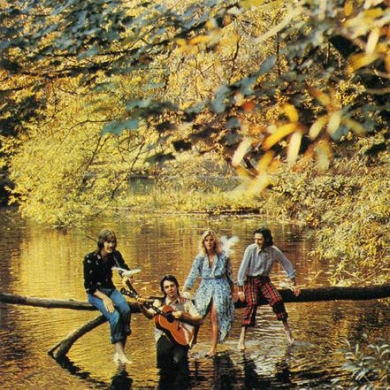
Wild Life (1971)

HOPE: Wildlife (1971), 2/10: All that talk about this being one of the worst Macca albums of his career ? It’s true. I cannot comprehend why this was given the deluxe Archive treatment over London Town or Back to the Egg, two far superior records ( Archive Collection complaint # 1). Out of the ten songs on offer, I only listen to two with any regularity; stunning, bitter rainy day ballad “Dear Friend”, and gorgeously poptastic “Some People Never Know”. Both are superb Macca songs by any standard. The only possible way I could imagine enjoying the other 8 tracks would be if Paul and I were sitting on a porch on a breezy afternoon and he was strumming his acoustic guitar and singing them to me and me alone. That’s the only scenario in which “Bip Bop”, “Mumbo” or “I Am Your Singer” might sound “good” or at least marginally appealing ( doors open Paul, in case you want to try changing my mind).

MATTHEW: Wild Life (1971), 4/10: this has a pretty great Side 2, culminating in a pair of fine Macca songs, “Tomorrow” and “Dear Friend.” But then it is followed by another absurd piss-take closer—this time, mercifully short, but unfortunately a reprise of the painful track that opens the relatively weak Side 1 (ok, weak is being nice; its atrocious; I can never get through “Mumbo” without lunging for the skip button). I’d rate Side 1 a 1/10 and Side 2 a 7/10; so my final ranking splits the difference. That’s probably being too generous as, in the end, there are only two true keepers on here; and considering the plethora of perfect pop songs that Paul penned in the 70s, that’s pretty sad. 

The next two Wings albums, in my mind, are a pair—most obviously because they both came out the same year (1973), but also because they came to me on the opposing sides of a C-90 cassette about a year later (when I was 10, courtesy of Carol, an honorary teenage cousin—I called her parents uncle and auntie).  Band on the Run overshadowed Red Rose Speedway commercially and critically—and on my tape deck.  Carol had added “Live and Let Die” to the end of the BOTR side of the tape (for years I assumed it was actually the album’s final song).  007 is a hard act to follow; “Red Barn Door” ( aka “Big Barn Bed”) just didn’t cut it. So, nine times out of ten I didn’t flip the tape, but pressed rewind or put on something else.

Red Rose Speedway (1973)

HOPE: Red Rose Speedway (1973), 7/10: I have a real affection for this album and while it’s not entirely successful ( “Loup” is pure evil), it’s infinitely superior to Wild Life. And it’s home to another one of my all-time fave Macca songs, “Little Lamb Dragonfly” ( I will take as many epic hook-filled ballads from Paul as he can serve up). I confess I’m a complete sucker for Macca tracks where he employs his trademark improv quirk; all those “do-do-do’s” on The Beatles “Mother Nature’s Son”, “ooh-ooh-oohs” on “Back Seat” and “la-la-la’s” on “Little Lamb” and on and on. I even like the ham-fisted medley (“Hold Me Tight/Lazy Dynamite/Hands of Love/Power Cut”) that closes this album which is clearly bits of other potential songs awkwardly sewn together. Plus there’s another wonderful “tuneful screamy” here,”Get On the Right Thing” that I can’t get enough of. The album is slick and slight but its hidden gems justifiably kick up the score for me. And though I know it was the thing back in the day in the UK to release stand alone singles that didn’t land on actual albums, I think the double A-side from ‘72 featuring  “Hi Hi Hi” and the candy-coated “C Moon” would’ve fit quite nicely on RRS, the latter in particular.

MATTHEW: Red Rose Speedway (1973), 6/10, lacks history for me, and although it has grown on me through many recent listens, I still find it rather flat. It has ups and downs, like its three predecessors, and there’s nothing awful on it. For some, it is probably as good as Ram. For me, it’s a notch or two above Wild Life but falls short of Ram. I understand why EMI opposed making this a double album; with the exception of one or two tracks (I rather like “Country Dreamer,” for example), the rejected numbers were even less memorable. It’s as if instead of developing unfinished songs further, Paul just kept writing more of them. The “Kiss/Dragonfly/Pigeon” trio in the middle of the album have particularly grown on me, but they need something more compelling around them. For example, with many of these Macca ‘70s albums, one wishes in retrospect that some of the between-album singles had been substituted for the weaker tracks. RRS, for example, had one big hit (“My Love”), but (as Hope says) imagine how much better it would have been had it included the earlier single “Hi Hi Hi” and its B-side “C Moon,” and the later single “Live and Let Die”!

Band On The Run (1973)

MATTHEW: Band on the Run, (1973), 10/10, on the other hand, deserves its accolades. It is one of those albums that simply works. The Paul & Wings ingredients are the same, but the formula is tweaked, and the result is finally the record that one imagines the previous four might have been. Play the late Beatles albums to someone who (somehow) has never even heard of them, then play BOTR and say it was the Fab Four’s 1973 record, they’d surely believe you (they might ask why only one Beatle sang, but musically they’d accept it).  As a result, it thus never ages. Like Abbey Road, it is immortal.  RRS sounds like the early 70s. BOTR sounds like a great rock/pop record. I admit I’m pretty much over “Jet,” which has become tiresome after a thousand listens; and the original UK album version without “Helen Wheels” is better. Nor is it my absolute most-loved Wings album (that’s still to come). But there’s surely no doubt that it’s the best album Paul made in the 70s (and one of his best two or three ever).

HOPE: Band On The Run (1973), 9/10: BOTR is like Sgt. Pepper to me. As in the first Beatle album I owned as a kid was Pepper and in turn BOTR was the first Macca solo album to find its way into my meager collection. I played it endlessly, front to back and it invariably became the gauge by which all other Macca records I got would be compared to. But as Pepper has gradually descended down the Beatle album-ranking lists over the years making way for the likes of Revolver, White Album (and lately Abbey Road), somewhere along the way the charms and virtues of other Macca albums, including Ram, came to knock BOTR off the top spot as far as frequency of listening and overall love for me. In fact, there are at least five other Macca albums from the ’70s I listen to with more frequency than BOTR. But my feelings are driven solely by over-familiarity, it is still a ridiculously wonderful pop album and is deserving of every accolade it gets! 

 I think the real stars of BOTR are not the piano pounders, but the gentler animals, specifically “No Words” and “Bluebird”; both are melodically stunning and I absolutely adore them to this day. Still, I have to offer a true confession that you ain’t gonna like Matthew… which is that the song I play the most is, okay, it’s freakin’ “Jet”. Ah Mater, I’ll never get tired of yer.
I do think though, that the overwhelming praise for BOTR did a bit of a disservice to what came both before and after it release-wise. For years critics held to the claim that every post-Beatle Macca release was significantly inferior to it. Patently untrue but they clung to that opinion for eons, cutting Paul no slack until the release of Tug of War in 1982. It still kind of irritates me, it felt like there was a concerted effort to drag him down, but I digress! BOTR deserves a near perfect score and if I were to offer one artifact to a space alien unfamiliar with solo Paul to investigate, it would unquestionably be this.

Venus And Mars (1975)

MATTHEW: The next three Wings albums are very much a trio that go together, all released between May ’75 and December ’76, with the third being a live album that promoted the previous two. For some reason, I don’t remember listening much to Venus and Mars and At The Speed of Sound at the time; but I still have my cassette tape of Wings Over America, which I played a lot. Looking back, that kind of makes sense, as WOA arguably renders its two predecessors redundant.

HOPE: Venus and Mars (1975), 6/10: Nerd fact, when iPods were launched in the early ’00s, you could get the back of the device engraved with whatever personal wording you wanted. I chose the lyric “Venus and Mars are alright tonight” because what the hell else was I going to do; like christening a boat, I had to bestow my new precious, incredible life-altering device with an equally meaningful “name”. V&M is not my favorite Macca album but I do find a lot of it to be exceedingly embraceable. But bad news first. “Rock Show” is a bit silly, not the tune but it’s genuinely cringeworthy lyrical content, “behind the stacks you glimpse an axe” being a particularly egregious line. I think Paul was aware that he wasn’t perceived to be as hard and tough soundwise as The Who or Led Zeppelin at that time but still reeeeally fancied the idea of the proverbial “kids” thinking Wings ROCKED ( of course by the time they did officially, convincingly ROCK on 1979’s Back to the Egg the kids could not have cared less).

When I was kid I loved kitschy retro “You Gave Me the Answer” which I find completely insufferable now (I would actually play act Paul and I dancing to it which is as humiliating as it sounds ). I do adore “Love in Song”, think it’s a total sleeper, so handsome and full of rain. And the sad soul of “Treat Her Gently-Lonely Old People” qualifies it as a keeper as well. At the end of the day though  “Listen To What The Man Said” is the indisputable star of V&M, just an unimpeachable melody and production (and it still has the ability to make me sigh out loud). If I’d have been rating this album as a kid I would’ve awarded it a 10/10 solely because of the stickers and poster it came with. That stuff was as important to me as the actual record. I immediately slapped the stickers on my school notebooks and while they served as a nice compliment to my masterfully drawn ELO logos, I feel an insane, undeniable twinge of regret that I no longer have them.

MATTHEW: Venus and Mars (1975), 6/10: I see why “Rock Show” flopped as a single; it doesn’t rock well, it lacks the charm that imbues so many Macca songs, and it wears thin very fast. I suspect it put me off the album back in the day. But even now, Venus and Mars strikes me as a very mixed bag. I like “Love in Song” and “Letting Go,” but there is simply nothing great here until the end.  The closing cluster is REALLY great (“Call Me Back Again,” “Listen to What the Man Said,” and “Treat Her Gently/Lonely Old People”; I’m going to pretend the “Crossroads” TV theme was not tacked absurdly on the very end). But those fine 15 minutes remind me of how disappointing the rest of the album is. And to return to my point earlier about between-album singles: “Junior’s Farm” would have made a great substitute for “Rock Show”!

Wings At The Speed Of Sound (1976)

MATTHEW: At the Speed of Sound (1976), 7/10: For decades, in my mind this was as good or bad as Venus and Mars, but I recently realized how much better Speed of Sound is. For starters, Sides A and B kick off with great singles—“Let ‘Em In” and “Silly Love Songs.” The whole of Side A stands up well. It closes with a nice pair of mellow Macca ditties. And as for Paul’s controversial inclusion of songs written and sung by other Wings band members: when it works, it works really well (“The Note You Never Wrote” is excellent, perhaps the best Denny Laine song on any Wings album); but when it bombs, it bombs big (“Cook of the House,” cute enough as a B-side, as it was to “Silly Love Songs,” where it should have remained).

HOPE: At the Speed of Sound (1976), 7/10: I’m pretty sure this is the first Macca album I bought in real time. And to be frank I wasn’t sure what to make of it with its overly democratic song distribution. Which meant it didn’t rank highly for me in the beginning because all I wanted was Paul. But like you Matthew, as years went by I came to love it especially the cryptic and cloudy “The Note You Never Wrote”. There is something very overcast and gloomy about the whole record that appeals to me, I feel the presence of a very particular sonic vibe on tracks like “San Ferry Anne”,”Time to Hide” and “Wino Junko”, as well as the two stellar singles “Let ‘Em In” and “Silly Love Songs”. And I think “Beware My Love” is a total powerhouse, one of his best ever rockers, I mean the construction of it is just so clever. And Paul’s vocals on those “I must be wrong’s” are absolutely killer! All hail screamy Paul.

Wings Over America (1976)

HOPE: Wings Over America (1976), 5/10:  While WOA is generally fun I have problems with how the setlist is arranged as well as some of the actual choices. There are at least a dozen tracks from post-Beatle Paul that are more worthy of inclusion than the dreaded “You Gave Me the Answer”,“Richard Cory” or “Spirits of Ancient Egypt”. Having said that, the version of “Listen To What the Man Said” on offer here is absolutely smokin’ and I especially love when Paul introduces the Thaddeus Richard sax solo with a “take it away Thaddeus”. And what is there to say about “Maybe I’m Amazed” at this point, I mean what an absolutely spectacular vocal good lord

MATTHEW: Wings Over America (1976), 7/10: comparing live albums to studio ones is always an apples/oranges challenge (and a cliché to point that out!), especially a triple live album to single studio ones. But this one is so closely tied to specific studio albums that the task is made easier. Although it came out of the summer 1976 tour that promoted Speed of Sound, WOA overwhelmingly favors Venus and Mars above all others. If we count the V&M title tracks as one, and we discount the 1-minute “Crossroads” outro, WOA includes almost all of V&M, nine out of it’s 11 songs. In contrast, there are only 4 songs from Speed of Sound (and 5 each from Band on the Run and from the Beatles catalogue). But here’s the thing: the live versions of the V&M tracks are better than the original ones; even the dodgy “Rock Show” is elevated by being in a medley with “Jet.”  The use of songs written and sung by band members other than Paul somehow works better live than in the studio. And there are just the right number of Beatles songs. Ok, the result is not amazing (don’t hate me if I prefer the other big hit live album from 1976, Frampton Comes Alive!), but it is pretty damn good.  My old cassette got played hard (admittedly it was an Indonesian bootleg with the tracks muddled up and tracks like “Answer” and “Egypt” missing), and I’ve gotten my money’s worth from the 2013 Archive Collection CDs too.
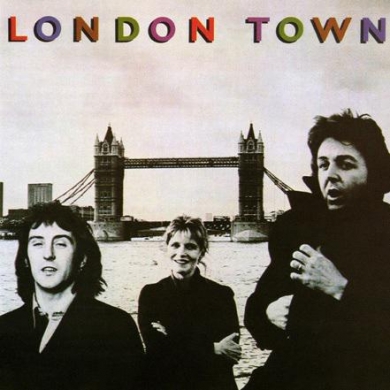
London Town (1977)

MATTHEW: We both recognize how much our—and anybody’s—appraisal of an album is tied to our personal history with it, to deep-rooted emotional connections and associations that interfere with our vain attempts to be objective.  Well, that factor plays more of a role with my feelings—yes, FEELINGS—about the last two Wings albums than with any other albums in the entire Macca post-Beatles catalogue.  London Town came out right after my 14th birthday; I was 15 the summer that Back to the Egg was released. I bought them both right away, flogged them without mercy, and absolutely adored them. I still do. They are, hands down, my favorite Wings LPs and my favorite Macca LPs. I listen to them now, trying to understand why they have reputations as reflecting the decline and collapse of Wings, why Paul has slighted them by not releasing Archive Collection editions, and I just can’t. It makes no sense. They are full of energy and creativity and melody and so many masterful pop music moments. Why, Paul, why?  These records are so freakin’ GOOD!

HOPE: London Town (1978), 7/10: I think LT is a stone-cold crazy record. It’s the most disparate bunch of songs Paul had ever assembled on any of his solo albums to that point and despite the title has no discernible theme. The weirdest and most disturbing thing is that the song I think most about on this album, find myself mindlessly singing to myself most often, isn’t even one of the genuinely good tracks, it’s “Cafe on the Left Bank”, an insidious piece of filler I refuse to accept that I like. But then again that’s part of why I’m so completely charmed by LT as a whole. It’s like a bunch of TV commercials gathered together masquerading as a pop album. All that isn’t to suggest that it isn’t home to some stunners. “With a Little Luck” remains eternally gorgeous and I love “Don’t Let It Bring You Down” with its dark melody tied to what’s meant to be an uplifting lyric…but cherry-picking songs does LT a disservice. These songs quite literally need each other, 90 % of them can’t stand up on their own. No, LT sounds best when listened to in sequence, each song leaning against the other like the bunch of sloppy drunks they are. Please Paul, time to top up and let the endearingly problematic LT into the Archive room ( Matthew and I will get the door).

MATTHEW: London Town (1978), 10/10: I am incapable of being objective about this album. It is so deeply familiar, and every single track just right and in the right place. Giving it less than a 10/10 would just be pandering to you, Hope, or (God forbid) to the cretinous critics who trashed it with knee-jerk derision just because it was made by happy Paul not angsty John. Like Speed of Sound, it’s two sides begin with smooth, well-crafted, comfort-food singles (the title track and “With a Little Luck”). But LT is better than Speed of Sound for being all-Paul (9 tracks) or Paul co-writing with Denny Laine (5): tuneful, inventive, varied in style but not overly so, quirky but not whacky. It isn’t even missing a non-album single (“Mull of Kintyre” stay where you are). Intellectually I can accept that Band on the Run is better, but if I could only take one Macca album to the proverbial desert island, it would be this one.

Back to the Egg (1979)

HOPE: Back to the Egg (1979), 10/10: Egg is a loud, beautiful, blazing down the highway, mess of an album and I think it’s the most criminally underrated release of Paul’s post-Beatle career: the catalogue’s true sleeper. With its fat riffs, sludgy chords and throat-shredding vocals, Egg is most certainly Satan’s favorite post-Beatle Macca album. Okay, let’s just call it what it is, PAUL’s METAL ALBUM. Out of all the grungy noise-makers, I feel most worshipful toward the maniacal “Spin It On” and Cheap Trick-ish “So Glad To See You Here“. But I also love the dirty power pop of “Getting Closer”, which I think is one of his most underrated singles. And let’s talk about “Arrow Through Me”, one of the all-time greatest McCartney songs ever ever ever, a sublimely melodic lament and deep catalog dark horse which can never be exalted and appreciated enough. That hook is positively sublime.

The album was the recipient of some savage reviews which has led to Paul distancing himself from it, talking it down, and most significantly from a hardcore fan perspective (as of this writing) depriving it of the deluxe treatment within the acclaimed and exhaustive Archive series (wishing you took us up on that suggestion of a drinking game now right?). In what universe is Wild Life more deserving of the fancy pants treatment than Egg? Egg is loud, lyrically cartoonish, romantic, weird, occasionally somber and staggeringly melodic; what’s not to love ? It’s one big confusedly-beautiful piece of noise. And for the record, I loved the freestanding single that came out just prior to Egg featuring the lush disco-lite “Goodnight Tonight” as well as it’s perky b-side “Daytime Nighttime Suffering”. I know Paul didn’t feel they fit the vibe on Egg and hence didn’t include them on the finished album but honestly I don’t think anything is “missing” from Egg as a result of their exclusion. To be frank, at the time, it didn’t occur to me that they could or should have been on there. I was just happy there were multiple new Paul records to get! And, added bonus, Egg is also the ideal gauge for verifying whether someone shares the same worldview as you and is ultimately worthy of your lifelong friendship.

In the late ‘80s, I had a job at the CBGB Record Canteen, the decidedly sleazy and noisy shop located next door to the club. One day, my boss asked me to help train a new girl they’d hired. She and I were both very young and cynical and so circled around each other music nerd style, tentatively dropping band names and monitoring one another’s reactions. We somehow got on the subject of McCartney ( though to be honest, I’m sure I brought him up), and without prompting, she said that she particularly loved Egg. That was it. Egg was the magic sign that let me know she was cool and we are still friends to this day. It is truly magical.

MATTHEW: Back to the Egg (1979), 9/10: The fact that you & I agree on this, Hope, but Paul and his critics apparently don’t, logically makes us wrong. But here’s the thing: we’re not! Because this is a weird and wonderful Wings concept-album experiment that simply works; despite being far more varied and quirky than London Town, Egg has a momentum and energy that holds it all together and carries it breathlessly through its 42 minutes as if it were half the length. It’s nod to the punk/New Wave movement that was peaking at the time is just right: neither forced nor half-hearted, it infuses the album with a hard rocking edge that no other Macca album before or since matched. As Hope notes here (and in a stirring ode to the album elsewhere on Picking Up Rocks), some of Egg is HEAVY. But the hints of metal don’t mean it skimps on melody. The riffs are hefty but buoyant, driving multiple singalong moments. “Getting Closer” and “Arrow Through Me” are primo Paul pop singles; the bass line and hook in “Arrow” are like a shot of bliss right to the heart.

Having gushed thus, I can’t resist one caveat. Macca albums almost always beg to be resequenced or edited, as there were usually non-album singles far better than his dodgier album tracks. Exceptions are Band on the Run (the UK version is perfect) and London Town (for me, if not for many others, perfect as is). But Egg is not an exception, as it’s sessions also birthed non-album Top 5 (US & UK) hit single “Goodnight Tonight” and it’s also excellent B-side, “Daytime Nightime Suffering.” In 1980 I made a tape with both those on the album instead of the non-songs “Reception” and “The Broadcast.” Ok, I still listened to the original version more. But my edited version is pretty great. (In case you’re curious, “Tonight” follows “Arrow,”  starting Side B, and the Grammy-winning “Rockestra” closes the album.) By the way, I also think Egg suffered from a record label change and competition with back catalogue: in the US, Paul switched from Capitol to Columbia after LT; Capitol’s response was to release Wings Greatest, which was packed with hits, five of them previously unavailable on an album. It thus competed with Egg, released only six months later. (Elton John’s Blue Moves suffered similar competition for the same reason; that’s the last plug for my book, I promise.)

End of Part 1

Coming in Part 2, we examine Paul’s ’80s discography. You might wanna put on a seatbelt. Ready? Read it here

Maneater: Grading and Rating the Albums of Daryl Hall And John Oates, A Love Story

f8091000de3f026d209837e21bc2e700_L

But if there’s a doubt maybe I can give out a thousand reasons why…

(“Say It Isn’t So” 1983)

I love Daryl Hall and John Oates. At this stage of my life, I’m pretty certain that I’ve listened to the Private Eyes album in its entirety thousands of times. And within that, the number of times I’ve played “Did It In A Minute” and “Italian Girls” in particular is, by any normal standard, sickly excessive. I’m not trying to scare anyone though the fact that I could easily live out the rest of my days without hearing another Dylan or Nirvana song but would invariably suffer painful withdrawal if I couldn’t hear “Kiss On My List” might. I remain enraptured by most of the same stuff everyone else is I suspect, the endless melodic genius of the tunes and Hall’s ridiculous vocal prowess chief among them but must acknowledge the standard cliche that applies here, namely that Daryl Hall & John Oates provided much of the soundtrack to all the wonder, fear and horror of my impressionable childhood and teen nightmare years. And though the songs weren’t necessarily coming from the viewpoint of a nerdy suburban girl who liked to draw for hours while sitting in a walk-in closet, they spoke to me on some visceral level that I’m incapable of explaining coherently beyond the stuff I just described. Deep down it’s way, way more than all that.

Grading the Albums of Daryl Hall & John Oates aka Why the Hell Am I Doing This? In the words of late, legendary writer Toni Morrison, “If there is a book that you want to read, but it hasn’t been written yet, then you must write it“. Now to be clear here, I am in no way comparing myself to a real and extraordinarily gifted author, it’s just that this statement kind of explains why I’m doing this. I’ve always wanted to read a piece breaking down the Hall & Oates catalog and ephemera and so figured I’d just make one for fun, for love, and for all the past, present, and future H & O acolytes otherwise known as my people.

Disclaimer (or maybe warning):  I confess that this essay features some of my personal history as it relates to the music of Daryl Hall and John Oates. I had to draw on a few experiences to establish the context in several instances but have tried to keep things under control ( tried ). Believe me when I tell you that I am infinitely more interested in breaking down the moody, noir-ish magnificence of the “One on One” video than sharing self-important kindergarten anecdotes because seriously, who cares. And I’ll just refer to them as H & O from here on in for ease of everything. While I’m going to reference some factual history as it relates to the overall sound and imagery, in no way is this mess you are reading meant to serve as an actual history of the band. It’s a fans view of the sound, lights, and colors emitting from H & O as seen through besotted and terminally faithful nerd eyes ( which hopefully one or two of you share ).

Screenshot 2020-03-09 01.14.20

Oh no, not sidebars:  Yes sidebars, but mostly in spirit, because they aren’t situated physically on the side, they are just stuffed directly inside this essay thing. These “sidebars” feature ludicrous conspiracy theories, potentially embarrassing anecdotes as well as impossibly misguided counterpoints to popular opinions. The truly unhinged and wtf sidebars happen once we hit the ’80s so I hope you will stick it out until then.

Listen to This!:  I attached links to the song titles mentioned within the album reviews so you can hear them as you read. It’s kind of like a poor man’s version of a museum tour. Plus there are links attached to some of the names mentioned within so if you want, you can get a little additional background.

1*vLhc4LAre0IV2VANx1Ujfg

DARYL HALL & JOHN OATES ( established 1970 ™): Need to get factual and dry for a second which I want to apologize for in advance. I promise there’s some shit-talking right around the corner. Anyway, since coming on the scene in the early ’70s, H & O have sold over 40 million records, had six # 1’s, 34 chart hits, seven platinum, and six Gold albums. Those are crazy numbers when you consider they happened at a time when you had to buy actual records or tapes in order to hear stuff at your leisure and the only number that was counted technically was that initial time you played it i.e. bought it. Streaming has skewed and forever altered the meaning of numbers but the point is H & O have been insanely successful (and for the record, H & O’s play counts across all the platforms add up to pretty staggering numbers ). But the singles are only half the story. Let’s talk about that for a second…

“Singles remind me of kisses, albums remind me of plans”

(“If I Didn’t Love You” by Squeeze 1980)

Singles vs. Albums:  Squeeze’s genius lyricist Chris Difford really nailed the difference between singles and albums in that line, perfectly and poignantly. While H & O are very famous for their kisses ( singles and no pun intended, swear ), their plans ( albums ) are generally not spoken of in reverential terms. You won’t see them on those ubiquitous “Greatest Albums of All-Time” lists unless maybe it’s one solely focused on the ’80s, but even then it’s unlikely ( not cool enough, I’ll get to that shortly ). H & O’s full-lengths are generally regarded as storage facilities for singles that are surrounded by inferior filler/packing material. While that logic applies to ABBA, it does not apply to H & O ( while some may suggest otherwise there is no such thing as an ABBA deep cut, either it’s a transcendent single or it’s caulking, there’s no in-between ).

The fact that H & O’s singles were so successful has clouded the perception of what they actually were at their core. They were an album band. They were a deep-cut manufacturing company, only theirs weren’t meandering, last-minute filler but in fact, all sounded like #1 singles from some alternate universe.

Screenshot 2020-03-08 20.44.05

“Maybe I should feel guilty…”
(“It’s A Laugh” 1978)

The Scourge of the “Guilty Pleasure”: I’ve never listened to Daryl Hall and John Oates with irony. Not just because I never thought I was personally cooler than whatever album I was listening to ( I wasn’t ), but because when I first heard most of the songs, I was still innocent, trusting, and naive enough to take them at face value. Which is to say, for all its apparent rhyming silliness, “Kiss on My List” wasn’t a joke to me. It was a key member of my teenage crush soundtrack team along with evergreen anthems like The Police’s “Every Little Thing She Does is Magic” and “Misunderstanding” by Genesis.

Of course, some experience the H & O visuals and aural soundscape a lot differently. The utter ’80s-ness of the videos, coyly comical lyrical content, and lush Oates mustache, have ensured their permanent residence in the musical “guilty pleasure” pile. They are considered either with a nod and a wink full of bemused irony or as a punchline. But that kind of thinking has no place here. The concept of “guilty pleasure” is, at its core, bullshit since none of us can help how we’re wired. It’s best to just own up, embrace stuff and not give a shit what people say because honestly, who cares. Obviously “Maneater” isn’t the mortal, soul-baring equal of “Love Will Tear Us Apart”. But “She’s Gone“, well that’s another story.

What are we grading here ?:  All 18 official studio albums as well as any key live or compilation albums that were released within the timeframe that H & O were still releasing new studio albums, plus the 2009 box set. I’m going to use the standard 1 to 10 grading scale, 1 being rubbish, 10 being perfect.

About the compilations:  I’m sorry but I have to share one more nerd thing. There are a whole lotta hit compilations, too many, which has inevitably resulted in a lot of repetition. I really want to accentuate the studio album experience here and will only be talking about the compilations I feel are the most significant and/or were the most culturally relevant at the time of their original release.

Also won’t be getting into some of the latter-day, 21st century live albums which while generally fine, serve mostly as archival documents and souvenirs.

Screen Shot 2022-04-14 at 6.08.00 PM

“It’s you and me forever”
(“Sara Smile” 1975)

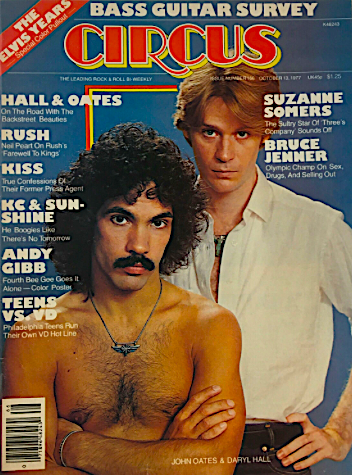
Initial Contact:  The first Hall & Oates record I ever bought was the 45 aka 7″ of “Rich Girl”. From that point on I was officially hooked though I had no idea at the time that meant for the rest of my life. I also vividly remember spending most of my meager allowance on the Circus Magazine depicted above. I know. It was unquestionably worth forking over hard to come by kid cash to the mean girl cashier at Family Pharmacy, my childhood magazine haunt. Plus it had a poster of hairy Andy Gibb so you know, it was coming home with me no matter what. At the time I couldn’t decide who I thought was hotter but I admit that John’s shirtless come hither thing coupled with my inexplicable youthful fascination with mustaches gave him the edge at that moment. I did ultimately switch allegiance to Daryl but retained a keen Oates appreciation and this cover is the undeniable foundation of that appreciation.

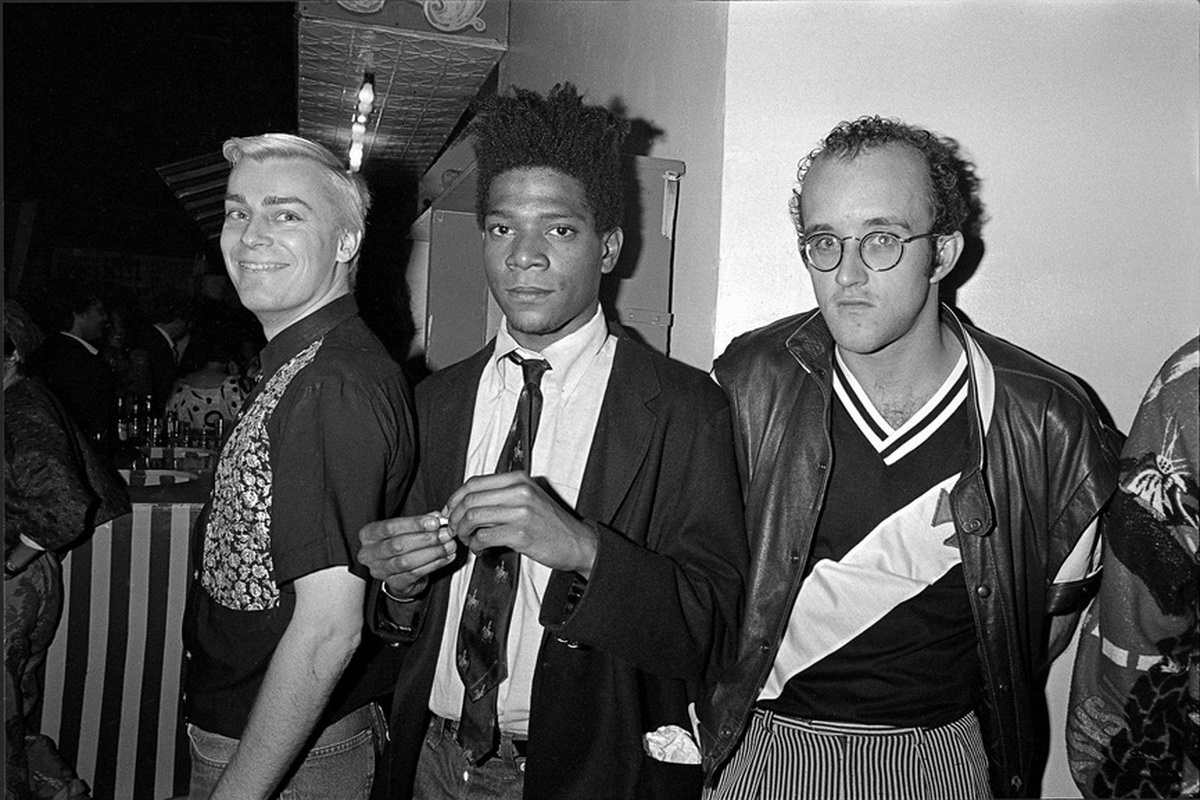
John-Sex-Jean-Michel-Basquiat-and-Keith-Haring-at-AREA-ClubJohn Sex, Jean-Michel Basquiat and Keith Haring in 1987. I swear this will make sense in a minute. 
Question- What is “Cool ?”:  I attended the School of Visual Arts in NYC in the ’80s, when visual artists seemed as big as pop stars ( or at least they did to me ). Iconic graphic artist Keith Haring had studied there for a couple of years before dropping out but nonetheless came to do a presentation one afternoon. He’d arrived with fabled and fabulous downtown performance artist John Sex in tow, another SVA alumnus, which was about as NYC ’80s hip as you could possibly get. Keith spoke favorably of his former school, showed slides of his work, answered our student questions, and sweetly drew his trademark radiant baby on anything we put in front of him. But then he did this thing that nearly obliterated whatever goodwill I had for him and everyone else in the room that day.

During his presentation he showed a slide of an album cover he had worked on, some dance thing I can’t recall, and said he frequently got asked to do art for record sleeves but was picky about what he chose to work on. He then mentioned that he’d recently been asked to do an album cover for Hall and Oates. John Sex then jumped in and asked Keith if he’d considered this request. His answer was an emphatic “pfffft, no way“. The obvious implication being that they were lame. Which was made abundantly clear by the tone of his voice as he said it. No way. People laughed. They knew what he meant. It was instinctively understood by every person in the auditorium that day that Hall & Oates were not cool.

Admittedly, everything was working against them in the “this band is cool” column at that point. They were popular. Their videos played in an endless loop on MTV. The songs were catchy and in regular rotation on AM radio ( uncool ). They were in their thirties for God’s sake ( this was regarded as ancient in the ’80s MTV heartthrob days ). And of course, girls liked them more than boys. They were not looked upon as a serious, credible musical entity in any way. And so Keith Haring and my pretentious art school classmates thought them to be corny shit. But they were wrong. Wrong, wrong, wrong. See no matter how “uncool” they were perceived to be by the cool people in the ’80s, whether they accepted it or not, at that time Hall & Oates were the absolute total 100% sound embodiment of New York City.

No, I didn’t say anything after that dark moment, I just sat there and seethed, arms crossed, playing the role of pissed-off fan-girl. “You all just wait, because 35 years from now I’m gonna call you out on this bullshit”. And here we are. Okay, I feel better now.

P.S. I forgave the late Keith in my heart and remained a fan of his…but I do still think he was wrong.

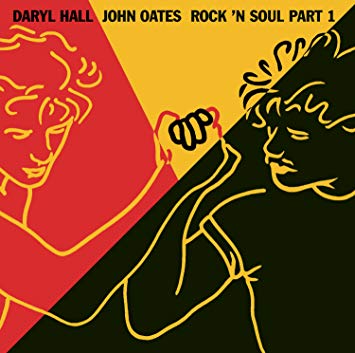
Sidebar!: I believe the album in question was the 1983 Rock ‘n Soul compilation because the cover art they ultimately settled on amounted to a poor man’s version of a Keith Haring drawing i.e. THIS :

71sDEd4xlWL._SX355_

“Rummaging through antique clothing store racks of quirky Technicolor bowling shirts, musty record stores with row upon row of vinyl inspiration, vintage guitar shops, seeing beautiful girls writing their own fashionable rule books, druggie burnouts on broken stoops and all this wrapped together under a thick aroma of freshly baked pizza and italian bread…the Village offered up multiple sensory orgasms of possibilities around every corner”

“The maneater wasn’t just that woman. It was New York City”

-Quotes from John Oates’s 2017 memoir Change of Seasons

Okay, so Hall & Oates = NYC: Certain bands are as much a place as a sound. The Beach Boys ARE Southern California. Joy Division ARE Manchester. And Daryl Hall and John Oates ARE New York City. Or to be more specific, ’80s New York City. They embodied the vibe as vividly as any of Larry Levan’s legendary nights at Paradise Garage or Wild Style or the seedy “Fascination” video game arcade in Times Square which I was always moderately terrified to walk into. They may have been full-on Philly in their origins but their sound was perfectly in sync with the neon, steaming manholes, cigarettes, and candy-eyed synthesized glamour of New York City.

You’d never know it now but back in the ’80s, 8th street, in the West Village of NYC, was ground zero cool for teen people like myself. It was centrally located near all the best record and clothing stores and home to a giant new wave pop culture-infused head shop called Postermat. That place was a teenage pop fan-MTV addict’s dream. It had glass counter displays stuffed with hundreds of band buttons and pins (Bowie, Specials, The Jam, and on and on). There was a massive tee-shirt wall with images of everything from Little Richard to the Union Jack as well as a cluster of poster racks filled with the usual cult heroes (Elvis, Marilyn, James Dean). 

It was also located directly across the street from the legendary Electric Lady recording studio, the musical home base of Jimi Hendrix during the last months of his life.

Of course, the studio’s historic legacy meant absolutely zero to my ignorant teenage brain. All I cared about was the fact that Daryl Hall and John Oates recorded their albums there ( ultimately their four GREATEST albums ), across the street from Postermat on freakin’ 8th street, where I walked by nearly every day, and they touched this same sidewalk I’m touching now, and oh my god what if they are actually here or on the way. Walking down that street was always a slightly fevered experience because of this. I did ultimately catch them filming part of the “Possession Obsession” video on what I’m certain was the coldest night in the history of mankind but even with my youthful constitution at its maximum strength, it was just too damn cold to stand out there and watch for too long. 

Screenshot 2019-10-16 00.47.31

This is the image that is lodged in my mind when I think of NYC in the 80’s. Daryl and his immaculate hair on 6th Avenue and 8th Street in 1983’s “One On One” video.

One Last Thing, Here It Comes…John Oates, Real Talk: Time to address the elephant. It’s no secret that John Oates has been treated as something of a 6th finger in Hall & Oates by the world at large. As in he’s there but is not necessary. As in what exactly does he do and is his guitar plugged in. It was an idea that picked up steam as the duo became more successful, and Daryl became the primary face in the videos, and the primary voice on the hits.

John’s legendary secondary status reached its pop culture apex on, where else, The Simpsons :

In a Pitchfork interview back in 2007, Daryl was quoted as saying that he and John were “not an equal duo and never had been. I’m 90% and he’s 10% and that’s the way it is “.

And all through my years of fandom, I admit I felt this too. Hot Circus Magazine cover aside, when it came to listening to the albums, the Oates tracks ( the ones he wrote and sang lead on ) were barricades, the opening band before the real thing you were there to see. Still, as it was LP days and moving the needle required physical effort, I mostly just let the albums play all the way through, becoming familiar with the Oates-led tracks by default but having nowhere near the same emotional investment in them. The hooks in the Hall-led tracks were just more straight-up swoon-some and surprising.

Once the Sony Walkman arrived on the scene and fell into my hands ( ed. note: I basically hijacked my brother’s so blessings to him for understanding ), the editing frenzy began and it was mostly Oates tracks that ended up on the cutting room floor. The painstakingly assembled mixtapes I was stuffing in this magnificent new gadget were basically non-stop Hall-fests. Daryl, Daryl, and more Daryl.

The inevitable by-product of this editing, this laser focus on only the songs I loved with nothing in between, resulted in these previously adored tracks losing some of their initial luster from overexposure. Like a beloved teddy bear that’s lost an eye, I just plain over-loved them.

To “fix” this issue, I started plugging songs I’d initially ignored into newly made mixtapes hoping it would reignite my fever for the old songs by recreating that anticipatory feeling of waiting for them I used to get when the record was playing on the turntable. Which is what led to my formal Oates Epiphany. Most of the new additions on these tapes were HIS songs. Don’t get me wrong, I’d kinda liked some of them already but something had shifted. They were now sounding really, really good, like way better than I remembered. Is “Cold Dark & Yesterday” ( Oates ) better than “Did It In A Minute” ( Hall )? In a word, no. But it is damn good. Still, are there days I’d rather hear “Friday Let Me Down“( Oates ) than “Method of Modern Love” ( Hall )? Absolutely, most days in fact. And so when I say I love Daryl Hall and John Oates, I do genuinely mean both of them. It took a minute but the epiphany arrived.

And so to honor and acknowledge  what maybe doesn’t always get the attention, at the end of most of the album reviews there will be a nod to the “Best Oates Moment” i.e. the song(s) where Oates is the primary composer and/or lead vocalist ( FYI: John’s autonomous contributions were somewhat sporadic over the first handful of albums and several thereafter so I will only reference where the above description applies ).

And now…

The Albums

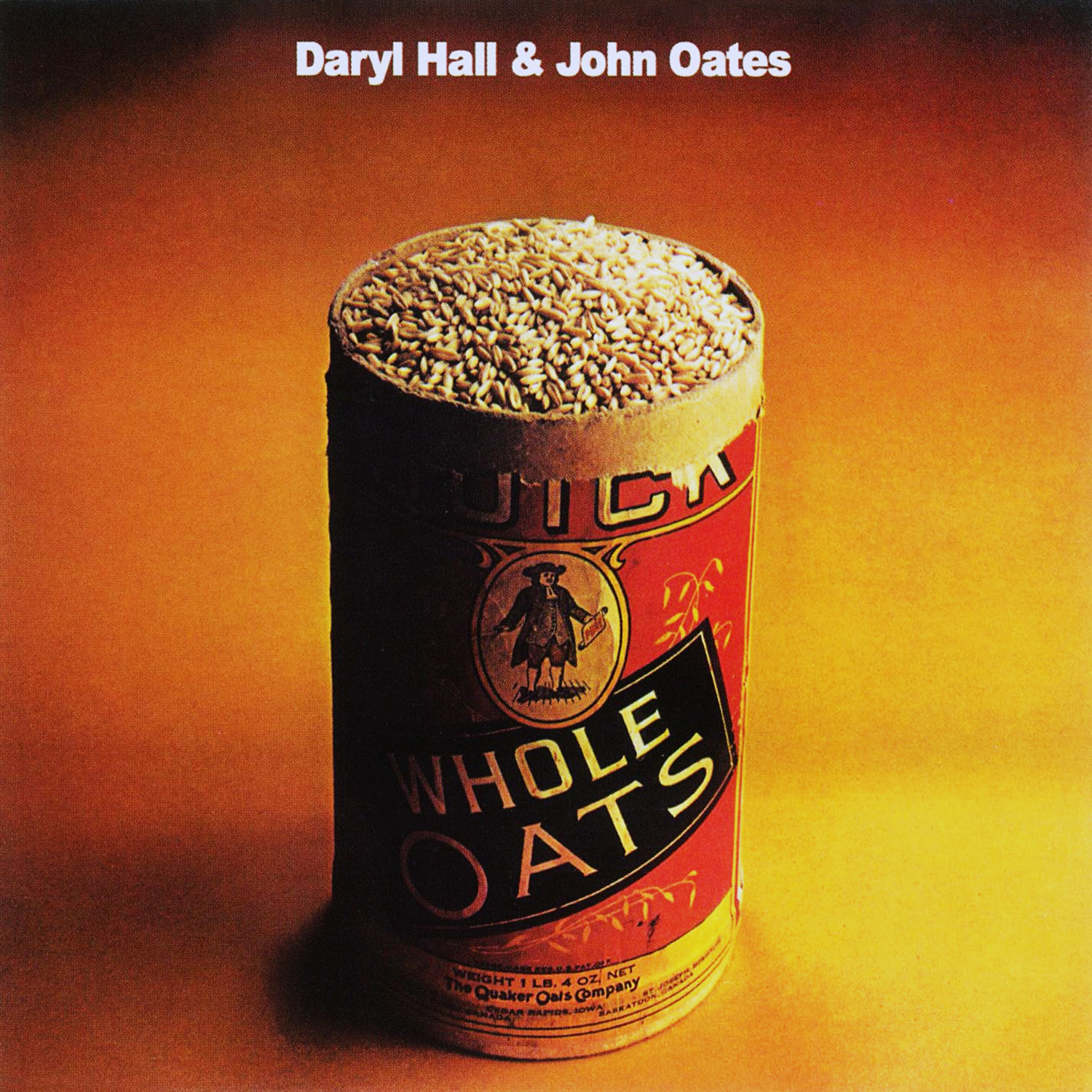
halloatesdarylhalljo_wholeoates_bjma

Whole Oats (1972) 

Grade: 4/10

John Oates refers to this as H & O’s “dump album”, as it features the most worthy songs they’d accumulated in their arsenal up to that time. The theme of the album is just a simple, “Hi, we’re Daryl Hall and John Oates and it’s 1972” and as such is filled with sunny, quirky, AM radio-ready, sucking on hayseed, folky pop songs and no fixed identity. There’s a lot of talk about heading back to the “countryside”, walking “down by the canyon” and of course, “lying on the needle floor” with who else but “the reverend’s daughter”. The overall sound sits restlessly between early ’70s acoustic style Elton John and the cornier side of Harry Nilsson…but underneath this pile of hay are a couple of tracks brimming with promise and foretelling the H & O sound of the future, specifically Hall’s shining vocal showcase “Lazyman” and the album’s closer, the lush, Todd Rundgren-esque “Lilly (Are You Happy)“. They are both soul with the latter also being fire.

darylhalljohnoates_abandonedluncheonett_1jz4

Abandoned Luncheonette (1973)

Grade: 9/10

While the hayseed folk-pop of the debut album is still on display within Abandoned Luncheonette, the soon-to-be trademark, lushly-stringed soul sound officially infiltrates the proceedings, due in large part to the influence of the album’s producer, the legendary Arif Mardin. And fact is the most successful songs are the ones where they abandon the folk-pop and go straight-up soul. As for specific songs, what is there to say about “She’s Gone” at this point ( insert reverential sigh here ) with its oddly joyful, over-the-top angst and legendarily demented proto-video. It features not only the finest vocal interplay H & O ever laid down but generously gifted the world with the seminal line “worn as a toothbrush hanging in the stand” ( As “guilty feet have got no rhythm” was to the ’80s, so was that “worn toothbrush” to the ’70s ).  The superb title track, a movie plot in the shape of a song, offers a particularly memorable and soaring vocal from Hall on the chorus. Guitar solos straight out of ’70s cop shows where they are heading to the bad side of town, sophisticated soul ballads; it’s all here. The last-minute of the album is occupied by a chicken in the bread pan pickin’ out dough i.e. a couple of bizarre raving banjo and fiddle solos because, why the hell not.

Best Oates Moment: A 23-year-old John was inspired to write “I’m Just a Kid ( Don’t Make Me Feel Like a Man)” after the experience of being surrounded by even younger people ( girls ) at a show, whom he sensed were looking at him as an old guy even though he himself was technically young. It is lyrically problematic at points with John referring to himself as a “cradle thief”, and his love interest as “little girl”, and then stepping way over the line with “will you survive, will you learn to drive”. It’s hardly 33-year-old Ringo Starr singing “You’re Sixteen” but yeah, it may be slightly dicey. Know what though, best not to think too much and just dig it at face value as the nicely-tuned ’70s rock shuffle that it is.

darylhalljohnoates_warbabies_4txy

War Babies (1974)

Grade: 7/10

Generally speaking, even when they were being weird, H & O still made songs that were pretty accessible. Produced by old colleague and super genius Todd Rundgren, War Babies is the most deliberately defiant, sonically experimental, FM radio-ready album H & O ever made and as such, the one with the most “Rock Cred”. As a chick, I can state it’s not really built to appeal to chick ears and seems more focused on attacking key nerve centers in boy brains…which is to say at points it gets dangerously close to Frank Zappa and there is some serious instrumental wanking. When it works, it more closely resembles the noodly yet accessible soul-pop excursions of Todd himself, “Is It A Star” being the best example. And while “I’m Watching You ( A Mutant Romance)” sounds like a lyrically clumsy Lou Reed song, it is still oddly compelling. War Babies is ultimately a slick, sleazy, and desperate piece of work, an acquired taste to be sure but absolutely worth exploration for the open-minded H & O fan.

darylhalljohnoates_darylhalljohnoates_9wy

Daryl Hall & John Oates aka the Silver Album (1975)

Grade: 5/10

This album features in “Worst Album Covers of All-Time” lists so often at this point that it’s become a cliche. And the fact is, the cover’s not that bad, it’s androgynously “of its time” though maybe somewhat unreflective of the music within it i.e. if it sounded like say Diamond Dogs or Young Americans it would make more sense. Frankly, as worst H & O album covers go, this wouldn’t even make the Top 5 ( Dear God, it gets so, so much worse ). Of course, the fact that the cover tends to be the main talking point regarding this one says a lot about the album itself, for despite being the home of the evergreen, eternal, undisputedly wondrous ballad Sara Smile, the rest of it is pretty middling and mediocre. But it does establish the temporary sound address that will serve as home base for the next H & O release, namely the string-laden Philly-style soul being purveyed at the time by the O’Jays, Harold Melvin and the Bluenotes and producers Gamble and Huff. In 1974 H & O parted ways with Atlantic ( shit just wasn’t happening ) and signed to rival label RCA in no small part because of manager, and future head of Sony Music, Tommy Mottola’s relentless belief in their potential. They honor him here with a thinly veiled “tribute” song called “Gino the Manager” and yeah, let’s just get out of here.

darylhalljohnoates_biggerthanbothofus_3yuy

Bigger Than Both of Us (1976)

Grade: 6/10

The first half of “Bigger Than Both of Us” is solid and soulfully poptastic. “Back Together Again“, “Rich Girl” ( their first #1 ! ), “Crazy Eyes” and idiosyncratic, haunting ballad “Do What You Want, Be What You Are” are superfine to the last and if we were rating just those this would be at least 7 out of 10. But the quality starts to slip after that and the rest of the album regresses into pretty faceless, paint by numbers b-side quality songs. “Rich Girl” remains a perfect piece of ear candy and the fact that mercurial, contrarian legend Nina Simone, of all people, recorded a freakin’ cover of it powerfully attests to its significant charms.

Best Oates Moment: With its quirky and damn swoony chorus, “Crazy Eyes”  is one soulful babe.

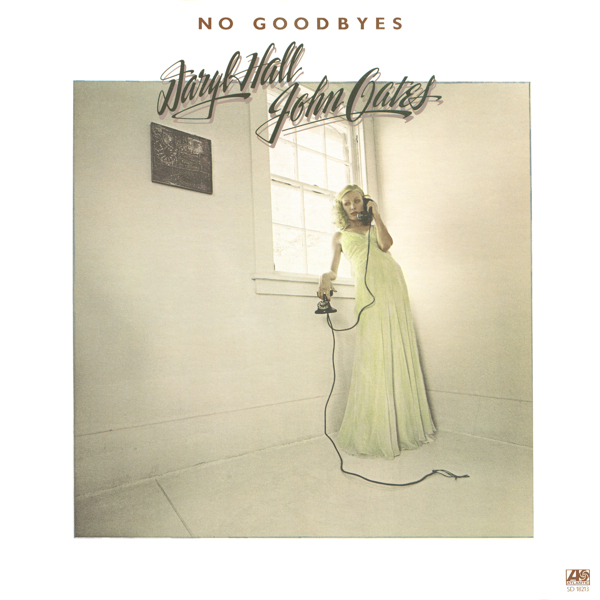
darylhalljohnoates_nogoodbyes12_3db7

No Goodbyes (1977 compilation)

Grade: 3/10

In 1976 to capitalize on H & O’s success since leaving their label, Atlantic re-released “She’s Gone” as a single. Back in 1973, the song had only gotten as high as # 60 in the pop chart but now that H & O had a few hits under their belts, the world was more receptive and appreciative of its emotional, cynical beauty and it soon shot to #6 on the pop chart ( p.s. it should be noted that band of brothers, Tavares, took their own fabulous version to the top of the R & B chart in 1974 so the song wasn’t exactly an unknown entity). And with that Atlantic kicked out No Goodbyes, to cash in on the new success of “She’s Gone” and recoup some dollars. It featured a handful of tracks cherry-picked from the three albums they did for Atlantic but more importantly added three previously unreleased tracks which is why I’m bringing it up here. Those tracks are okay but Daryl himself is particularly sweet on “It’s Uncanny“, an optimistic, Elton John-esque little bounce and as a result it’s been finding its way into live performances in recent years.

halloatesdarylhalljo_beautyonabackstreet_bzgf

Beauty on a Back Street (1977)

Grade: 7/10

Time to ROCK. Sort of. Beauty on a Back Street is the “hardest” H & O album. It is primarily guitar-driven and completely devoid of hit singles. It is home to “Winged Bull“, considered in some circles to be the worst song H & O ever recorded. While that song is not good per se, it’s not the worst ( though Hanoi Rocks, legendary Finnish AOR glam rockers 2002 cover version might lead you to believe otherwise ). It’s just a pretentious, over-ambitious power ballad that sounds like Led Zeppelin’s “Kashmir” and “No Quarter” mixed together and not in a good way (though admittedly I’m uncertain if there could be one). But it isn’t hurting anybody.

Forget about the bull though, for there are some superbly edgy, truly fine, let’s call them “rockers” populating the top of half of the album. Dark and soulful “Don’t Change“, the Cheap Trick-esque “You Must Be Good for Something“, anthemic shred-festing ballad “Why Do Lovers Break Each Other’s Heart“, old school soulster “Bigger Than Both of Us” ( yes, that was the title of their previous album and as such is a total throwback to their more vintage Philly sound ) and “The Emptyness ” a kind of back-alley Beach Boys song with an extraordinarily OTT Oates vocal that remains oddly endearing. Beauty on a Back Street marks the start of the creative upswing that was to run unbridled for the next eight straight years…after this next cash-in/hopeful gesture thing that is…

Best Oates Moment: The aforementioned “The Emptyness

darylhalljohnoates_livetime_1gkt

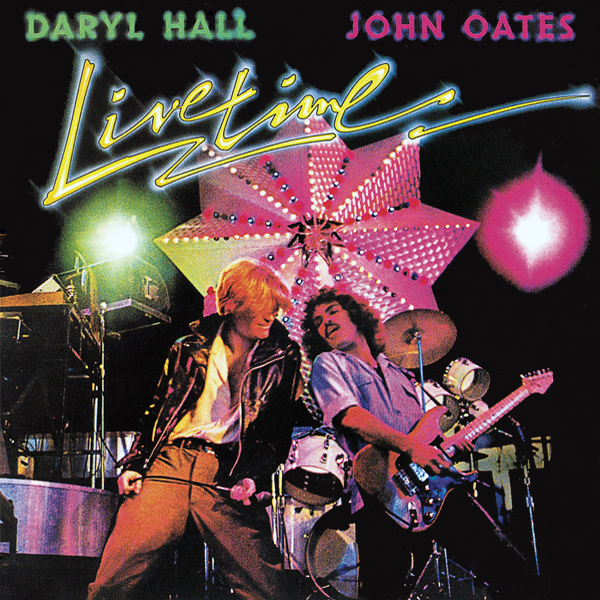
Livetime ! (1978)

Grade: 3/10

Back in the ’70s everyone was doing it. After kicking out a few studio albums, it was de rigueur for any moderately popular rock and/or soul act back then to release a live album. The live releases were not so much souvenirs of particularly special shows as they were placeholders to maintain momentum between studio albums and avoid falling out of the public eye. But despite the motivation behind them, make no mistake, if the wind was right this kind of thing sold ( Peter Frampton, Lynyrd Skynyrd, McCartney & Wings,etc.). That said, Livetime! was not one of them. On the plus side, the garish late ’70s style album cover is super awesome and the track selection itself is decent with all the big hits represented. On the down-side, the overall sound is exceptionally tinny and it includes a straight-up piece of filler in “Room to Breathe”…which wouldn’t be a big deal except for the fact the album is only seven songs in length which only serves to magnify its presence.

Best Oates Moment: While Oates’s vocals on both “The Emptyness” and “I’m Just a Kid…” are ridiculously melodramatic, hearing him give so hard and feel so much for everyone in Hersheypark Arena on that cold December night in 1977 night is all kinds of badass. 

halloatesdarylhalljo_alongtheredledge_bzgk

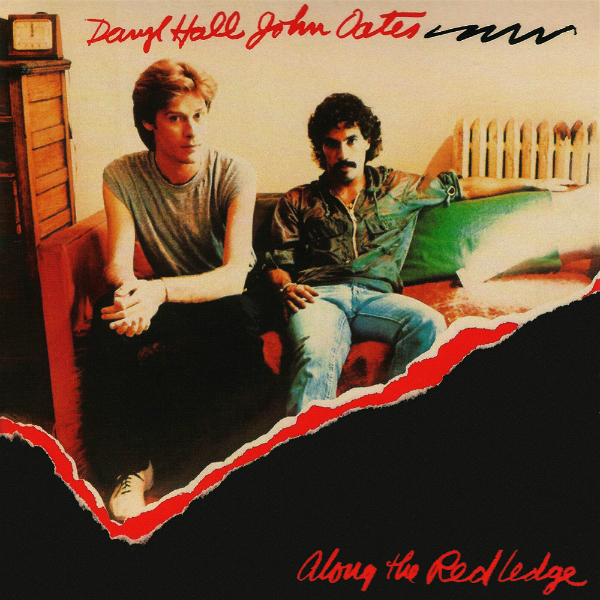
Along The Red Ledge (1978)

Grade: 8/10

Hardcore aficionados often cite Along the Red Ledge as the real sleeper in the H & O catalog, the secret classic…but there is trickery at work here thanks to the dreaded front-loading factor…which is a coy way of saying that the first five tracks are so solid and get you so high that you don’t necessarily notice how weak the rest of this album actually is. Yes, while you’re still tripping on the luscious fumes of the luminous “It’s a Laugh“, “Pleasure Beach“, the worst song H & O ever recorded, is sneaking in the back door of your very ears, riding on the coattails of all the goodness that came before it and hoping you don’t notice how crap it is.

This album is where things started to shift stylistically, seeing the final appearance of the Philly Soul string flourishes while marking the full mobilization of the hook factory. Highlights include the aforementioned “It’s a Laugh”, both cynical and sad with its huge, gorgeous, ascending chorus, and the heartbreaking Beach Boy-esque beauty “The Last Time“. And don’t want to sleep on deep-cut “Have I Been Away“, which is essentially a more melodic precursor of future hit “Everytime You Go Away” and is home to a stunningly acrobatic Hall vocal. And to be fair, the album does end on a hopeful note in terms of quality with the hazily romantic “August Day” so we do get past the iceberg ultimately.

Best Oates Moment:Melody for a Memory“, an epic and occasionally haunting piece of rock music for staring at city lights with some ridiculously fine co-lead vocalizing from both John ( going low ) and Daryl ( going high ).

halloatesdarylhalljo_xstatic_bzh2

X-Static (1979)

Grade: 9/10

And now comes maybe the true sleeper in the H & O catalog. X-Static lives a lonely life within the H & O discography, suffering the statistical indignity of “watching” the four albums that had preceded go Gold and the four that followed it go Platinum while achieving no shiny awards for itself, forever cementing its D-List status. Apart from its lone hit single “Wait For Me“, it is mostly forgotten…which is a damn shame because it’s actually really good.

X-Static is full of piano propelled big chorused prototypes of future H & O hits, songs that had they maybe appeared within the next few albums would’ve been hits, in particular, “The Woman Comes and Goes” and “Running From Paradise“, both super melodic, keyboard-driven bangers. The album’s only genuine hit, the aforementioned plush power ballad “Wait For Me“, remains a swoon inducer of the highest order and is the only track from the album that ever appears in a setlist with any regularity.

The album is slightly time-stamped, due to its couple of desperate but totally infectious excursions onto the dance floor. “Portable Radio” and “Who Said the World Was Fair” are essentially rock-disco, though to be clear are much closer in the gene pool to say Paul McCartney’s popped-out version of the sound than to the Studio 54, snorting coke in the VIP lounge Rolling Stones version. But they are both exceptionally sticky and fun.

This album was reissued in 2000 and featured a previously unreleased bonus track “Time’s Up ( Alone Tonight)“, an absolutely bitchin’ uber-melodic kiss-off pop song and co-write between Daryl and producer David Foster, and it’s a damn shame it wasn’t on the original release.

Best Oates Moment:All You Want is Heaven” is a complete hook-fest and offers a gentle tip of the cap to the old Philly soul.

darylhall_sacredsongs_cjn

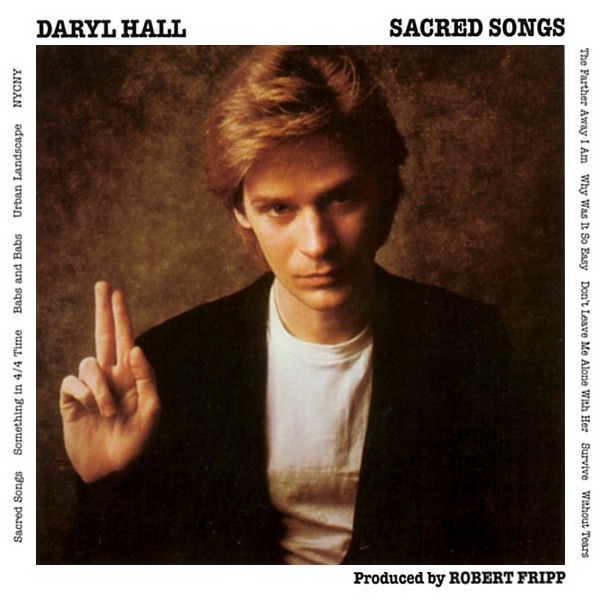
Daryl Hall: Sacred Songs  ( Recorded in 1977, released in March 1980)

Grade: 8/10

Sidebar: The Doomed Tale of Daryl Hall & Robert Fripp Otherwise Known as The Turning Point in the Sound of Daryl Hall & John Oates That Led to their Complete Chart Domination from 1980 Onward 

When you talk about The Beatles, you’ve got to talk a little about their invaluable and debauched residency in the sleazy clubs of Hamburg. From the haircuts to the profound emotional brotherly bonding, their time there was the foundation for nearly everything that happened to them afterward.

Now while this next stuff didn’t happen during H & O’s formative years, it marked a crucial turning point in their sound evolution and sowed the seeds of what happened next i.e. H & O becoming one of the biggest pop bands in the world. Stick with me here…

The Bonding:  Daryl Hall first met Robert Fripp, the main creative force within UK progressive rock legends King Crimson in 1974. Though at that point Fripp had decided to step away from music to explore his spiritual interests ( the official male English Rock star rite of passage of the era. See George Harrison, Pete Townshend, Richard Thompson, etc.), the two remained in regular contact through Fripp’s musical sabbatical.

Let’s Do This:  By 1977 Fripp was feeling inspired to get back in the fray and so he and Daryl decided to embark on a couple of new projects. The plan was to produce and create the first Daryl Hall solo album which would dovetail into Robert Fripp’s own album (also his first solo excursion) for which Hall would provide the lead vocals.

daryl-fripp

Oh to be a fly on this wall. Fripp, Gilda Radner and Hall in 1980.

Project #1:  The first Hall/Fripp collaboration and Hall’s first solo album, Sacred Songs is hard to pin down. It’s reminiscent in parts to early ’70s Bowie ( think Young Americans and Station to Station) and full of hazy plastic soul, jagged Fripp guitar solos and ambient interludes. It runs the gamut from hypnotic, post-apocalyptic balladry ( “The Farther Away I Am“, “Why Was It So Easy” ) to anxious New Wave ( Nycny ) to proggy FM radio-ready rock ( “Babs and Babs” ). The best of the bunch is “Something in 4/4 Time“, a gritty piece of power pop that was hopefully a top ten hit in a better, alternate universe. Sounds good right? It is! But it sounded nothing like the H & O albums that had come before it…which turned out to be a problem.

RCA mad RCA were not happy with Sacred Songs. It sounded nothing like a standard H & O album which, to them, created a marketing conundrum. Worried that its overall sound would confound existing H & O fans and “Rich Girl” lovers, and kill whatever existing momentum had been created, they refused to release it, it was, in classically cruel record company speak, shelved. Hall and Fripp were not happy about this and openly complained to no avail ( at least not right away ). Unfortunately, the RCA stonewall didn’t end there.

Undeterred aka Project # 2:  In 1979, Hall and Fripp recorded the second installment of their collaboration, the Fripp solo album, ultimately titled Exposure featuring Hall’s lead vocals on all tracks. RCA weighed in again. On the premise of contractual restrictions, they refused permission for Hall’s vocals to comprise the whole of the album. The edict handed down resulted in Fripp’s only being able to include two of the Hall vocal tracks. This forced Fripp to recruit other singers to re-record songs Hall wrote and had already recorded.

Fuck You:  To summarize RCA had a very specific vision of what a Daryl Hall-infused record should sound like and it needed to jibe with their pre-ordained marketing plan. All this served to ( rightfully ) piss Daryl off forever. In his 2007 interview with Pitchfork, he straight up says “That’s when I completely fell out of love with the music business”.

On Second Thought:  Eventually, good sense prevailed. After some track leaking, open complaining by Hall and Fripp and letter writing by fans who’d gotten wind of the whole mess, RCA eventually acquiesced and released Hall’s Sacred Songs in March of 1980. Time has been kind to it and it’s been rightfully celebrated as a minor cult classic over the course of the 21st century.

A Seed Takes Root:  Hall and Fripp’s collaborative efforts produced an eccentric, sometimes challenging, inherently soulful, and peculiar kind of pop music that served as a sonic blueprint for the H & O sound that came to run riot over the charts in subsequent years. Next in line is the gigantic, fantastic, hybrid flower that grew from the seeds of the Hall & Fripp collaborations…

halloatesdarylhalljo_voices_amrg

Voices (1980 aka the album that marked the point at which Daryl Hall & John Oates officially became HALL & OATES)

Grade: 10/10

Diagram A: Daryl Hall & John Oates Voices is better than Fleetwood Mac’s Tusk, let me explain…

Wait a Minute Baby:  In 1979 Fleetwood Mac released Tusk, their highly anticipated follow-up to the massively successful Rumours album. It was a 2-LP, 20-song behemoth that felt less like a group effort and more like a random sampler featuring the work of three disparate artists ( the Mac songwriting core of Lindsey Buckingham, Stevie Nicks, and Christine McVie ). It was generally regarded as an incoherent mess, albeit one with a handful of truly brilliant songs sprinkled within it, amongst them Nick’s eternally exquisite “Sara” and Buckingham’s commanding title track.

Thump and Clangor:  The main problems fans, label, and critics expecting Rumours II seem to have had with it were related to Lindsey Buckingham’s contributions. The 1979 Creem Magazine review of Tusk described his anxious, helium-infused proto-new wave offerings as “dull sketches buried in thump and clangor”.  Which is to say they were just a little too quirky and eccentric for people to get their heads around, more “Vegetables” style Brian Wilson than say “Wouldn’t It Be Nice” style.

Sonic Sea Change:  Over the past 20 years or so there has been a major shift in opinion regarding Tusk. It’s gone from being a legendary disappointment to being considered the boldest and most inventive work the band ever did, as well as the album all the cool kids now namecheck as their favorite Mac release.  And the Buckingham tracks that everyone had a problem with? Those are the songs generating the most accolades. Its enviable afterlife has seen it lauded in every way possible from being given a latter-day review score of 9.2/10 on Pitchfork, to having two books written about it, to its being released as a super deluxe 5-cd box set.

NY/LA:  Voices is the NYC version of the LA to its core, Tusk. Only it’s a better record. It’s a mix of anxious, bizarro-new wave and pop-piano hook-fests that go down way easier than any of Tusk‘s jittery excursions. Even at its weirdest, every track on Voices sounds like a radio song. While Tusk is self-absorbed and insular, Voices is out wandering the streets looking for trouble.

What Album?:  But of course, where Tusk has retroactively been lauded as a masterpiece, H & O’s Voices is generally just thought of as an old pop album…when it’s even thought of as an entire album at all because the enormous popularity of its singles, “You Make My Dreams” ,”Kiss on My List” and “You’ve Lost That Loving Feeling” have gone a long way to rendering the rest of the tracks on the LP invisible.

The Songs:  Perfectly dolled up demo Kiss On My List“, and the electro-soul blueprint of the future “You Make My Dreams” are the glamour queens of Voices, drawing the crowds and looking good. The spare and sharp quartet of “Big Kids“, “It’s So Hard to be in Love with You“, “How Does it Feel to be Back” and “United State” mix soul, New Wave and Cheap Trick and make something completely new; nothing in pop sounded quite like it at the time. The weird and edgy songs, “Gotta Lotta Nerve“, “Africa” and  “Diddy Doo-Wop” exist in the same sonic universe as Tusk tracks “The Ledge“, andNot That Funny“. And the cover of the old Righteous Brothers chestnut “You’ve Lost That Lovin’ Feeling” is significantly dirtier and street-ier than the original and full of highly entertaining, over-the-top soloing from both Daryl and John. I still think “Every Time You Go Away” ( which was ultimately covered by British singer Paul Young , slathered in synthesizer, and sent on its way straight to #1 on the pop chart ) is a weak link and not a patch on any of the wondrous balladry that had come on previous albums ( “Do What You Want“, “Lilly” ). It seems funereal compared to the up-all-night vibe that exists within the rest of Voices and worst of all, is missing the H & O signature move i.e. the “did you get the license plate number, what the hell just happened” hook. Yeah, I acknowledge and accept that I’m likely standing alone on that one.

Voices > Tusk:  Voices is not the best H & O album but it is the most important, for with it the blueprint of the future became official. And so yeah, Tusk is a beauty in places but as far as innovative, accessible pieces of pop music art go, listen to this, Voices is better.

Best Oates Moment: The kick-ass Cheap Trick meets the Temptations opening track “How Does it Feel to be Back

darylhalljohnoates_privateeyes_3yv1

Private Eyes (1981)

Grade: 10/10

Private Eyes is H & O’s definitive artistic statement. It’s their Pet Sounds. Their Blue. Their Purple Rain. Home to millions of whiplash-inducing hooks and some of D.Hall’s finest vocal performances, it is the album to offer up should anyone ever ask you where to start in the H & O canon. It’s where the frequently/forever sampled/ no bass-no drum, electro-soul ballad extraordinaire “I Can’t Go For That ( No Can Do)” lives. The rest of the album is split between the gloriously urgent and shiny ( “Tell Me What You Want“, “Head above Water“, “Some Men” ), plush piano pounders ( “Private Eyes“, “Did It In a Minute“,”Unguarded Minute“), and Oates-ian scenery chewers ( “Mano a Mano“, “Friday Let Me Down” ). A sinewy lizard in the form of a song  ( “Your Imagination” ) and a bow to H & O heroes The Temptations and the Four Tops ( “Looking for a Good Sign” ) featuring a Hall vocal par excellence, round things out. Private Eyes is true vintage NYC-pop music-art perfection.

Best Oates Moment:Friday Let Me Down” is an oddly joyful rejection song that lies somewhere between the Go-Go’s and Springsteen and nicely showcases the extraordinary cruelty of that classic torture device known as the answering machine.

darylhalljohnoates_hoh2o12rear_4y8y

H20 (1982)

Grade: 10/10

H2O as a whole is a pretty cynical affair, with every song to the last expressing some manner of confusion, anxiety, or frustration, albeit in the most popped out, addictive manner possible. It’s all sweet outer coatings with bitter centers ( “Guessing Games“, a stellar cover of Mike Oldfield’s “Family Man” ) and dark city grooves ( “Open All Night“, “At Tension“, “Art of Heartbreak“), its centerpiece being Hall’s gorgeous, world-weary ballad “One on One“. And bonus points for the video of the latter featuring Daryl impeccably decked out in his ’50s street corner finery walking through a long-gone ’80s NYC: it remains a swoon-worthy and gorgeous memory of the olden days.

This is the album where Hall starts to push the envelope vocally, unleashing and shredding to magnificent effect on “Family…” and in the coda of “Go Solo“, a precursor of what was to come on the next studio release, Big Bam Boom

“Oh Oh here she comes”. Okay, just a few words on THE SONG.  Despite the name of this essay, I’m tired of “Maneater“. Partially because it’s a little silly and it lends itself so easily to mockery and as a result is the song haters will generally wield as the primary example as to why H & O suck. But mostly, I’ve just heard it too many times. Like Beatle lovers who hate “Hey Jude” ( get it ) or Bob Marley fans who couldn’t endure another minute of “One Love” ( please tell me there are some ), “Maneater” is not, nor will it ever be a part of my evergreen H & O playlist. Of course, having seen people completely lose their shit to it in a live setting, I understand why it still needs to happen. With its 380 million-plus plays on Spotify ( and counting ), the love for “Maneater” runs deep. And in its defense, Charlie De Chant’s sax solo within THE SONG completely annihilates every other ’80s sax solo that ever existed ( including you “Careless Whisper”) but from a personal standpoint, I’m just gonna sigh and hit fast forward forever.

Best Oates Moment:Italian Girls” with its lyrical references to Sophia Loren, pasta, and Vino Rosso is a patently ridiculous, melodic, and awesome piece of candy.

hall oates rolling stone

Oh, it’s no secret to me…

Sidebar : The Misogyny Thing aka “She was open all night”

Success breeds backlash and so as H & O’s chart dominance began to grow, so too did the negative criticism. Hence a few writers began calling out what they perceived was overt misogyny within the lyrics. The nature of the complaint was that within the typical H & O song women were more often than not, presented as cruel and manipulative ( they’d “pay the devil to replace her” after all ).“Maneater” and “Open All Night” were thought to be particularly hostile ( the chorus of the latter being  “She was open all night, while I was away, you were open all night” ). The irony of course was that the duo’s primary songwriting partners during their biggest years were women, namely sisters Sara and Janna Allen, the former of whom had a hand in both aforementioned tracks. 

But okay for argument’s sake, could “Open All Night” be said to possess a questionable sentiment? Well technically, yeah. While it remains a gloomy beauty of a song, there’s an undeniable thread of judgement and anger running through it. But it’s not part of some broader manifesto. The critical assertion of misogyny always felt like a bit of a broad and lazy stroke, some selective cherry-picking to justify disliking them. The weird part is until these magazine reviews brought it up, I hadn’t really noticed because I was processing what I heard in a really different, naively fantastical way.

Like some prehistoric form of fan fiction, I was sensing something a little “different” lurking within the songs…something deeply, inherently queer. As in, it sounded like some of these love-themed songs were addressed to boys. It didn’t matter to me how many times Daryl sang the word “girl”, to my ears that was just a red herring. It was a classic “Paul Is Dead” scenario, with me twisting and deliberately mishearing words to support my desired theory. When Daryl sang “I should’ve listened more” I heard it as “I should’ve listened BOY”…and okay, I still do. When he trilled “You know I ain’t no danger boy”, I inserted an imaginary comma between the latter two words.

Now to be clear, these thoughts weren’t triggered by the rumors that had regularly dogged H & O since their infamous Silver album cover ( that Daryl and John were in the old parlance, lovers ). That tale seemed, and was, so on the nose as to be patently ridiculous. No, my Spidey sense and wild teenage imagination were ignited by a handful of highly interpretable often vague ingredients within the music itself, ranging from the “New York City vibe” described earlier, to what I perceived as a knowing “lilt” in Hall’s vocal delivery, to the brief lyrical turns ( from the “crewcut rainbows” mentioned in “Some Men” to the repeated “blowing” in “Delayed Reaction” to not being able to “go for that” in you know what song ). Further gasoline was thrown on the fire when in a 1983 interview in Rolling Stone, Daryl said, “The idea of sex with a man doesn’t turn me off, but I don’t express it. I satisfied my curiosity about that years ago. I had lots of sex between the ages of three or four and the time I was fourteen or fifteen. Strange experiences with older boys. But men don’t particularly turn me on. And, no, John and I have never been lovers. He’s not my type. Too short and dark.”

The “Paul is Dead” saga or more specifically, The Beatles themselves had convinced me that no song was ever to be taken at face value, that every single one was a puzzle waiting to be solved, you just had to be savvy enough to catch the clues and code words. Of course, I wasn’t trying to solve a complex conspiracy theory here, I was a teenage girl looking to imbue my favorite H & O songs with mystical romantic qualities because honestly, I thought it was hot. Now please enjoy Daryl bringing all of the above home on this staggeringly wondrous version of “Laughing Boy” from 1976. Watch here. Hot.

Rock ‘n Soul Part 1 (1983 Compilation plus 2 new songs and FYI, there were 2 different covers)

Grade: 9/10

Rock ‘n Soul was the first bonafide, all killer, no filler H & O hits collection and though it’s now primarily an artifact of the olden days, its initial release was a pretty big deal as it marked the debut of two highly anticipated new tracks. The first, “Say It Isn’t So” is unquestionably one of the greatest H & O songs ever. Its echoey, hip-swinging, strutting down the runway tempo is perfectly set by T-Bone Wolk’s booming bassline and it features some of Hall’s absolute finest vocal scenery-chewing and word stretching ( “I know that you lie-eeeed” ). The other new track, the stuttering and cynical “Adult Education” is not as melodically lush but is still a great sneery, finger-wagging, synthesized beast. And oh yeah, oh yeah, I’d be remiss if I didn’t mention the video. “Adult Education“, the movie, is four and a half minutes of confusingly arcane symbolism, set in an underground tomb and featuring a true star-making performance by John Oates. Open-shirted with eyebrows vacillating in a manner somewhere between Groucho Marx and Milhouse Van Houton, he aggressively brandishes the neck of a guitar ( the neck, just the neck ) and comes across like some weird aberration of Prince, if Prince couldn’t dance. He totally, shamelessly goes for it and serves up a performance that is equal parts bold, beautiful, and utterly cringeworthy.

darylhalljohnoates_bigbamboom_3o0y

Big Bam Boom (1984)

Grade: 9/10

You know how around Xmas time there are some houses whose occupants opt for the extreme method of decoration with seizure-inducing light displays, elaborate manger scenes, a motorized Santa checking names, and reindeer occupying every available surface? This album is like those houses. It’s noisy, synthetic sensory overload. Introspection is out of the question. But it’s also ridiculously fun, in fact, the cover tells you all you need to know. Of all the albums H & O made in the ’80s there are none more intrinsically, biologically timestamped EIGHTIES than BIG. BAM. BOOM. It is also the last truly great Daryl Hall and John Oates album. “Out of Touch” the anthemic lead single ended up being their last #1 song ever, a notion which if posed at the time would have seemed absurd. Big Bam Boom serves as a showcase for some top-class Daryl Hall end of song improvising with nearly every track featuring some ridiculously clever, virtuosic ad-libbing during the final minute ( or in the case of “Method of Modern Love” the last two-plus minutes which is total f-ing beauty ).  Highlights include the handsome “Some Things Are Better Left Unsaid” which starts wistfully sad, then like most everything else here, ramps up and increases in volume as things progress, allowing Hall to really wail, and the aforementioned “Method…”, the synthetic soul, love pledge that sounds like Smokey Robinson in space, which is kind of who H&O were at that point.

Best Oates Moment: Sweet, singing on the street corner throwback “Possession Obsessionand the slightly sinister, groovily hypnotic “Cold Dark and Yesterday“. Both are wickedly wonderful.

DEnz1rzUwAABS9L

This photo from backstage at the Live Aid show in Philly in 1985 will never not be completely insane.

Tina Turner knows:  After witnessing the triumvirate of Kenny Loggins, Steve Perry of Journey, and Daryl singing their respective lines at the recording session for USA for Africa’s  We Are The World in 1985, Tina Turner exclaimed something to the effect of “damn, these white boys can sing! “. She had a point.

darylhalljohnoates_liveattheapollo_exd

Live at the Apollo (1985)

Grade: 4/10

Both a labor of love and dream come true for H & O, this album recorded live at the fabled Apollo Theater in Harlem features a supergroup comprised of Daryl, John, and two of their absolute idols, Temptations legends David Ruffin ( the rough ) and Eddie Kendrick ( the smooth ) running through a handful of hits from both groups. It’s a sweet document, though with a little bit of a “you had to be there” vibe, both a tribute and a baton passing, and made all the more poignant by the fact that by 1992, both Ruffin and Kendrick had passed away.

darylhall_threeheartsinthehapp_9tbv

Daryl Hall: Three Hearts In The Happy Ending Machine (1986)

Grade: 7/10

Welcome to 1986 when there was no such thing as “enough” and bigger was thought to equal better ( shoulder pads, hamburger patties ). This was especially true within the world of record album production. On the half-full side, the second Hall solo album could be said to resemble a more grown-up version of Big Bam Boom, loud, glossy, armed with head-spinning hooks and a wider worldview. But there is a half-empty take to counter that, namely that the Hall voice, the most valuable tool in the arsenal, is more often than not buried in layers of synthesizers, echo, and shiny guitars to suffocating effect. To be fair, this was the style of the time, and Dave Stewart of Eurythmics, gifted but essentially the poor man’s Jeff Lynne, was at the helm, so there was no way it wasn’t gonna sound like this, with everything turned to 11 and Hall often fighting to rise above the racket.

But underneath this noisy neon blanket live a handful of great, GREAT songs. The H & O-ish “Foolish Pride“, one of the few tracks where the Hall voice soars with clarity, break-up ballad “Someone Like You“, twanging riff-heavy “Dreamtime” and stadium-soul anthem “I Wasn’t Born Yesterday” are all pretty fabulous at their core.

Part II, A Change of Season

hall oates radio

Hold on tight for we are about to go off a cliff. It pains me to say this but from this point on in H & O’s career, the quality of releases whips wildly between sort of okay to adequate to not-so-great, with a few moments of brilliance sprinkled in for good measure. The endless touring, the fatigue, the understandable desire to explore outside the confines of H & O all probably affected what happened from this point forward to some degree. And so the latter-era H & O records as a whole aren’t great…but there are definitely beauteous songs nestled within them.

darylhalljohnoates_oohyeah_2v0a

Ooh Yeah! (1988)

Grade: 3/10

“Ooh Yeah ! was an unfocused album. My head and my heart were not into it”.

-Quote from John Oates’s 2017 memoir Change of Seasons

It’s never a good sign when the Wikipedia page for an album has no information other than the names of the participants, general statistics and song credits. While that serves as a confirmation of its existence, it’s also a reflection of where it stands in the big picture. And it’s especially odd when it’s an album that actually went platinum… which is to say we all loved H & O and were very excited that finally, after four long years there was a new studio album. And we were all (mostly) disappointed once we heard it. Ooh Yeah! qualifies as both the worst H & O album and the biggest letdown. It’s the most slickly produced with the most unfinished-sounding songs. Hooks are scarce. It seems distracted. To add insult to injury, the cover is also terrible ooh yeah. The strongest track by far is the LP’s lone hit, “Everything Your Heart Desires“, with its laid-back Temptations vibe. Runner up award goes to “I’m In Pieces“, an over-the-top Jackie Wilson-esque, unrequited love ballad that while somewhat hampered by an overblown production ( and saxophone ) is still pretty okay. I’d like to say Ooh Yeah! is a misunderstood cult classic whose mysteries will eventually reveal themselves but no, truth is it will only ever be an album that came out in 1988 by Hall & Oates.

darylhalljohnoates_changeofseason_exc

Change of Season (1990)

Grade: 5/10

So Close“, the first single off Change of Season is a great song, widescreen sad, nostalgic with lots of space for the Hall voice to run free and wild. That said, Hall hates the version that leads off the album, having been forced by the record company to bring in, wait for it, Jon Bon Jovi to fatten up the production and make it more “radio-friendly”. Which, to be frank, had to suck. As a compromise, Hall’s preferred, unplugged version was included as a bonus track. The Bon Jovi version is a cacophonous monster, a nearly five minute death match between the production and Hall’s voice with the latter coming out on top, (by shredding, raging, and steamrolling over every shiny guitar chord that charges its way Super Mario style). And truth be told, it’s still pretty great. But yes, Daryl’s instincts were correct, the unplugged version is the truer rendition, the real heartbreaker. The rest is a bit faceless for the most part except for “I Ain’t Gonna Take It” which is a gloriously defiant little monster that would’ve fit perfectly on Hall’s aforementioned Three Hearts album.

The End of an Era: In 1990, John Oates shaved his renowned mustache off after a show in Tokyo. Asked about it in a 2011 interview, Hall said he thought it was “bold”…and mentioned that “when he did that, he also shaved his head. It was a statement. He was a shaved-head, bald-lipped motherfucker!”. Bold.

darylhall_soulalone_czk6

Daryl Hall: Soul Alone (1993)

Grade: 6/10

Soul-rock hippie space cadets The Family Stand were one of the finest and most underrated bands of the ’90s. While their idiosyncratic sound basically ensured their never finding a regular home on radio or MTV, they were the recipients of a lot of love from other musicians and were regularly tapped to work on other outside projects. The two male members of the trio, Peter Lord Moreland and V. Jeffrey Smith produced and co-wrote the majority of Soul Alone with Hall, the three creating a sleek, lush, soul sound, full of Marvin Gaye-style flourishes and eccentric hooks that still sound pretty damn good today. You will find the Hall voice front and center throughout the album, where it should be, a real about-face from his previous solo excursion, Three Hearts. The plush and fabulously patronizing, “I’m in a Philly Mood” is superb. And melodic deep cut “Wildfire” is pretty exquisite with its twisting, turning chorus. Plus there’s a sweet nod to Mr.Gaye with a wistful re-interpretation of his “When Did You Stop Loving Me…“. The song quality levels out a bit after those three tracks to just plain old good as opposed to brilliant, but the standard remains resolutely high.

darylhall_cantstopdreaming_gs7

Daryl Hall: Can’t Stop Dreaming (1996)

Grade: 3/10

Released first in Japan and soon after in the U.S., Can’t Stop Dreaming is a mixed bag with a lot of co-writes and is not an especially memorable listen. The sweetly uplifting title track is the standout here, with a very ’90s R & B feel and classic H & O hook…but the rest is surprisingly faceless and veers dangerously close to smooth jazz in parts. And there’s a superfluous remake of “She’s Gone” which conveys none of the passion or urgency of the original.

darylhalljohnoates_marigoldsky_3ell

Marigold Sky (1997)

Grade: 5/10

There was some hype with this one as it was the first new H & O studio album to appear in seven years and it had been assumed by that point that they were through doing new music as a band. And…it’s okay. The standouts are the title track which has a genuinely appealing ’90s country vibe and the gloriously shiny diamond that is “Romeo is Bleeding“. The latter features a big fat hook, a big fat synth and a big fat Hall vocal and qualifies as one of the greatest “lost” H & O tracks ever. They were playing it at the shows around the album’s release and honestly I wish they would start including it again because it killed. “Romeo” dwarfs everything here and alone it scores a 10/10.

darylhalljohnoates_greatesthitslive_i9j

Greatest Hits Live (2001)

Grade: 7/10

Recorded in 1981 on the Private Eyes Tour, this was at one point being considered for official release during H & O’s ’80s mega-years according to the sleeve notes, which is why I’m including it here. And while there are plenty of actual “greatest hits” on it, there is also weird shit like “Mano A Mano“, “Diddy Doo Wop” and “United State” which are oh so cool to hear in live form and I 100% approve of. And Hall’s vocal on “Wait For Me” is complete and utter fire.

darylhalljohnoates_doitforlove_319k

Do It For Love (2003)

Grade: 3/10

Seriously, is someone just punking us with these album covers? I just can’t. Anyway, like 1990’s Change of Season, there are a whole lotta hands beyond Daryl and John’s involved in the songwriting here, making for a less than cohesive listening experience. There is a tendency to grade on a curve with stuff like this because when a beloved artist makes an album after years of recording dormancy that doesn’t completely suck, most of us feel a great sense of relief. And that haze of relief results in a whole lot of over-the-top hyperbole and excessive praise. But because of the ridiculously high standard H & O have set in the past, it would be impossible for an album like this not to be a disappointment. The cool electronics of the eighties are nowhere to be seen and the sound here is closer to 1990’s Change of Season, with a lot of glossy acoustic guitars. Actually come to think of it, maybe the cover was trying to tell us something. The Philly soul flavored title track is okay if a little rom-com soundtrack-ish and the sweet cover of New Radicals plush and lovelorn “Someday We’ll Know” is an inspired choice ( in fact a full-on collaboration with New Radicals main man Gregg Alexander would be just too damn wonderful, getting a fever even thinking about it).

darylhalljohnoates_ourkindofsoul_af0

Our Kind of Soul (2004)

Grade: 5/10

This lovingly curated cover album features a mix of Motown, Philly Soul, and originals and has its heart in the right place. I saw H & O play just prior to the actual release and was totally blown away by their performance of The Temptations deep cut “Fading Away“…but that passion doesn’t quite come across on the studio version. Which is to say in a live setting, these songs really come alive but as studio recordings they tend to fall a bit flat.

darylhalljohnoates_homeforchristmas_3qiu

Home For Christmas (2006)

Grade: 4/10

Christmas albums are always a dicey proposition and how “good” they are depends on how high your tolerance threshold for holiday music is as a whole. Back in 1983, H & O released a sweet, kitschy version of “Jingle Bell Rock” as a single, the video of which is a masterclass in mugging, grinning, and complete cuteness and ended up recording a new version for this release ( which is okay but not a patch on the aforementioned version ). As for the rest, they tried to make things a little more eclectic by including a couple of originals among the standards, and there’s a really fine, shuffling cover of The Band’s “Christmas Must Be Tonight“. And have to call out the Hall vocal on “O Holy Night” which is exceptionally pretty. At the end of the day, it’s a laid-back, delicately crafted Christmas album and that’s really all it’s trying to be. Mostly though I love the pooh bear and piglet style cover.

darylhalljohnoates_dowhatyouwantbewhaty_79t3

Do What You Want, Be What You Are (2009 Box Set)

Grade: 8/10 ( it covers everything but…let me explain)

I guess the real question is if you are not a completist do you need this comprehensive 74-track collection? And the answer is…maybe. It’s a great overview to be sure and there’s a bunch of previously unreleased stuff…but unfortunately the majority of that stuff is of the live variety and not particularly essential. The fact is H & O didn’t leave a helluva a lot on the cutting room floor; the best songs really did land on the actual studio albums for the most part. Still, there are a few interesting curios (and a nice booklet breaking down the songs in the four-cd physical version) including “Don’t Go Out“, an Oates track that didn’t make it onto Private Eyes.

darylhall_laughingdowncrying_3lmc

Laughing Down Crying (2011)

Grade: 5/10

“He was my best friend in the whole world. He was my musical advisor and teacher.” That’s Daryl Hall talking about longtime H & O band leader and multi-instrumentalist Tom “T-Bone” Wolk ( Literally the “&” in Hall & Oates ), who died the week recording began for this album. It lends a truly bittersweet air to Laughing which also features the last track T-Bone ever played on ( “Problem With You” ).

The 64-year-old Hall voice is in pretty fine fettle throughout but this one is mostly for hardcore completists. In other words, it’s okay. But, but here’s the thing, there are some genuine flashes of that old school Hall melodic gift, a nifty hook here ( “Wrong Side of History” ), a big chorus there ( “Crash & Burn” ), and enough proper tunes to suggest that he’s still got it in him.

darylhall_beforeafter_f1qv

BeforeAfter (2022)

Grade: 8/10

BeforeAfter is a fine and eclectic compilation of Daryl’s solo career to date. It is non-chronological and comes over more like a coolly curated mixtape than a dry historical overview which makes it a pretty engaging listening experience. This collection was built with everybody in mind. It not only provides a nice indoctrination for newbies but rewards longtime fans with eight previously unreleased performances from Daryl’s beloved TV show Live From Daryl’s House.
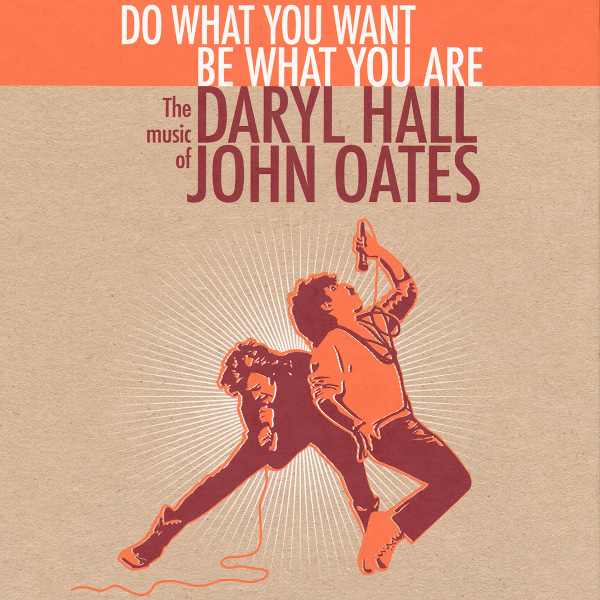
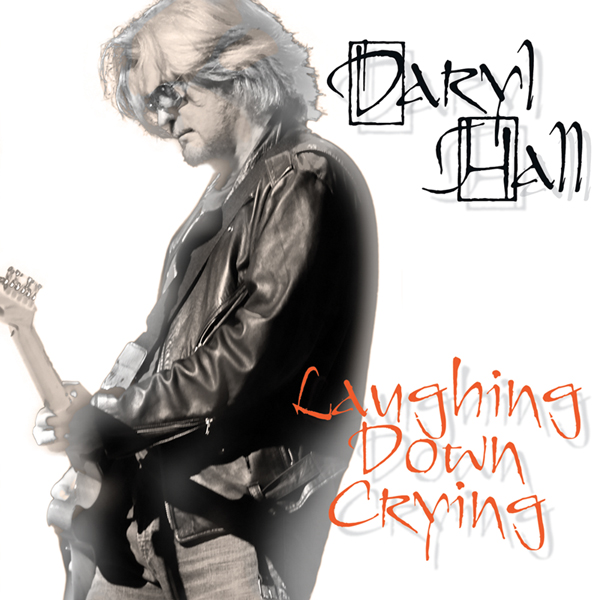
It’s great to see deep cuts like “Right As Rain” and “Talking To You (Is Like Talking To Myself)” dragged out of the shadows and into the spotlight. And the inclusion of riotous, fox-in-the-henhouse-of-sound, “NYCNY” is an awesomely cheeky touch. But for old-schoolers, the treasures lie in the live treats.Sacred Songs nugget “North Star”, featuring guitarist Monte Montgomery, sounds especially lush and languorous here and Hall’s vocal is pretty killer. Even better though, are a tag-team of tear-inducing covers, the Eurythmics “Here Comes The Rain Again” starring Dave Stewart himself on guitar, and “Can We Still Be Friends”, a super-emo duet with Todd Rundgren both of which I don’t recommend listening to unless you have your crying towel handy. 

Yes, there are a few wondrous tracks it would have been great to see included (“Wildfire” where are you? “Something In 4/4 Time”, miss you my manic pal), but those are just minor, nerdy quibbles. 

John Oates- The Solo Albums

True confession. I haven’t spent a lot of time with the five Oates solo studio albums, the first of which, released in 2002, had one of the most tragic album titles in the history of recorded music, Phunk Shui. I can only explain it like this. You know how sometimes, even as an adult when you are around your parents (or parent) you involuntarily regress into the surly teenager you used to be, giving one-word answers and eye rolls when they ask you questions and occasionally recoiling from hugs? That’s kind of how I feel when confronted with John Oates solo albums. Muscle memory takes over and I become that impatient H & O fan from my younger days who just wanted to hear the Daryl-led songs. And I feel some guilt about this because as I’ve been saying all along here, John was responsible for some absolute bangers over the course of H & O’s history. And it seems like he’s had a really good time recording all of his solo albums.

Based on all that I’m reluctant to step into the role of Grinch and slam them. I’ll just say they run the gamut from groove-based soul to retro folk to swampy blues to country rock with a few cover versions thrown in for good measure. They tend to harken back to early guitar-based H & O and so if you are a fan of that sound go forth and Phunk Shui.

The Oates solo studio discography:  Phunk Shui (2002), 1000 Miles of Life (2008), Mississippi Mile (2011), Good Road (2013), Arkansas (2018)

Who The Fuck Are Daryl Hall & John Oates? 

event-poster-8972924

Daryl Hall and John Oates were never part of a scene. They were popular but they were also total outliers, oddballs, weirdos. They were creatively restless soul scientists, the kind of sharks who had to keep moving forward to stay alive, expertly distilling elements of Motown and New Wave while adding bits of folk and prog to make something completely new. Their songs featured some of the most majestic pop singing you’re ever gonna hear in the form of Daryl Hall. Cool but not cool, NYC to the core but actively stuffed into Yacht Rock playlists, white boys but with a deeper shade of soul. Back in 1985, Daryl said, “I think we’re the ’80s Beatles”. And he had a point. Both bands were completely ubiquitous in their respective heydays and the popularity of their songs has ultimately transcended age, race, and gender. There were some lean years when no one cared and some creative missteps but within all of it, there were songs. Brilliant, beautiful, ridiculous, and heartbreakingly perfect songs. Only one way to end this…

Bonus H & O Ephemera Footnote! 

The Best Daryl Hall & John Oates Cover(s) Ever

220px-The_Bird_and_the_Bee_-_Interpreting_the_Masters_Vol_1

Check out The Bird and the Bee’s superb cover album Interpreting The Masters Vol.1: A Tribute to Daryl Hall and John Oates. With pronouns intact and both heart ‘n’ soul on full display, it’s a master class in cover song etiquette and execution and is an absolute gift.

Robert Fripp and Daryl Hall’s Opus of Glorious, Paranoid Weirdness:

Robert_Fripp-Exposure_(album_cover)

If you wanna hear Daryl Hall at his most manic, unhinged, and free, check out the 2006 reissue of Robert Fripp’s Exposure which features all the previously unavailable Hall performances. It’s a long, long way from “She’s Gone”.

The Daryl Show:

384046425_img_1173LR

Live From Daryl’s House started as a web series in 2007 and as a result of its popularity grew into a broadcast TV series in 2011. It usually features some cooking with Daryl looking on hungrily and admiringly, but mostly it’s live-ass music featuring Daryl and his kick-ass band. They perform with both established artists and new kids, offering up stuff from the extensive Hall songbook as well as originals by the respective guests. It’s plenty fun since a lot of deep cuts like “Somebody Like You“, “Babs and Babs” get airings and some of the performances are amazing. The 2009 episode featuring Todd Rundgren duetting with Daryl on “Can We Still Be Friends” is a particular heart-squeezer after which I always need a minute to collect myself.

The Book of John:

As you may have noticed, I’ve incorporated some quotes from John’s eminently readable 2017 memoir Change Of Seasons in this piece. It’s a breezy, engaging read and features some genuinely off-the-wall anecdotes that even if you are not a hardcore H & O fan make it worth checking out. Which is to say if you’ve ever wondered what it would’ve been like to have had the late legendary gonzo journalist Hunter S. Thompson as a neighbor, wonder no more because John’s got stories y’all.