

“When I was seventeen, it was a very good year,” or so that old Frank Sinatra song goes. In my case this sentiment only applied to the records I bought. Which is of course the most important gauge as to whether or not a year was “good”. Step into the PuR time machine as historian Matthew Restall & I (Hope) bravely venture back to 1980 and 1981, our 16th and 17th years of life (for real). Join us as we revisit the albums that were soundtracking our respective graduations to “adulthood” and compare our favorites. It’s time to address their role in all the humbling escapades and misguided daydreams that unfolded as they played. Do they still sound good? Did they ever?! In the web that is our own, we begin again….

Now The Reason We’re Here…
MATTHEW: Think back to the year you turned 17, to the albums of that year and the year before. Perhaps you agree with us that your relationship to those albums exists on three levels. There is the music you listened to then, and how you felt about it then. How you feel about those albums now is the second level. And the third level comprises albums you missed or ignored or hated back then, but now appreciate or even love. Our conversation below will meander through those levels. Our selections aren’t claims to authority, to listing the biggest or best. Instead, we celebrate the wondrous complexity of our intimacy with music—from the edge of 17 to forty years on.
HOPE: We don’t get to choose when or where we make our entrance into earthly life, which means you get the pop you get. Missed the birth of punk? The fever of disco? Being blown away in real time by Sgt. Pepper, Pet Sounds or Blue? Too bad for you then (uh, me). Here, have some Jefferson Starship, loser. Use this “Bette Davis Eyes” to soundtrack your pivotal, traumatic teenage years. Let Kenny Rogers teach you about love. And hey girl, “Don’t Stop Believin”. That’s right mofo, it is 1981, you are 16, and this is what you get. This is your musical year zero, the soundtrack to all the overwhelming, nonsensical thoughts exploding inside you as you awkwardly transition into adulthood, reality and mortality.
But seriously, I am not disappointed to have come of musical age in 1980-81. In fact, I feel kind of lucky to have turned 16 and 17 when I did, and hopefully everything about to be spilled will explain why. I wouldn’t trade my Year Zero for any other. Matthew?
MATTHEW: Sure, there is a part of me that wishes I had been in my late teens in the London of the late-’60s, or during the rave scene of the early-’90s. But in the end it is hard to beat the explosion of musical creativity that made 1977-84 so exciting. So, I feel extremely lucky that those were my 13-20 years. And that 1980-81 were my sweet 16-17 years. If I could go back and change anything, I wouldn’t change my Year Zero; I’d just pay more attention this time.
HOPE: If I had to pick my Top 10 or 20 albums ever, the pop soulmates whom I want by my side for the rest of life’s journey, at least half of them, no exaggeration, would date back to the years of 1980 and ‘81. Yes, that’s a high percentage of faves to be stuffed into such a small span of time. But they were albums and songs that entered my life beginning at the tumultuous age of 16, so it kind of makes sense. I mean, the music that soundtracks your teenage years is traditionally the stuff you’re most bonded to and feel the most sentimental about. Then again, I first became acquainted with them in high school and—gonna be blunt here—I f-ing hated high school. And I wasn’t too crazy about myself at that point either…so why in hell would I still want to listen to stuff that I came to know when things were not so great? It’s because I still feel this weird kind of hope when I hear them, this sweet possibility. When things felt bad, they offered up a little, “hey you never know” and they are still capable of evoking that feeling, it’s just in them.These albums expertly soundtracked countless absurd, unrealistic, never-gonna-happen daydreams, and they played right along, validating and reassuring every emotion. They were the best and definitely the most glamorous friends I had.

Let’s Get Physical…
HOPE: How would I describe the 1980-81 version of myself? An awesome combination of scared and sad. Perpetually concerned for my physical safety (not paranoia, like for real, taking alternate routes home real) and sad because I was a weird, “otherly” nerd—shy, badly coiffed and predictably sensitive with a grand total of one friend. Yes, just the one, thanks. Plus my family was in the midst of some major, traumatic upheaval. Every day I would come from school, grab my snack (Yodel or Ring Ding chased with Hawaiian Punch, uh, yum), then head straight to my room to cry before General Hospital came on. “Why can’t I be like everyone else?” was the repeated mantra I would weep along to in my head. Yes, I know, I know. I’m still impressed to this day at how disciplined I was regarding my misery ritual. I literally trained myself to stop weeping just before the show began at 3pm. Just a tight 15 minutes of tears and then it was soap time.
There was actually a benefit to being a lone wolf, though at the time I didn’t recognize it: I was free. What I mean is since I had no one to impress and there was no direct peer pressure, I could indulge my personal taste with complete impunity and explore all kinds of music without fear of judgement. I was obsessed with Casey Kasem’s Top 40 radio show and every Sunday morning would listen with rapt attention, tape recorder pushed up against the speaker at the ready for any new tunes that caught my ear. Then there was the nascent FM radio as well as a parade of “rocking” magazines with Creem, Rolling Stone and Trouser Press being my main squeezes.
All of which is to say my favorite albums back in the actual years of 1980-81 were very suburban white girl. Okay, she was a weird off-kilter one but she was definitely willing to eat whatever she was served by the major record labels and then some. Nearly every album or song I loved in 1980-81 was attached to a crush of some sort and/or soundtracked some outlandish romantic daydream. To be clear the crushes were not solely on schoolmates but on actual dyed-in-the-wool rock stars. I wanted Sting and Phil Collins (no really) with the same fervor I had for specific actual human schoolmates I was in real life contact with.
MATTHEW: Our teen lives were, in so many ways, totally different. By 1980, I had been in boarding schools in England for eight years. Was I miserable? Not anymore. Sure, I had suffered as a small child in such schools. Who didn’t? And even in my teens, I had my struggles with self-doubt, with anxiety over the pressure that I felt to succeed academically and fit in socially (being completely shite at every one of the dozen sports we were forced to play). And British boarding schools of the 1970s were violent places (1980 was the year I was given “six of the best” by the headmaster, a formal caning on the bare arse that by today’s standards was a shocking ritual abuse; and yet, violence amongst us boys was far worse).
But all that aside, I mostly loved my final school years (1980-82), and central to that was music. The school came with extraordinary privileges, and that included the opportunity to play in the school orchestra (flute), jazz band (sax), and a series of crappy rock bands (keyboards; sax; the fool). Being obsessed with pop music was normal, and it was acceptable to have both very specific tastes (my friend who was nicknamed Elvis—after Costello, not Presley—mostly just played JJ Cale and Linton Kwesi Johnson) or eclectic ones (I was teased gently, but not bullied, no kidding, for liking everything from Barry Manilow to The Sex Pistols). For all our privilege, we had little cash and limited mobility, but there was a thriving internal market in used stereo equipment, and we feverishly swapped, borrowed,and taped albums. The school where I was in 1980-81 had 800 boys (and 60 girls; yes, that’s another story), and most of them had some records or cassettes or both. So, why did I latch onto some albums and not others? And given how different my life was from Hope’s, were the overlaps and differences in our pop music worlds predictable?

Masterplan, Masterplan, Masterplan !
MATTHEW: How did we create the discussion that follows? Not very scientifically. We made very long lists by diving into our memories, our collections, and our devices. We exchanged lists, trimmed them, listened (a lot), and started the conversation that follows here (in edited form). Albums appeared and disappeared, often for no good reason (e.g., Hope introduced me to Dan Fogelberg’s The Innocent Age, which I’d never heard, and I picked up a vinyl copy for a buck and grew to really like it—and then it didn’t make the next cut; The Human League’s Dare was in my top ten for months, and I have no idea why it ended up getting only passing mention). No doubt the choices would be different if we were to start from scratch (to turn it on, turn it on again . . .).
The Albums



Genesis: Duke (1980); Abacab (1981).
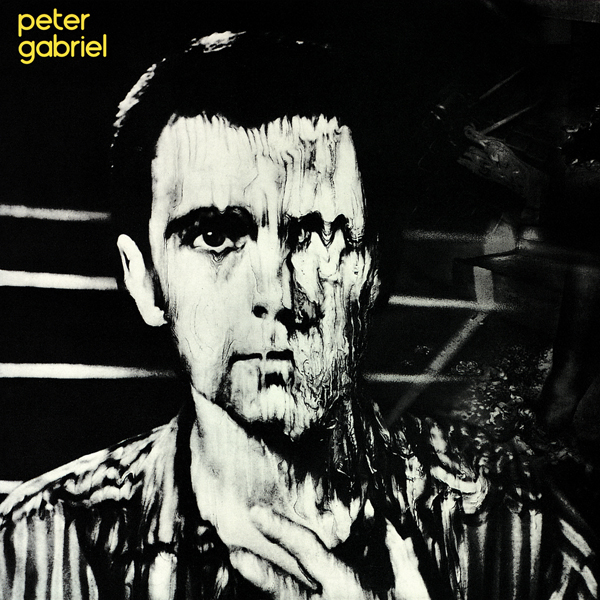
PeterGabriel: III (Melt) (1980).
Phil Collins: Face Value (1981).
HOPE: So…I think Genesis got better once Peter Gabriel quit the band in 1975. Significantly better. Once detached from the confines of Gabriel’s cryptic conceptual costumed creations, the melodic impulses of the remaining band members, Mike Rutherford, Tony Banks, Phil Collins and Steve Hackett (he until 1977) were finally able to run unencumbered and free. Based on my “keen” observation over the years, where a person stands in the Gabriel era vs. Collins era is generally determined by their age and gender. Hence as a wistful, daydreamin’, crushed out teen girl, I was all about the latter day version of the band—aka the Phil years—that ran from 1976-83.
I should mention that I lusted after Phil Collins. I had a magazine photo of him cooing into a mike with his eyes closed whilst sporting a Vancouver Canucks hockey jersey pinned to my wall. I thought he was a total babe. I know how weird and f-d up that sounds but we’re all friends here. And my adoration went well beyond merely gazing at my pin-up “boy”, oh yes it did. My sketchbooks from the time are filled to the brim with overly flattering pencil drawings of rakish, romantic Phils.
But to be clear, the music is what drew me in and to my ears, the two albums released in 1980-81 Duke and Abacab mark the dual pinnacle-peak-high points of the band’s entire discography. When these albums were released, there was a bit of bitching from purists about their overt poppiness and brazen radio-friendly vibes, especially in regards to Duke’s “Misunderstanding” and the Phil dictated-curated horn-fest of Abacab’s “No Reply At All.” But to my ears, shedding the indulgent, fantastical fairytale-concept album tendencies of the Gabriel years and replacing them with romantic, lovelorn, intrinsically weird but gorgeous pop songs was progress. Goodbye freaking “The Return of the Giant Hogweed,” hello anthemic animal “Turn It On Again” (now that’s progress!). I still adore both albums, but I want to call out “Keep It Dark” and “Like It Or Not” from Abacab and “Misunderstanding” from Duke in particular; it’s been 40 years since I met them and they still completely own my heart.

A drawing of Phil Collins by teen Hope. Fancy a stroll on my estate luv?
MATTHEW: Genesis was better after Gabriel left? In some circles, Hope, those are fighting words. But I’m with you on this. Sure, there’s much to appreciate in the first six albums (1969-74), and the later albums (1986-97) have their virtues. But for me they all pale compared to the glorious middle six albums (1976-83), of which Wind & Wuthering and Duke are my favorite. There’s been much written on the band’s conscious decision to shift from ‘70s prog rock to ‘80s pop rock, alienating many old fans but gaining millions of new ones—with the great leap being the jump from Duke to Abacab. To my ears, however, the transition is more gradual through this middle-six period. And that may be why Duke appeals so much: it has a foot in each genre; it’s the sound of a band incredibly accomplished yet still reaching for more.It is also a sibling to the Collins classic, Face Value, with which it shares a track and other well-known elements. Your teen crush on Phil is endearingly hilarious, Hope, and although I can’t claim the same, I certainly fell hard for his debut solo album. From start to finish, I loved it then and still do. Among my school friends in ‘81, the album created a division between devotees of Face and those who insisted Peter Gabriel’s third eponymous album, released nine months earlier, was better. Popularly known as Melt, the album was—and remains—a high point of Gabriel’s career. It was also the first time Collins used the gated drum sound (yes, Phil drummed on a few tracks for his old band mate, and his sticks are the very first thing you hear on Melt); that sound was soon made famous by “In the Air Tonight” (the opener to Face, offered and rejected as a Duke song). If you’re our age, you can easily imagine how my friends and I made and remade Reconstructed Genesis mixtapes, trying to find the perfect Face-Melt and Melt-Face-Duke-Abacab hybrids. Inevitably, we concluded the four were already the perfectly crafted corners of an endlessly captivating musical square. (Yes, we know Rutherford also released a solo album in 1980.)
HOPE: I loved Face Value! I was also so firmly ensconced on the Phil side of the fence when the album was released that it didn’t even occur to me to listen to Melt. I sensed it was cooler to be into Gabriel, I mean he was reverentially referred to as “Gabriel” by the press and music nerds alike, like he was a genre unto himself. But what Phil was serving up was far more edible to me. I rarely listen to the whole Face much at this point. I just stick with a handful of faves. I still especially love the demo-ish bouncing ball that is “I’m Not Moving,” the b-side to the album’s eternally fab first single “I Missed Again” which, as such, got played to death in my eagerness to get my money’s worth of the whole 7”. And I do quite like Phil’s horn-infused redux of Duke track “Behind The Lines,” as well as upbeat sweetheart “Thunder and Lightning.” And while I respect the cult of “In The Air Tonight,” these days I prefer the solo live version of the song on 1981’s Secret Policeman’s Other Ball compilation album, which also features a wonderful take on Face’s “The Roof Is Leaking,” with Phil play-acting the American rustic pioneer trying to survive to perfection (listen here). (P.S. I really like Rutherford’s 1980 solo album Smallcreep’s Day, but side one is taken up by a 7-song suite that lasts 25 minutes, and the nerdom required to appreciate and sit through that is damn hefty.)

Roxy Music, Flesh & Blood (1981).
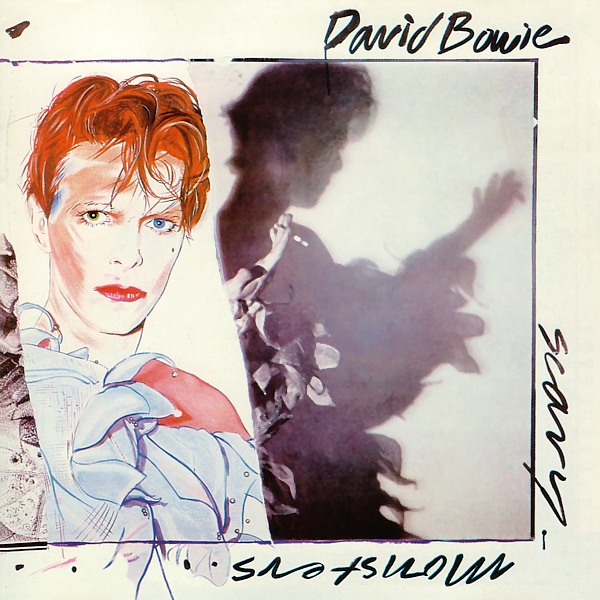
David Bowie, Scary Monsters (and Super Creeps) (1980).
MATTHEW: Our feelings about a band and its catalogue—which albums we love more, which ones we tend to play less or forget—are no doubt influenced by commercial and critical success or failure. But I agree with you, Hope, that a more significant factor may be personal to us (especially us as teenagers): the moment when we discovered a band, when their music clicked with us, when a particular album struck a chord (as it were). For example, I had been a little young for the first phase of Roxy Music (1972-75; I liked the singles but found the albums a little inaccessible). But I was converted by Manifesto (1979), and Flesh and Blood made me a fanatic. It was a #1 smash in the UK that summer, a soundtrack for the season, one that I also played all through the school year that followed—doing schoolwork to it, falling asleep to it, making tapes of it for girls (yes, its smooth, silky charm struck me as a seduction tool—and I wasn’t wrong, albeit mostly in my dreams). The dismissal of second phase Roxy (1979-82) by critics only made me love F & B more, and I’ve always adored it even over its yet-smoother sequel, Avalon, which the critics conceded wasn’t half bad (its critical reputation has continued to grow). Thanks to F & B, I’ve been addicted to Bryan Ferry’s croon ever since.
HOPE: I secretly like coming in at the “wrong place” in an artist’s discography, going down the road less travelled because you don’t know any better…or in this case, when opportunity knocks. I met Roxy’s Flesh and Blood in the Record World bargain bin where a year or so after its initial release there were fat stacks of it at the insanely cheap price of $1.99. It was totally worth it. “Oh Yeah” is just so infectiously gorgeous, as are “Same Old Scene” and the title track. Also, “seduction tool”…you were one classy lad Matthew.
MATTHEW: As David Bowie liked to say (with a mockney accent), “Oh, you don’t know the half of it!”
We are so fickle, as fans, as listeners. Entering the ‘80s, I was a follower of numerous top-selling artists who had emerged in the ‘60s and ‘70s, and whose albums on vinyl or cassette were heavily represented in my small but rapidly expanding collection. I’m thinking of Elton John, Paul McCartney, Paul Simon, Bruce Springsteen, Billy Joel, Foreigner, and Queen. They all released albums in 1980-81, and some I liked a lot (The Game and One-Trick Pony could well have made my short list), some I grew to appreciate much later (The River), some wore thin quickly (4 and Glass Houses), some had one good side and one that I never played (21 at 33), and some helped nudge me away from an artist for many years (McCartney II; see here for Hope and my blog on all the Macca solo albums). And then there was John Lennon’s Double Fantasy, which I felt obliged to like but actually seldom played. But even if I didn’t completely ignore those artists (at least not yet), I ceased to be as enamored of them as I had been just a year or two earlier. If I played them at all, I was far more likely to play an older album; they were no longer at the top of the vinyl pile and at the forefront of my chatter about music with my pals. What has this to do with David Bowie? He was, of course, an exception.
Bowie was a god in my home, worshipped by my sister from childhood. There was Bowie, and then there were all the other musicians in the world. Likewise at school, it was ok to have opinions about bands (after all, we lived to argue about music), but with respect to Bowie, merely “really good” was the most critical position allowed. Until Lodger. I defended the so-called third Berlin Trilogy album. But it seemed to many to reveal that Bowie was a fallible mortal after all. Then, a year later, came Scary Monsters. And a monster it was. It was heard everywhere. In Britain, the album and “Ashes to Ashes” were both #1, and “Fashion” was #5 but felt like the biggest song on the album—as if it was pointing the way forward to something huge (which it was: the entire UK New Wave and New Romantic wave that would flood the UK and then swamp the US charts). It’s a coherent pop album that rocks. It showcases Bowie’s songwriting and singing skills, as well as some perfect guest choices (Robert Fripp’s guitar!). The best Bowie albums felt ahead of their time, directing the future, not merely reacting to the moment. On those grounds, this is one of his best (for me, top five).
HOPE: Oh my God, can I just give a quick nod of approval regarding Paul Simon’s One Trick Pony, if only because it contains my all-time favorite song of his, the heated and lonely prayer that is “How the Heart Approaches What It Yearns”?! Anyway, I did not purchase Bowie’s Scary Monsters until years after it was released because, and this is criminal, I didn’t really get into him until around 1983 (heathen!). And while I liked “Ashes To Ashes,” I wasn’t quite intrigued enough to fork out for the single either (though I now believe it to be brilliant). Truth be told, I don’t really like Scary Monsters, it’s too jagged and anxious and just not melodic and romantic enough for me. I prefer David’s pop-glam-soul stylings. I was and always will be a Young Americans kind of gal.
MATTHEW: I get that. I have no patience with the haters of Let’s Dance. Slick-pop Bowie isn’t worse than rock-pop Bowie, just different. I even like Tonight. A lot. I listen to it far more than, say, Aladdin Sane; just as I listen to Duke more than early Genesis; and just as I listen to Some Girls and Tattoo You more than Exile on Main Street or any of its predecessors. Why? Partly because I’m a pop kid at heart, and partly because of personal-age timing—which is what this blog is ultimately about, right?

The Rolling Stones: Tattoo You (1981).
HOPE: Okay, so I had a huge crush on this girl in my art class, who in perfect rom-com style symmetry was my main competition for teacherly praise. Unfortunately it was 1980 and at that point in history it wasn’t 100% cool to be open about these sorts of (queer) feelings if you were a kid growing up in conservative leaning suburban environs. Plus I was a shy loser so like no, it was my total personal secret. Of course, as the heart is stronger than the head, there was some seriously passive aggressive “pursuit” happening anyway. How do you get close to your crush if you are a pop nerd? You find out which bands they like, get some albums and then “casually” initiate conversation about said bands. We were already reasonably friendly, meaning she was genuinely nice to my nerd arse and as complimentary about my work as I was of hers (she did this one pencil drawing of Jack Nicholson that was so ridiculously good that I still regard as one of the finest pieces of art I’ve ever seen and rank it right up there with Géricault’s “Raft Of The Medusa”). Anyway, she loved the Stones. Though I owned a few albums, at that point I was mostly indifferent (Beatle girl here). Then in 1981 the stars aligned; the same time I was liking the girl, the Stones released Tattoo You, arguably their last great album. And off to the record store I ran. And surprise, surprise, I really liked it. The eerie and gorgeous “Heaven,” the silly drawl of “Tops,” and the wondrous “Waiting On A Friend” (still wanna marry that Sonny Rollins sax solo), all were just so damn good. Right, so there was a back room in the art department. It was sort of a storage area but was off-limits and locked most of the time. It had a dirt floor. We weren’t supposed to go in there but one day it was open…and so my crush and I snuck in to have a look. While I had no intention of making a move I did cease the opportunity to bond. As we were fledgling artists in a room full of art supplies it was clear what needed to happen. We would paint our names on the blank cement wall of the secret room for posterity.
I boldly got some paint and made the first move. I painted out in big letters “Rolling Stones” which was basically my way of saying “I love you” without actually saying it. She then shyly took the brush and added “gather no moss,” which, okay, was a clever twist on my desperate attempt at kissing up to her and maybe her own way of impressing me. We then each wrote our names (or was it our initials, can’t recall) and the year “1982” (yeah, it was the year after). Bonded forever (tattoo you baby!) or so I thought. I remember writing in her yearbook soon after “I enjoyed vandalizing the storage room with you !” adding that her future success in the art world was, wait for it “just a shot away” ( the fabled lyric from “Gimme Shelter”). Jeezus, did I work that Stones muscle hard. Anyway, I believed this was the beginning of a beautiful love story (start me up!) but alas it was not to be. We went to the movies once soon after, me with delusions of “forbidden” romance, her with, well, I don’t know. Sadly she didn’t return my calls after this one excursion so, yeah, I was forced to move on (“she’s a mean, mean machine”). 40+ years later, I do wonder if that graffiti is still there, I mean I hope it is. Hey, you still awake? Anyway this album is completely intertwined with that ridiculous memory and I still think it’s sloppy-gorgeous and play it all the time. It continues to be a gift and because of that I both forgive and thank my wannabe dream girl.
MATTHEW: I really hope that graffiti is still there (and that the art-class girl went on to a happy life). I too was in the Beatles camp as a kid, enjoying Stones hits but failing to appreciate the albums until I was older (when they’d stopped making good ones). I had recorded Some Girls and Tattoo You onto the same cassette (Emotional Rescue lost out, no idea why), played it when I was hanging out with Stones fans, and viewed the two as equal (rejecting the claim, then and now, that Tattoo was inferior because it comprised “leftovers” from Rescue and earlier). Then, many years later, I heard “Slave” again, and it blew me away. What a bass line! What a brilliant, hypnotic song! It led me back to the album, and to the band, which I enjoy now in a way I didn’t at the time. (Tattoo You is re-issued in October in six different format packages.)


The Police: Zenyatta Mondatta (1980); Ghost in The Machine (1981).
Dire Straits: Making Movies (1980).
MATTHEW: If Genesis and the Stones were long-established British bands who seemed to go charging into the ‘80s (and surely we could not have known how one would turn pop with wild success, then implode, while the other would settle into a kind of stately mediocrity for another four decades and counting), then bands like The Police and Dire Straits were British bands who seemed to be defining rock at the turn of the ‘80s. Both entered 1980 with two hit albums under their belts (although Sting’s band was bigger, especially in the US, than Mark Knopfler’s—whose stratospheric international success would come after Sting had gone solo). In Britain, these albums and their hit singles were inescapable in 1980-81. If I wasn’t playing them myself, I could hear them coming from some other boy’s room at school (our “rooms” were divided by thin wooden walls that stopped before they reached the ceiling, producing a cacophony of competing rock and pop every afternoon after classes ended).
HOPE: In keeping with most of my favorite albums of the 80-81 era, I was somewhat in love with the artist(s) responsible, in this case Sting (duh). I bought two copies of every magazine he and the band were in so I could cut one up and affix the best pics in a fat scrapbook that I would look at while the records played ( You did this too, right Matthew?). Okay, so while we can all agree that The Police never made a bad album, if I were ranking the five studio albums Zenyatta would come in last for me. I played it constantly when it was new but the two mega singles, “Don’t Stand So Close” and “ De Do Do” really did, and still do, dwarf the rest of the tracks. I should add that my favorite song on the album back in the day was the chirpy-acerbic “Canary In A Coalmine” and whatever charm it initially held for me has completely worn off.
While I liked Zenyatta straight away, I wasn’t so sure about the album that followed. The first time I listened to Ghost in The Machine I was seriously disappointed. It wasn’t melodic enough for the sonically immature sugar addict (me). Oh how I’d I looooved “Every Little Thing She Does Is Magic,” the album’s biggest single, but it turned out to be the poppiest confection on the whole thing. It had clearly been used Hansel and Gretel style to get me in the house and I felt cheated. Ghost was, as a whole, a pretty dark, cynical and somber affair which would have been fine had there been monstrous hooks attached to its bleak world view. And so while I did end up playing it pretty regularly—it was still The Police after all—I was never emotionally invested.
Fast forward 40 years later and what the holy hell, it is now my absolute favorite Police album. It appears that age has made my aural palate more sophisticated (sort of) meaning unlike teenage me, fat candied hooks are no longer mandatory in order for me to enjoy something (mostly). And in the context of all Police albums, the obligatory ego-sating tracks offered up by Andy Summers and Stewart Copeland are by far their finest, especially the former’s “Omegaman,” a gorgeous tornado that is arguably one of the best Police songs ever period. Fun fact: I saw them twice (!) on the Ghost tour, purchased concert tees with the album cover logo and had no idea the red graphic represented-depicted the bands faces until years later because I am stupid.

The LED lights depict the faces of The Police. For years I thought they represented a sideways view of each band member holding his respective instrument. Tragic.
MATTHEW: For me, The Police never made a bad album, but nor did they make a perfect one. All six (1978-83) were close to each other in quality, two-thirds of the tracks excellent, a third just ok. I too prefer Ghost over Zenyatta, Hope, but only just. Some will find this outrageous—or maybe just too obvious—but I always thought Sting’s contributions were superior to the tracks contributed by Summer and Copeland; I even made mixtapes that comprised the best Sting songs on Police records, giving them names like Regatta Mondatta. For that reason, these Police albums weren’t on my final short list. Whereas Making Movies was high on that list, because I was a massive fan of the first four Dire Straits albums (1978-82). I won’t say more here about Making Movies, as Hope and I have rated all the Straits albums in a separate blog on PuR, which you can read here.
HOPE: As for Making Movies, while I was enamored with the groovy weirdness of “Skateaway” (both the song and its super foxy video), it took a minute for me to appreciate it as a whole. And apart from a couple of filler tracks, it’s damn good. Still despite its wistful horniness, something I could sadly relate to in 1980, it played no role in my life until the following decade. I think I subconsciously considered it to be a record for boys, if that makes sense. There was more instrumental noodling than pop-ified soulful desperation. And back then, it was all about the latter (which all the stuff we’re writing about here has made painfully obvious to me).


Daryl Hall & John Oates: Voices (1980); Private Eyes (1981).
HOPE: I’ve already spilled a lot of words regarding my love for H & O within this website you are bravely perusing right now. In 2020 I wrote a piece called Maneater: A Love Story, which you can read here, where I rated all their albums, exulted the achievements of John Oates and attached homoerotic subtext to assorted songs and performances in an extremely cringeworthy fashion. Upon reading it, two members of a Hall & Oates Facebook group commented that I was “long-winded” which I’ve decided to spin into the more positive characterization of “passionate” because the piece was fueled by years of pent-up emotion so you know, I had a lot of stuff to say (insert wind sound here). Anyway, within that piece, I wrote a whole lot about both Voices and Private Eyes which respectively represent the bronze and gold medalists of the entire H & O discography (with 1982’s H2O being the silver recipient). I love every jittery-electro-new wave-soulful-anxious-plush pop bone of both albums and still listen to them both on a regular basis. I should clarify, these albums are in no way “twins.” Voices is a leaner, weirder and art-ier affair, a mix of infectious singles and FM radio ready bizarro deep cuts, while Private Eyes is a slick, shiny, neon hook factory, home to many a luscious chorus but with a bit less quirk than its predecessor. As cartoonish as they can seem (“because your kiss is on my list”), they still to this day reduce me to a daydreamin’, besotted 16-year-old every time I hear even a smidgeon of either of them.
MATTHEW: I’ve listened to a lot of Hall & Oates in the last year, Hope, thanks to your “long-winded” (no!) piece on PuR, and have come to appreciate their unique brand of witty, quirky, catchy, American-variant New Wave pop. When they get the formula right—as they do on the eight US hit singles on these two albums—they really get it right (the classic H&O combination of slick sound and slightly comic lyrics on “I Can’t Go For That (No Can Do)” never gets old). But that was partly why I never got deeply into these albums. I still have the tape I made of Private Eyes (yes, it’s the best of these two) and H2O, but I am pretty sure I transferred the singles to mixtapes and played those more, largely ignoring the albums. Another reason why my connection to these albums was superficial: my friends and I weren’t quite sure what to make of them. There seemed to be some sort of inside joke to the relationship between Daryl and John, conveyed in the songs perhaps, but we weren’t getting it. So, if I was going to take a break from English synth pop and play North American pop-rock, I was more likely to listen to the awesome A side of REO Speedwagon’s Hi Infidelity (1980) or to Journey’s Escape (1981)—both sledgehammer rock albums without a hint of subtle wit or elusive inside jokes.
HOPE: And that’s the thing, right? Girls were more into Hall & Oates than boys were. They weren’t meat and potatoes “rocking,” their double entendres tended to be a bit clever and Daryl was exceedingly pretty, hence they were regarded with suspicion …meaning if you were a guy who was into them, you were suspect too. And I get it, but that suspicion was a crucial part of what made the Hall & Oates engine run as hot as it did for us chicks, especially me (I wrote about these “feelings” in painful detail in my aforementioned essay too because, you know, we have no secrets here). For the record I was not remotely charmed by REO…but I did have a major Journey epiphany post 1981 which you can read about here. Honestly, I kind of love them now. Yeah, I said it.

Christopher Cross: Christopher Cross (1979).
MATTHEW: As this came out in December of ‘79, it’s impact was 1980-81 (beating another end-of-‘79 release, The Wall, for Album of the Year Grammy in ‘81). I loved “Ride Like the Wind” enough to buy the album on cassette. But what really got me into it—or rather, who—was my girlfriend’s Spanish aunt. We visited her in Madrid in the summer of 1980, when she flogged her cassette of the album without mercy, joyfully singing along in her Madrid accent. That should have made me hate it, but to my 16-year-old mind, the aunt was incredibly hot, and my crush spilled over onto the record. I’ve never stopped listening to it, and I think it holds up very well—thanks in part to the superlative skill of the two dozen musicians who contributed to it. My crush fizzled fast, but I still fancy the slick Christopher Cross.
HOPE: Right, I am never not going to think of “hot Spanish aunt” anytime I ever hear this again now, ha…which based on the frequency with which I listen to this thing will be freakin’ tomorrow. I love this shiny, sleek. impeccably performed piece of romantic West Coast candy and Cross’s mellifluous, bellowing voice beyond all reason. I too, have never stopped playing this album, I mean, there is not one bad song on it. Plus he duets with late cult hero Valerie Carter on “Spinning” which is beyond sublime to me. And if that weren’t enough, in an interview with Songfacts, Cross said “Ride Like The Wind” was based on the “big jam in the middle of Paul McCartney’s ‘Nineteen Hundred And Eighty Five’ (from 1973’s Band On The Run album)”…and that he wrote the lyrics whilst tripping on acid during a drive from Houston to Austin, Texas…all of which I can totally get behind.
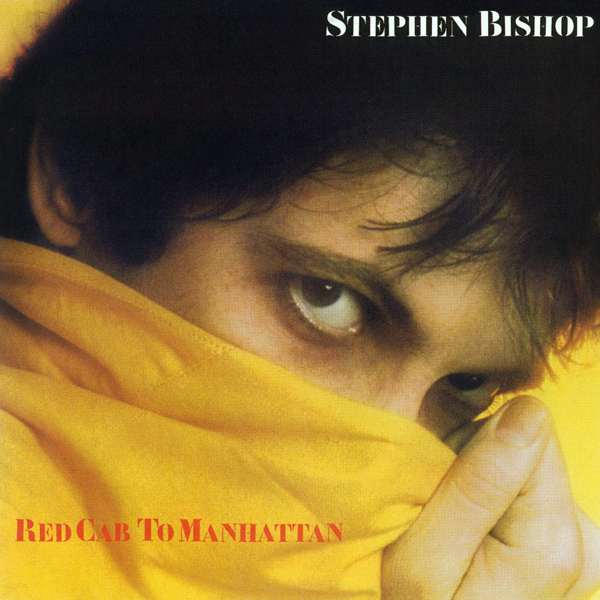
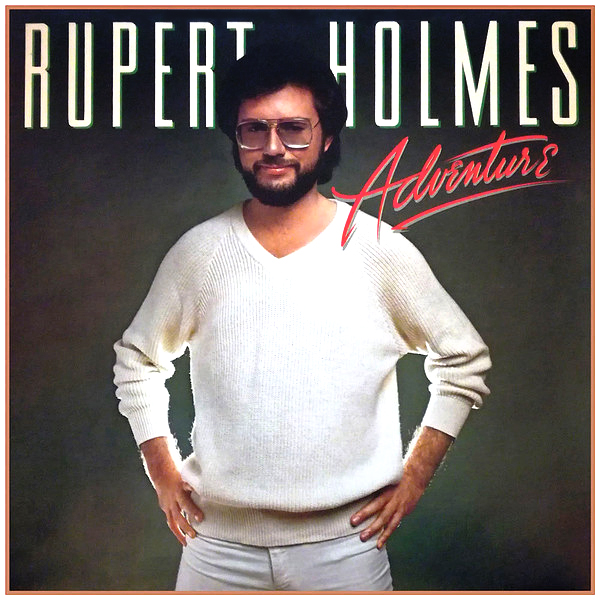

Stephen Bishop: Red Cab To Manhattan (1980).
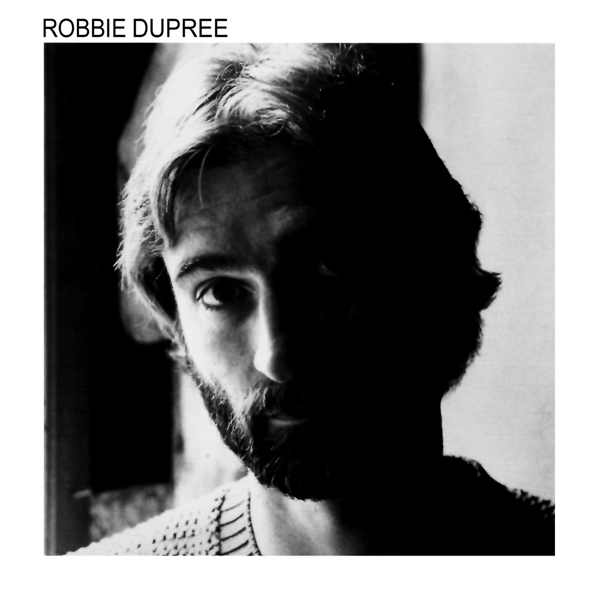
Robbie Dupree: Robbie Dupree (1980).
Rupert Holmes: Adventure (1980).
Marty Balin: Balin (1981).
HOPE: I was a total sucker for the melodic-bearded-straight boy-slickness that dominated the U.S. Top 40 in 1980-81. Technically this stuff falls into the nerdy sub-genre of West Coast, but these days it’s more commonly referred to as “Yacht Rock” (read why I hate that characterization here). Stephen Bishop: Red Cab To Manhattan, Robbie Dupree: S/T, Rupert Holmes: Adventure, and Marty Balin (of Jefferson Airplane/Starship): Balin all spent substantial amounts of time lodged on my turntable. While these albums weren’t technically built for teenage girl consumption, they all did some serious winking in that direction. In Marty Balin’s video for his Top ten hit “Hearts” (here), it’s abundantly clear he wants ladies of all ages to covet his mature rock elder statesman arse (literally). In what was now officially a disturbing trend, I drew a pencil portrait of the Balin album sleeve to honor my “love.” I wish to God I still had it, if only to shake my head and wonder what the holy hell I was thinking.
All four of these albums not only feature a fair amount of sex (rear entry metaphors, frigidity cures, no I’m not making this up) but are rife with some seriously quirky storylines (prison, murder, suicide). There are also, unsurprisingly, a lot of allusions to women who have yet to graduate from their respective educational institutions. And if that weren’t enough, all of these fantastical, scary notions are wrapped in the most melodic wrapping paper imaginable (hooks, hooks, hooks) with nary a rough edge to be seen. Of the four albums, Bishop and Holmes are by far the weirdest and most musically adventurous while Dupree and Balin serve up more traditional sounds (as well as supply a bit more filler). I should note that my absolute favorite track out of everything on offer here is Dupree’s wistful pop horndog and former top 20 hit “Hot Rod Hearts” which I feel is necessary to share a verse of:
Schoolgirl brushes her hair back
Blue jeans can’t hide the bare facts
Bad boy knows where to find her
Runs the light, sneaks up behind her
Yeah, you get it.
MATTHEW: When you told me these four were on your list, Hope, I listened to them all, expecting one or two to ring a bell. After all, I was vaguely familiar with each of them, I could name (and hum) each one’s biggest hit, and I was (and still am) by no means averse to a little Yacht—I mean, West Coast. But I can honestly say I’d never heard these albums before. Considering I was in school in England, that’s not surprising, as these four had a hell of a time getting airplay or sales in the UK. As far as I can tell, no Balin or Bishop or Dupree single or album charted there. Ever. Rupert Holmes had more success in the UK: his huge 1979 US hits, “Escape” and “Him,” also went Top 40 in the UK; and their parent album, Partners in Crime, did well enough that I had a tape of it. But its follow-up, Adventure, was as invisible in Britain as all the records by those other three artists. So, listening now, what do I think? In terms of their quirkiness, both lyrical and musical, I’d rank them Holmes, Bishop, Dupree, Balin. And in terms of listenability, the same. Because although there’s a gem or two on each album (as you say, Hope, hooks galore, and lots of smoothness), it’s the odd combination of moments of sweetness with moments of (sometimes creepy) sex-obsession that ultimately make these entertaining. Perhaps I favor Holmes over the others because I’m familiar with Partners in Crime, but he seems to be in a superior category of inventive songwriting. I doubt I’ll spend much future time with Balin or Bishop or Dupree, but Holmes deserves regular revisiting—and not just Adventure but the full 1974-81 run of seven albums ending with Full Circle (1981) (which didn’t make your short list, Hope?).
HOPE: Sadly, I’m not a fan of Holmes’s Full Circle. It totally missed the bullseye tune-wise for me which is surprising considering the timeline. Still, I do love its f-ing terrifying album cover (see here).


James Taylor: Dad Loves His Work (1981).
Jackson Browne: Hold Out (1980).
HOPE: Dad Loves His Work is technically JT’s divorce album (he and Carly Simon officially separated a few months after its release) but at least half the tracks fall into the trademark JT “aw shucks” storytellin’ category so it’s not remotely a pity party. I admit I know this album backward and forward but it’s only because like anyone who came of age pre-CD and streaming, I was too lazy to get up to move the needle and skip songs I didn’t like while the record was on the turntable back in the day. And so I would just let it play through hence I knew the lesser lights as well as the shooting stars. And to be frank I have no patience for the lesser lights at this stage of my life. I really only listen to the album’s most romantic and optimistic confection “Believe It Or Not” and harmony-fest “Hard Times” on a regular basis. They still rule. I also kinda like “Summer’s Here” which is basically a pastiche of a JT song with its allusions to flip flops, cold beer and swimming pools (you can say “yeegh” here, I totally get it). I think it just reminds me of my hazy childhood backyard (minus the pool, beer and flip flops) which is a good enough reason to play its corny ass.
MATTHEW: I do love that analysis: that in the vinyl age, we grew to like albums because we were too indolent to get up and shuffle in our flip-flops over to the turntable. Can you, dear reader, relate to that?! I certainly can.
I was a greatest-hits-only Taylor fan until Hourglass came out (I know, 1997, very late to the party), and soon after that I saw him play at Tanglewood, and I was blown away. I went back through his whole catalogue, discovering real gems and a few clunkers—like this one. I always loved “Her Town Too,” but never connected to the rest of it. And when I realized what the album title meant, I thought, “what a wanker!” Talk about weaponizing the children. Oh right, so Carly didn’t love her work too? As for Jackson Browne: “Stay” (from the previous album, Running on Empty) had been his first (and still his only) Top 20 hit single in the UK. I loved it and the album too (which I picked up during a summer in the US; it was not a hit in Britain). But Hold Out failed to grab me; I suspect I gave it only one or two listens and moved on (my loss?). (By the way, I had tickets to see Taylor and Browne play in New Orleans together in the spring of 2020. Thanks, pandemic, for blowing that, you viral bastard.)
HOPE: I’m not going to defend that album title! Right, so Jackson Browne, yet another hot boy who caught my eye (I was easy pickings back then). Honestly it took me years to really appreciate Browne’s Hold Out, meaning I filed it away pretty quickly after buying it. Yup, it turned out the album didn’t sound as good in my teenage bedroom as it did in the record store at the mall (wasn’t that always the way?). Mind you I wasn’t alone in my disappointment as the reviews weren’t all that kind either, with Rolling Stone’s characterizing it as “the weakest record he’s ever made.” Despite that it became his first full length to reach number one (and wasn’t that also always the way?). But I was aligned with the critics on this one, thought it sucked and filed it away in my little record cabinet. Anyway, at some point in the ‘90s, I decided to revisit this “weakling” called Hold Out, which was still in pristine condition from lack of human contact…and what the hell, I loved it. It took fifteen freakin’ years for me to finally appreciate its lustrous ruminations on lost love, lost friends and lost souls and the oddly upbeat arrangements they were swathed in. Hold Out shouldn’t technically qualify as anyone’s favorite JB album especially as the five that preceded it were pretty exquisite. It consists of seven songs that, truth be told, all sound kind of similar. It’s awash in that very particular late ‘70s LA studio sheen that to some might seem a bit, I don’t know, ball-less. Yet it is unquestionably my most beloved Browne-work. To quote a line from one of the album’s two (!) title tracks, “I love you. Just look at yourself, I mean what else would I do?”

Kenny Loggins: Alive (1980).
HOPE: My local library had a vinyl section where you could check albums out just like books. I could not afford this two LP behemoth at the time of release and so would regularly borrow it. Yes world, you could keep your Live At Leeds, At Budokan’s, and Fillmore East’s, none of them held my attention the way this slick, insidious bearded monster of an album did. For one thing it really brought home Kenny’s heartthrob status, something I’d only been tangentially aware of until then. I mean I thought he was hot ( someone please hose teen me down already) but to hear real life ladies actually screaming for him was inexplicably revelatory. And make no mistake, Kenny is well aware of his ‘hot troubadour’ status and works it hard throughout Alive, deliberately infusing every ballad with breathy wonder and supremely calculated moments of falsetto (I’m onto you Loggins, you manipulative and foxy bastard). This album oozes a very particular West Coast energy, like a light cloud of weed smoke wafting through a breezy arena, and is full of that very particular pin-up romance nerdy teen girls like me were/are extremely vulnerable to…and I still f-ing love it.
MATTHEW: Listening to this album for the first time is like walking into a room full of people, someone’s telling a story that is making everyone laugh, and you have no idea what’s going on. But you really want in on the fun. Live albums were big business in the ‘70s (improved tech made them sound better, they were cheaper to make than most studio records, they helped bands meet contractual obligations, and they lured fans to gigs). The trick of the mix was to keep audience response audible without drowning out the music. In the end, it was hearing the sound of collective rapture that made those albums compelling—and that’s what drew me to David Live, Frampton Comes Alive!, Wings Over America, Live Killers, and that Bee Gees album (Here at Last…) about which you’ve written eloquently, Hope. So, although I missed Loggins’ Alive, hearing it now for the first time and recognizing only half the songs, I get it. Everyone in the room is laughing. And that makes me want to laugh too.


AC/DC: Back in Black (1980).
Pat Benatar: Crimes of Passion (1980); Precious Time (1981).
MATTHEW: Talking of seeing bands live . . . our first rock concerts, the ones we caught as teenagers, become woven into our still-developing brains. Regardless of how much we cared about those bands then or since, their music at that moment forever has some meaning. That, of course, is why I’ve made AC/DC and Pat Benatar an unlikely pair here. For reasons long forgotten, my first two rock concerts were these two artists, both in England in 1980.
AC/DC made albums for me and my friends. At least, that is what it seemed like to us, from High Voltage (released in the UK when I was 12) through Highway to Hell (out the year I turned 15). Not us specifically (we weren’t that deluded), but us as schoolboys, gleefully picking over the puerile lyrics, air-guitaring and mimicking Angus Young’s duckwalk up and down the school corridors; after all, we were already wearing more or less the same uniform he wore! Bon Scott’s death early in 1980 was a shock, as was his replacement by Brian Johnson and the release of a new album that summer. Too quick and too soon? Any such thoughts evaporated the minute we heard Back in Black. We couldn’t believe how good it was. It was one catchy riff and one arena-ready chorus after another. As for that concert: my younger sister and I took a train down to Southampton that November, and as we walked to the theatre the pubs started disgorging roaring drunk AC/DC fans, who climbed on—and then broke up—the flimsy chairs as soon as the opening bars of “Hells Bells” opened the show. I had expected a rock concert to be loud, but not quite that loud and full of such mayhem, and I hadn’t anticipated how bad it would smell.
HOPE: You will be thrilled to know that the smell was alive and well decades later (I’ll explain in a minute). In 1980, AC/DC were just a logo to me. I didn’t hate them, I was just kind of indifferent. I wasn’t interested in “rocking,” no, I was more into swooning like a lovesick cow over whomever, and AC/DC was not sonically suited to soundtracking my flowery fantasies. It wasn’t until the 21st century (yes, it really took that long) that I woke up to the infinite power of “Hells Bells” and came to appreciate all the dumb sweet horny sleaze that Angus and crew had to offer. My awakening/epiphany was the direct result of an AC/DC show I saw at Madison Square Garden in 2008 which to this day remains the loudest concert I have ever seen there. It was absolutely soul-rattling. Having to wear earplugs in an arena seems ludicrous but I literally had to, the sound was deafening. That night the volume, alcohol and mystery drugs worked seamlessly as one, generating the most physical mayhem amongst audience members I have ever witnessed at a show to this day. I saw multiple people “being sick”, involving lots of hair being held and innumerable backs being rubbed. There was literally an attendant walking around with a mop before and after the concert. Upon seeing this I naively asked my friends, “why are they mopping the floor right before the show, what’s there to clean up? Oh, okay.” I watched in amazement as a woman a few rows in front of us was taken out on a stretcher, while the band were playing, after she’d become incapacitated after partying just a little bit too hard. It was all very disorienting and disgusting and it totally smelled…but it was also awesome. The next day, with my ears still ringing I finally, finally bought Back In Black. I finally f-ing understood that AC/DC were in fact life.

AC/DC at MSG in 2008. Call 911. And go get a mop.
MATTHEW: Superb! I love that your 2008 concert experience wasn’t that far removed from my 1980 one. Different time and place, same riffs and odors. A year after that concert, AC/DC released For Those About to Rock, and I caught that tour in London. Neither the album nor the show were bad, but it wasn’t quite the same. I was 18 by then, and you know how much difference two teenage years can make.My memory is of seeing Benatar live in Reading in the 1979-80 school year. But I can find no record of her ever playing in Reading, and in fact prior to 1983 she only played two shows in the UK, both in London in 1980. So much for memory. That still makes Pat my first rock concert. And it explains why I don’t recall the audience (in retrospect, surely a tame bunch compared to the malodorous Mongol horde that were AC/DC fans). All I recall is the thrill of seeing Benatar up there in person, live, singing in real time, not on my record player! What made it all so good—the live show, the first three albums (of which Crimes of Passion was and still is, for me, the best)? Was it that Benatar was just so damn hot (like a less grubby version of Joan Jett, still sexy-tough but probably a little more polite)? Was it her voice (it seriously rocked but also had astonishing range; four octaves, I think)? Was it Neil Geraldo’s wailing guitar? Was it the Inka-temple-stone tightness of the rhythm section? I wasn’t sure back then, although whatever it was seemed less in evidence as her subsequent ‘80s albums became less rock and more pop. I did eventually feel guilty about my teenage lusting, especially after I read her autobiography and understood how much she battled the toxic sexism of industry executives. But it also became clear why the early albums were so compelling: the tension in the romance between Benatar and Geraldo was channeled into their writing, singing, and playing: what I was hearing in her voice and his guitar was a sonic mating ritual.
HOPE: Don’t feel guilty Matthew. If we’ve learned anything from this essay thus far it’s that teenagers, regardless of gender, are disgusting horndogs. I wasn’t really interested in Pat in ‘80-81 but that had less to do with her than it did with my preference for male artists at the time. I think I just had trouble relating to things entirely from a girl’s point of view at that stage and was still knee-deep in my cute boy rock star crushing years. Clearly someone had a little growing up to do. On top of that, I’d only ever regarded Pat as a “singles artist” (the most dismissive and inherently judgemental of all pop characterizations). But because they were on your list Matthew, I was inspired to listen to both Crimes Of Passion and Precious Time end to end for the first time in my life. I knew the singles of course but hearing them in the context of a whole record was ear-opening. Turns out that Crimes is a pretty great album! And its sinister and occasionally predatory AOR anthems “Treat Me Right”, “You Better Run” and “I’m Gonna Follow You” remain smokin’ hot. My affection for “Hell Is For Children” also has no bounds (hell, hell is for children !). As for Crimes, I love the top half of the album but think the quality falls off a cliff about halfway through.
MATTHEW: Sinister, indeed. “Hell is For Children” was too convincing. It gave me nightmares (and I mean that quite literally). But I still listen to it, and it still gives me chills. I also love how Benatar threw that energy into the cover of “Helter Skelter” on Precious Time (you’ll never convince me that it wasn’t this, not the Beatles original, that inspired the Siouxsie and the Banshees cover), and—even bolder—her cover of Kate Bush’s “Wuthering Heights” on Crimes of Passion. That might have seemed a foolhardy choice, and her rock-ballad treatment is certainly ham-fisted compared to the whimsical weirdness of the original. Yet I dug it and still do. When she calls Heathcliff her master, you know she’s just rope-a-doping him (nobody is Pat’s master).
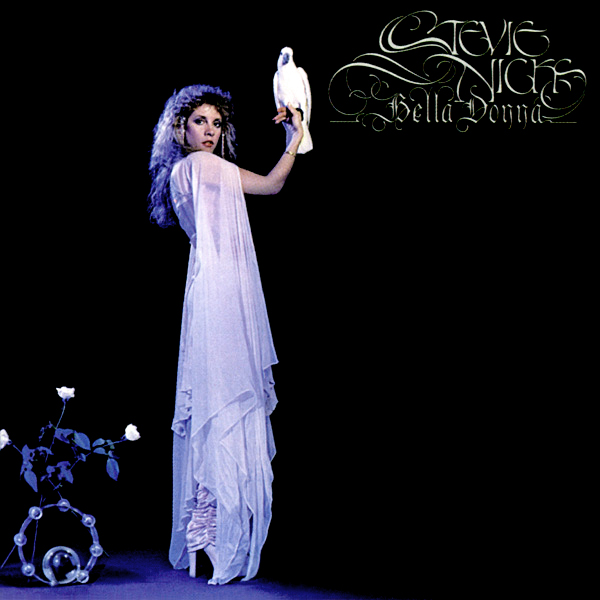

Stevie Nicks: Bella Donna (1981).
Kate Bush: Never For Ever (1980).
HOPE: Stevie’s best solo album? Yes. Home to a teeny bit ‘o filler? Well, yes. And honestly, I felt this way even back in the day but the good songs were so good that I was distracted by their magnificence and not as pained by the lesser lights. Half of this album is FM radio, dark and gorgeous goodness (title track, “Stop Draggin’ My Heart Around”, “Edge of Seventeen”, “How Still My Love” and the luscious, mystical ‘Outside The Rain”)…the other half is not of the same heartstopping ilk. The polarizing but unctious-sweet “Leather and Lace” aside, there are no masterful hooks or instantly imprinted instrumental flourishes among the rest of the tracks. But the good stuff is just unimpeachable and “Edge of Seventeen” can never be played too loudly.
MATTHEW: I agree that half of this is amazing, that those songs sound as good now as they ever did, that it is literally impossible to play “Edge of Seventeen” too loud, and that the rest of the album is just fine. But in ‘81, I taped the singles and let the album pass me by, not getting into it until two or three years later, when I was dating an American girl who was obsessed with Stevie. When that ended, I let Bella Donna drift away. You know those albums you love through someone else’s love for them? Somehow that slight sense of remoteness remains. I also think that whenever in ‘80-81 I felt like listening to an ethereal, otherworldly female artist, I was drawn to a younger, weirder, English one—who had been an object of much fascination (and not a little lust) since her arrival with two albums a few years earlier: Kate Bush. Never For Ever, her third LP, was #1 in the UK (her first four albums didn’t chart at all in the US), buoyed by three Top Twenty singles (also no-shows Stateside). Listening to it alongside Bella Donna, it is more dated, odder (closer to experimental pop than Stevie’s deliberately mainstream pop-rock, although not as experimental as Bush’s next album), but more brilliant. I’m a sucker for albums that save the best for last, and Never For Ever ends with two of the best songs ever by this extraordinary and eccentric talent. (Two fun facts: Never For Ever was the first UK #1 album by a female solo artist; and the Bush-Gabriel connection started here—she thanked him on Never For Ever for “opening the windows” and she appears on two Melt tracks.)
HOPE: Can I confess something pop musically shameful? Kate Bush didn’t officially enter my listening life until late in 1982. I’d seen her name in magazines but as you allude to Matthew, she wasn’t well-known in the U.S. at that stage. But get this, the first Kate track I ever heard in my entire life was the lynchpin of Never For Ever, the brilliant “Babooshka”! That was the song that cemented my fandom forever and ever “ya-ya”.
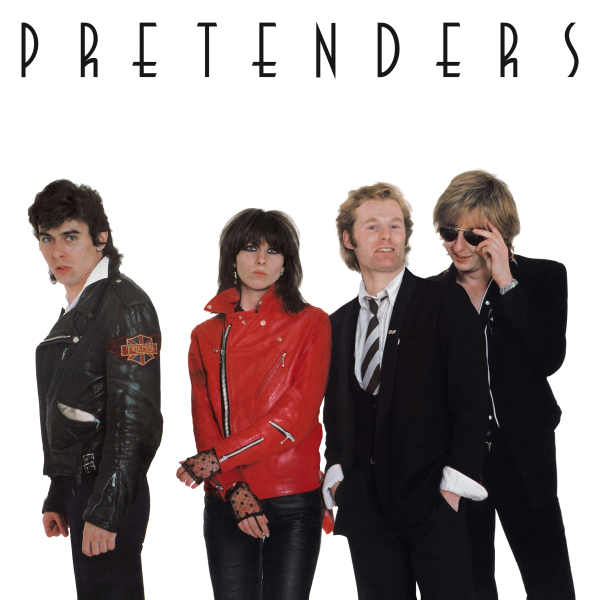

The Pretenders: Pretenders (1980); Pretenders II (1981).
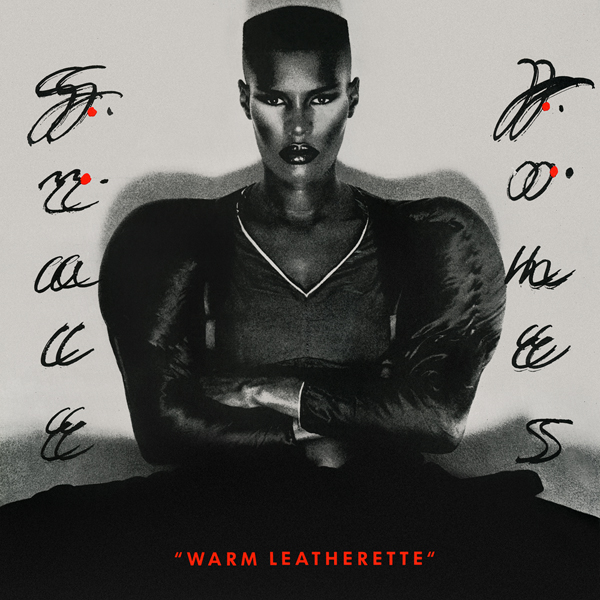
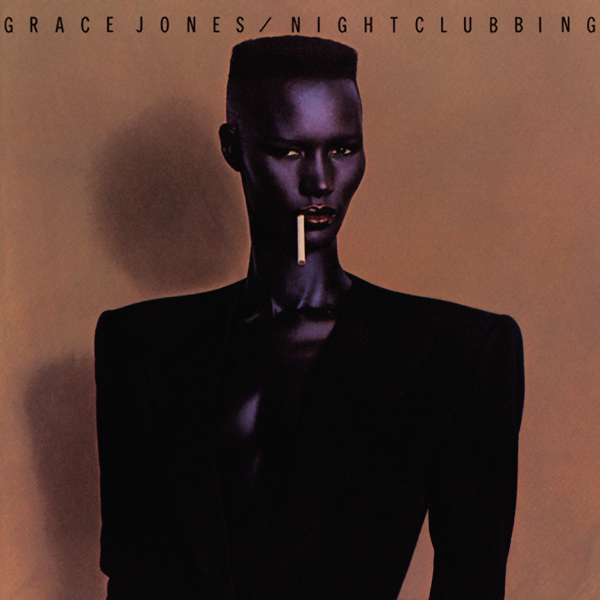
Grace Jones: Warm Leatherette (1980); Nightclubbing (1981).
MATTHEW: We are putting Grace Jones in with Chrissie Hynde’s band for the not-very-imaginative reason that they were female singers with tough images (like Benatar, and Debbie Harry—whose band’s 1980 Autoamerican did not make our short lists—and in contrast to the ethereal images of Nicks and Bush). Oh and Hynde’s “Private Life,” part of what makes Pretenders such a riveting debut album, was covered by Jones on Warm Leatherette, and was that album’s breakout single (top 20 in the UK). We are cheating a little here, as “Stop Your Sobbing,” “Kid,” and “Brass in Pocket” were all 1979 singles in the UK (the last of them #1); but the album didn’t come out until a few days before 1980 (it debuted at #1), when the US finally got the album and singles. Pretenders has justifiably been lauded ever since in lists of best albums of all time. In 1980, it was great catchy pop-rock, but—like Hynde herself—it had an edge that made it cool. I loved it, and still do. I can’t hear “Precious” without hearing a small dorm room crammed with teenage boys yelling “Fuck off!” when Chrissie yells it near the end of the song. For reasons long forgotten, I ignored Pretenders II when it came out, only learning to appreciate it when in 1986 I bought an old Ford station wagon in Los Angeles (my first car). The ‘70s boat with fake-wood side panels also had an in-dash 8-track, so my pal Brett E. gave me his box of old 8-track tapes; of the three that were still playable, Pretenders II was the best, and I grew to love it too (albeit not as much). Such are the random reasons why we ignore or adore albums.
HOPE: I should tell you that the thought of driving around LA in the ‘80s in a dodgy wood panelled station wagon with “Message Of Love” blaring out of the 8-track (ka-chunk) is a coming of age movie scene that I want to be a part of. Okay, so my younger brother was a huge Pretenders fan and unabashed Chrissie worshipper. One of the tenets of my personal pop rulebook was that whoever got to a band first was entitled to sole possession of that band for the foreseeable future. And so, as my brother got into them first in 1979, The Pretenders were essentially his property (as The Police were mine). I wish I were kidding but it’s true. I basically stood outside the gates until the mid-’80s, at which point he’d shifted his sonic allegiance to Black Flag. Once he’d left the fold, I bought both Pretenders and Pretenders II. They are both grand, but as II features my all-time fave “Day After Day,” gonna lean that way as far as preference. As the years have passed, I’ve become more and more enraptured by James Honeyman-Scott’s guitar lines on both albums, his lead on the aforementioned “Day After Day” in particular, which somehow manages to be both cacophonous and ravishingly gorgeous.
MATTHEW: Jones’s version of “Private Life” introduced me to her, and I embraced Warm Leatherette as a cool cult album (cult because the other singles flopped and the album didn’t break the Top 40), and a great covers album (especially Roxy’s “Love is a Drug” and Petty’s “Breakdown”). But it never quite transcended being just that—a covers album. Whereas Nightclubbing, despite also being mostly a collection of cover versions, felt like a Grace Jones record. And what a record! Side A sounds as fresh and gripping as it ever did, with the irresistible “Pull Up to the Bumper” (which still hits me like a happy pill) and Jones’s unbelievably groovy take on “Use Me” occupying the middle slots. Side B is almost as good, with Grace outdoing Piazzola on “Libertango” (a #1 single in Belgium!), outdoing Sting on “Demolition Man,” and ending with a sublime jazzy version of a Marianne Faithfull song. Jones would go on to have a big mid-’80s, and some of these songs would see renewed chart life on the hit compilation Island Life. (Did you ever lose a record, even one you loved? I’d no idea where my dinged-up, well flogged original copy of Nightclubbing went, so thanks to my mate Dan Z. for recently picking me up a vinyl copy, found in a thrift shop, for a few bucks!)
HOPE: The first Grace record I ever owned was the 1985 single of “Slave To The Rhythm,” which is what inspired me to explore the rest of the catalog, so yeah, late to the party. I like both Warm Leatherette and Nightclubbing but only in the smallest of small doses; which is to say, between the two I only ever listen to one song, namely her handsome version of “Breakdown”—which also happens to be one of the finest Tom Petty covers ever. I confess that my favorite Grace album is the Island Life hits compilation and yes I am a straight up dilettante bastard.
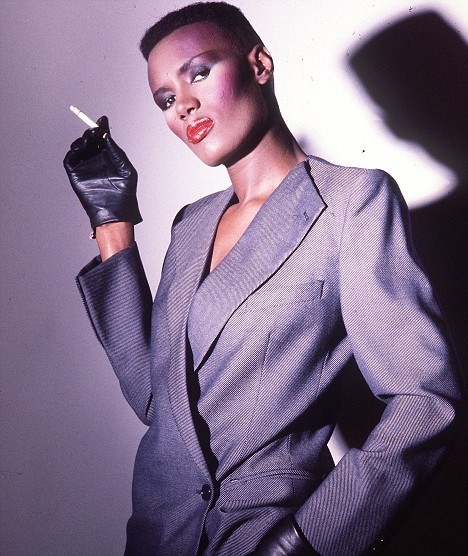
Please don’t be mad at me Grace.


George Benson: Give Me the Night (1980).
Imagination: Body Talk (1981).
HOPE: I know George Benson’s Give Me the Night, a whole album of soul-jazz for grown people, by heart. Now while I get why teen me would love the sleek, discofied title track, I’m not sure what attracted me to the rest. I rarely if ever listen to this thing these days, like maybe once a year if that, yet weirdly, creepily, there are bits of it that haunt my mind on a regular basis. The eerie opening in “Star of a Story (X)”, the nauseatingly cloying lyrics of “Love Dance” (‘we loved, we slept, we left the lights on’), the sing-songy chorus of “Love x Love” appear in my head with alarming frequency. I think I just played this thing so damn much that its loved up contents have become permanently embedded in my brain circuitry. Insidious.
MATTHEW: Around this time (my mid-teens), I was getting into both R&B and jazz (especially the fusion jazz of the turn of the ‘80s), so the way Benson had a foot in each genre really appealed to me. I rather liked how I had him to myself (along with jazz fusion stuff like Spyro Gyra and Weather Report), as they were far from what my English schoolboy friends considered hip. But that also meant this album soon settled at the bottom of the cassette box. I still have my Japanese-edition tape, which I played this year for the first time in over three decades. It feels a tad dated (yes, Hope, those lyrics!), but much of it is still wonderfully catchy.
Sitting right next to the likes of Benson and Spyro Gyra in my rack of tapes were bands like Chic, The Gap Band, The S.O.S. Band, Earth Wind & Fire, Cameo, Shalamar, Steve Wonder, Diana Ross, and Yarborough & Peoples—all US acts that were loosely classified as R&B. They all had some chart presence in the UK, all putting out albums in 1980-81, and I listened to them all. But for all those artists, those albums were not their best, and I tended to mine them for favorite tracks to put on mixtapes. The exception was Imagination, an English act—and perhaps that made a difference, as they appeared far more regularly on shows like Top of the Pops—whose first two albums I loved, playing them in their entirety over and over. Body Talk was the debut (In the Heat of the Night came the next year), and it was packed with catchy funk-pop. The band’s Leee John (yes, triple e) wrote eccentric sleeve notes (I still have my vinyl copies of both albums), and their look was a sort of camp Afro-Caribbean-English take on Roman senatorial sexiness. Odd and wonderful. And yet, I have no recollection of their subsequent albums. Of all the albums on my short list, Body Talk is probably the one both most played in ‘81 and most ignored since then. I callously dropped Imagination not long after leaving school. But from the opening bass line of the title track, Body Talk transports me back to . . . well, dancing atrociously in my dorm room.
HOPE: Here we go again; I didn’t even know who Imagination were until 1983! It wasn’t until my anglophilia was in full flight and I was reading magazines like Smash Hits and No.1 that I got familiar and started listening. And so, I stumbled on this album retroactively after falling in love with their ‘83 full length, the still fab Scandalous. As for Body Talk, it was all about the closing track, the seriously swoonsome “In and Out of Love” which is still a total babe.

Robert Palmer: Clues (1980).
MATTHEW: It’s not really fair to say that Imagination was an English band playing American music (part of what made them fascinating was how they differed from, say, Cameo). But I certainly pondered that analysis back in the day, and had similar thoughts about Robert Palmer. In fact, before Clues, I thought Palmer was American, just another Boz Scaggs—who had likewise had a few pleasant hits, but whose albums I had thus far ignored. But the two singles off Clues, “Johnny and Mary” and “Looking for Clues,” really got my attention. They were minor hits in the UK but total flops in the US, where Palmer had generally done much better than in his native country, so this was a kind of reversal and homecoming for him. I bought the album, finding it an addicting half-hour oddity. Palmer, I realized, was a Brit, but one obsessed with American music. Yet half of Clues sounded like a cross between Scaggs and Gary Numan. In fact, “I Dream of Wires” was a Numan song, and the album’s closer was co-written by Palmer and Numan. Whaaat? I loved the album’s schizophrenic character. It matched my own split-personality album collection, a perfect bridge between Numan and John Foxx on the one hand, Tom Petty and Hall & Oates on the other.
Almost a decade later, in Los Angeles, I gave Palmer a ride. He sat in the back and chain-smoked; “Don’t tell Peggy,” he muttered, as if she otherwise wouldn’t know, Peggy being his friend whose husband I worked for and who’s Jag I was driving. He was amused that Peggy now had a very young English chauffeur. When I explained that wasn’t exactly my job description, he asked what I was doing in LA. I blurted out, stupidly, “looking for clues.” Then I apologized. He just smiled, sucking on his cigarette like a lifeline. We rode the rest of the way in silence. Fifteen years later, Palmer died of a sudden heart attack. He was 54. After that, I started playing Clues again
HOPE: Haha, oh my god, you told him you were “looking for clues”?! I am not laughing at you Matthew, I am laughing with you. This is another one I didn’t get until a few years later but I found it too weird and slippery to really latch onto. I wanted to like it because it felt, okay, “futuristic” aka cool and superior to me, but the songs were just a bit too chilly and it never did sate my sweet tooth.
MATTHEW: On this one, you should laugh at me. And you’re right about the chilliness. I think that was the Numan vibe that Palmer was trying to tap into. Which takes us to the genre by which I was most obsessed and passionate about in 1980-81, English synth-pop. This was my equivalent to your West Coast musical comfort food, Hope, reflecting how far apart we were at the time—as teenage personalities but also as pop consumers in markets that overlapped very little, before the Second British Invasion started in 1982. My fixation ranged from short-lived acts like The Buggles (whose 1980 The Age of Plastic narrowly missed my short list here) to bands with long, successful careers whose debuts got my attention to some extent, but whom I would fall for heavily as the ‘80s wore on. Like Depeche Mode (1981’s Speak & Spell barely anticipated the thrilling pop perfection of their later albums), XTC (I disliked 1980’s Black Sea, not converting to a fan until the late-‘80s), and Joy Division/New Order (I got the significance of 1980’s Closer and 1981’s Movement, and listened to both, but their darkness was a bit much for me—no way was I playing those albums alone in the dark). And there was Numan himself, whose two 1979 records (one under Tubeway Army, one under his name) I loved, my vinyl copies heavily played but still in good condition; and yet for some reason I didn’t take to Telekon, his 1980 release, and barely followed him after that. All of which is a roundabout way of saying that amidst all this foundational synthpop, for reasons long forgotten, the albums that really grabbed my attention were the following.
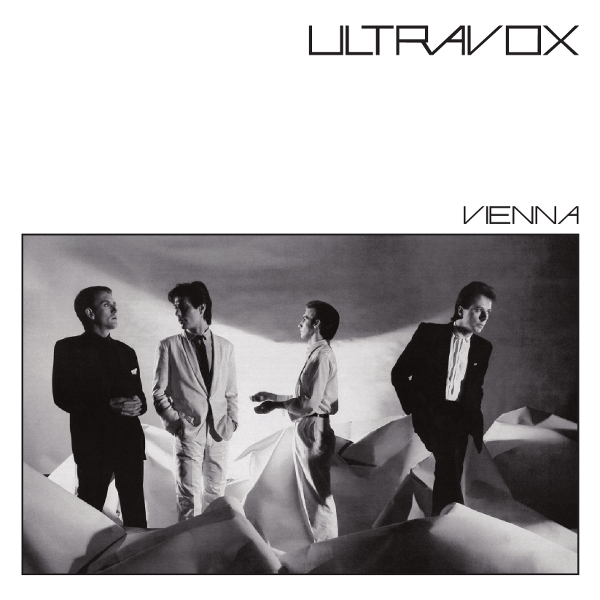

Ultravox: Vienna (1980).
John Foxx: Metamatic (1980).
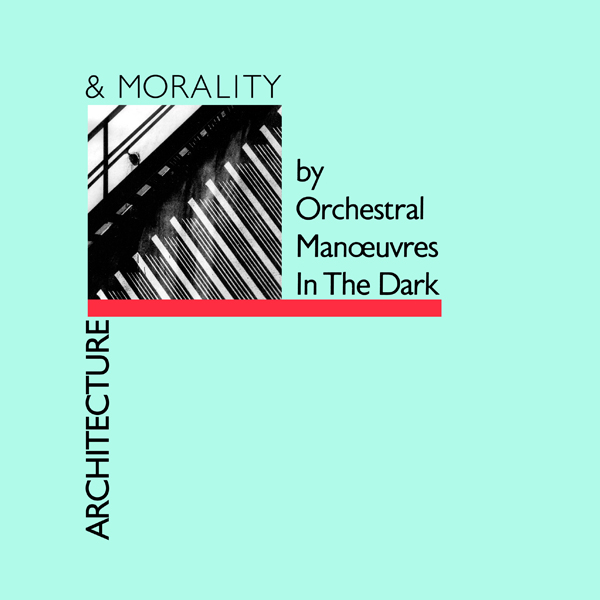
Orchestral Manoeuvres in the Dark: Architecture and Morality (1981).
MATTHEW: What usually happens when a lead singer or key band member leaves to go solo? Very seldom does both the band and the solo artist produce records that are better than what they did together. And even rarer still do those records prove to be classics of their time and genre. But that is what happened when John Foxx left Ultravox, and immediately created his masterpiece album. Talk about chilliness, Hope! Metamatic is a brilliant and artful exercise in crisp, cold dystopian synthpop. For me, it out-Numaned Numan. In a great way. Are friends electric, indeed. Meanwhile, Ultravox recruited Midge Ure (a member of Visage, whose s/t debut came out in 1980, featuring one of my favorite singles of the time, “Fade to Grey”). Uretravox (as my school friend Noel called them; imagine a French accent) promptly made what is often hailed as the band’s best album and one of the best of the era. Vienna is a riveting mix of post-punk guitar pop, synthpop, and experimental electronic pop—from the thrilling seven-minute opening instrumental to the ethereal title track (to be matched only by Japan’s “Ghosts” as an unlikely, genre-defying, band-defining hit single). I didn’t just love these two albums (Metamatic and Vienna), I was utterly intrigued by the ways in which they are so different and yet somehow two sides of the same coin. (The tape I made of them was played so much it is now unplayable.) I think I know what you’re going to say, Hope, and you’re right: Metamatic sounds today like a lost artefact of a distant moment in pop music history; whereas Vienna holds up as a roadmap for where synthpop was headed.
By the way, the sumptuous 40th anniversary reissue of Vienna includes a great remix by Steven Wilson, also available separately. And yes, fans, I know that both Ultravox and Foxx put out albums in 1981 as well. The former’s Rage in Eden was also very good, but I liked Quartet (which followed in 1982) more. And the latter’s The Garden didn’t quite capture the originality of Metamatic. By definition, perhaps it couldn’t? After the diminishing critical and commercial returns of four early-’80s albums, Foxx called it a day—to return many years later with a fascinating series of career stages (but that’s another story).

Matthew’s now unplayable mixtape. A+ for that penmanship, jeezus.
HOPE: More albums that expose the musical divide between 17 year old music nerds growing up on different continents aka Matthew was significantly cooler than I was (am). I literally became acquainted with these artists and albums ass-backwards. It was a dose of OMD’s Architecture first, then Ultravox, then Foxx whom I had no idea had even been a part of that band (nor did I until a couple of years later). And when I finally did “discover” Foxx, it was via his extremely out of character and most overt pop album, 1983’s The Golden Section. Yes, I was a bull in the synthpop china shop, clearly. I loved Ultravox’s “Vienna”, the song, back in the day but couldn’t quite get into the album, which I did actually buy…and I still kind of can’t. And until you mentioned Foxx’s Metamatic, Matthew, I’d never actually been compelled to listen to it, though I can’t definitively say why. Listening to it now though, it sounds distractingly dated. I think my deep-seated issue with these albums is that I like my synthpop a little, I don’t know, uh, sexier? I was never into Kraftwerk or Numan. And though I was intrigued enough with Ultravox to keep buying records, I was still pretty selective and tended to stick to the singles. On the other hand I loved the 1981 albums by their sonic peers, namely Human League’s Dare and Soft Cell’s Non-Stop Erotic Cabaret. Both were full of sticky, infectious (and in Soft Cell’s case intriguingly seedy) radio-ready pop songs. And on top of that, here we go again, the front men were both hot babes (The League’s Phil Oakey and The Cell’ s Marc Almond whom yes, I found super fine at the time, swear).
Having said all that, I must give credit where credit is due; OMD were undeniably my synthpop gateway drug. They were the band that literally introduced me to “the sound” and set the foundation. They were the ones. At some point in 1981 there was an ad in Rolling Stone magazine offering a free four-track EP by an “exciting” new British band called Orchestral Manoeuvres in the Dark. To which I said, free record by English band, yes please and sent in my request. It came in a nondescript black sleeve and featured “Souvenir”, “Georgia” and “She’s Leaving” from Architecture and Morality. As ludicrous as it seems, hearing OMD for the first time was a revelatory experience. Their moody, synth-drenched desperation was wildly different from anything I’d heard Casey Kasem play during his weekly top 40 show to that point. I thought they sounded like, wait for it, the future. This kind of extreme, hyperbolic reaction to seemingly normal pop songs was typical for teen me. A few years later, after hearing the Cocteau Twins song “Lorelei” for the first time I actually wrote in my diary, “this song is what I think it sounds like in heaven” (though truthfully, I may have been onto something there, time will tell). Anyway, that randomly acquired free record led to years of hardcore musical anglophilia, it truly, truly did.
MATTHEW: Classic Pop magazine’s recent list of the best forty synth-pop songs of all time included “Vienna,” Foxx’s “Underpass,” and OMD’s “Enola Gay.” But Orchestral Manoeuvres in the Dark did not jump straight to that synthpop masterpiece (a hit single of happy programmed beats and melody about the bombing of Hiroshima! Whaaat?). They put out two albums in the UK in 1980, and I was hooked from the start. The first (titled Orchestral Manoeuvres in the Dark) came out in the spring term, the second (Organisation) in the autumn term, and I had a C-90 tape with one on each side—recorded from a really weird awkward math-genius kid who had them on vinyl, and who was obsessed with the technology that OMD lads Andy and Paul had used to make the albums. Neither were released in the US, where instead a selection of tracks from both albums was put out in 1981 as O.M.D., a commercially understandable move (“Enola Gay” is the first track) that flattened and obscured the fascinating pinball-machine development of the OMD sound. The exchange that Andy and Paul had with an A&R man at Virgin has been much quoted (he asks, “Come on, guys, are you Stockhausen or ABBA?” To which the boys respond, “Can’t we be both?”), but it nicely simplifies their efforts to place catchy synthpop songs beside experimental electronic tracks, with obscure lyrics or none at all, and still achieve a coherent album. Even where they veered too close to Stockhausen (as on Organisation and the brilliant 1983 relative-flop, Dazzle Ships), the experiment is as enjoyable as when they leaned more towards ABBA—as in the triumphant Architecture and Morality, with not one but two hit singles about a 15th-century female French warrior-saint. (So melodically ABBA-esque, perhaps, but not even the excellent and dark final ABBA album, 1981’s The Visitors, which bounced on and off our short lists, ventured into such unpredictable territory; see our run-down of the whole ABBA catalog here.)
HOPE: I can totally imagine that weird awkward math-genius kid staring out his window with a telescope, scribbling calculations and building a transmitter with radio parts while his OMD album plays in the background in 1980. It’s just so perfectly geeky and beautiful.
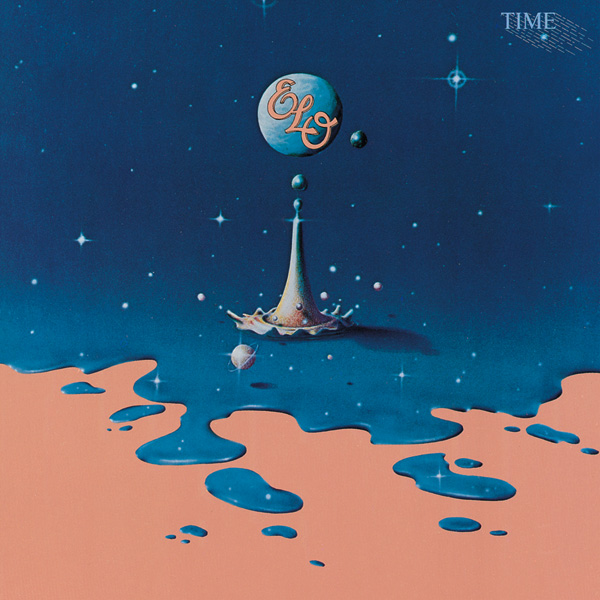
Electric Light Orchestra: Time (1981).
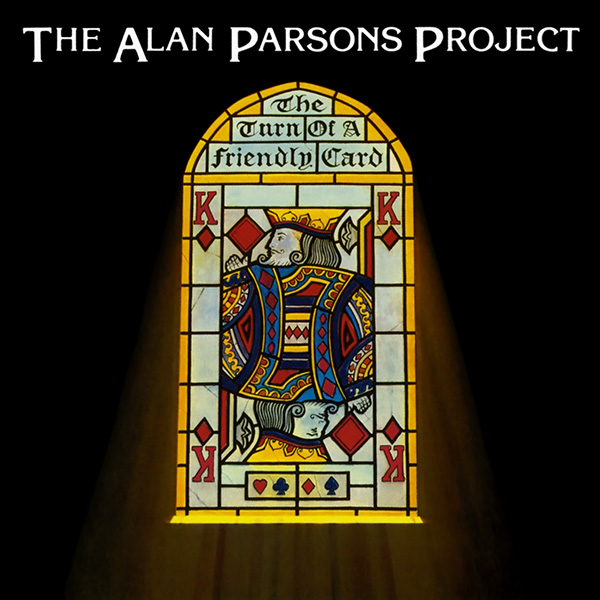
The Alan Parsons Project: The Turn of a Friendly Card (1980).
MATTHEW: When Time came out, I had long been a huge ELO fan. I had mixed feelings about the preceding albums—the disco-pop-leaning Discovery (I think I loved it at 15, then decided to disdain it at 16) and the Xanadu soundtrack that was half-ELO half-Olivia Newton-John. But the two before that, A New World Record and the masterful double LP, Out of the Blue, were instant favorites that I have never stopped playing. At first, then, I was disappointed that Time moved the band even further from its orchestral-rock roots. But Time’s eccentric mix of New Wave synth-pop and rockabilly, all in a concept album package, soon won me over. I still love how Jeff Lynne gave the time-travel theme a nostalgic twist: the central character pines, in 2095, for the year 1981. Hilarious and ahead of its time. Time was a retrofuturist album, two years before that term had even been coined. Now that’s cool.
HOPE: Wow, I have to tell you Matthew, I loved Discovery! I still do, I mean I listen to at least half its tracks on a regular basis. Alas, I cannot say the same for Time, which makes me sad because I love the album’s plotline and Lynne’s eagerness to embrace synthesized modernity. My problem has to do with its overall lack of melody. To my ears there just aren’t enough of the trademark ELO hooks. I think “Hold On Tight”, the LP’s lead single was/ is one of their worst (I apologize for my brutality but yeah). I know this thing has a cult following but dammit I just can’t feel it. Am I the devil? Yes, but I feel bad about it .
MATTHEW: Devil or not, you’re right about “Hold On Tight.” It is the low point of Time, and one of ELO’s most annoying singles—whereas “Ticket to the Moon” is, for me, blissfully brilliant. Time may be ELO’s only full-blown prog-pop album, a genre I have always loved, and hence my fervent following of The Alan Parsons Project from their Poe-themed 1976 debut through to the mid-’80s (when my fickle fandom faded a little). The Turn of a Friendly Card (a concept album about gambling, of all things!) was one of the Parsons prog-pop albums I played a lot. It was always a mystery to me why The APP consistently sold more in the US than the UK. Or was it that their MOR/AOR smoothness placed them close to the West Coast (aka Yacht Rock) style that was so huge in the US and almost invisible in Britain?
HOPE: I think that’s just it. The prog fanbase was overwhelmingly male and maybe APP leaned just a little too close to the softer West Coast side of things. Their sound was more sentimental and less clever if that makes sense. I also assume that things that were big in the U.S. were regarded rather suspiciously by UK music nerds, yes? I mean you guys were firmly ensconced as the musical tastemakers the whole world over so what the hell did we know. I genuinely liked the mega singles on the APP album, “Games People Play” (what a chorus) and “Time” (which was big around the time my grandmother passed and so she always, always comes to mind when I hear it). But I was not remotely curious about anything else on offer. I need to pay a compliment though. I love how side one of Turn Of The Card featured four pop songs as bait to trick unfamiliar new fans into buying it and then shafted them with a 16-minute prog-style “suite” on side two. That is just devious as fuck and I love it.
MATTHEW: I’ve been dying to see Parsons in concert for decades, somehow failing to get it together, but that “devious” line makes me want to catch his next small-venue gig, come hell or high water, just so I have a chance of cornering Al in the lobby and sharing it with him.

And now please enjoy our 16 minute suite on the evils of gambling.


Japan: Quiet Life (1980); Gentlemen Take Polaroids (1980); Tin Drum (1981).
Duran Duran: Duran Duran (1981).
MATTHEW: It is hard to know where to begin, as I am currently writing a book, titled Ghosts, that is partly about David Sylvian and his band, and my head is full of details, stories, opinions, and—yes—feelings about Japan. Central to what makes the years surrounding 1980-81 so compelling is the period’s dynamic instability of genre, with so many bands hell-bent on creating something new, something distinct even from their own previous albums; and few can rival Japan for the astonishing two-year burst of evolving creativity manifested in these three albums. (Quiet Life technically came out at the end of 1979, but didn’t reach most markets until 1980.) The obvious masterpiece is their swansong, Tin Drum, which is stunningly original, a rare case of an album whose unique blend of influences and styles unmoors it from its era. There is simply nothing else like it. Only by listening to the previous Japan albums, in sequence, does one hear Tin Drum as an early-’80s processing of Bowie and Roxy/Ferry antecedents (with an inventive use of African and Chinese motifs). GTP wears its influences more obviously, yet has a stark beauty that anticipates Sylvian’s solo output. That said, Quiet Life is my favorite, as I discovered it and the band right as I turned 16, when they were still cult status. By chance, I spent that summer in Tokyo, to find that Japan were (partly due to their name) big in Japan (and nowhere else), and that sealed that irrational teenage sense that this was a band for a select international following—me included. I’ve returned to these three Japan albums repeatedly for decades (along with Sylvian’s superb solo albums of the ‘80s), and always found them to be rich and revealing.
HOPE: To introduce hot UK bands to us American hicks US in the early ‘80s, record companies would sometimes issue compilations gathering selected tracks off said artist’s existing UK album releases as well as any free-standing singles then unite them to create sampler albums and EP’s. They would then offer them at a bargain price so you, the intrepid American pop fan, might be enticed to take a chance. And so my first encounter with Japan was via a 1982 US only compilation titled Japan that drew songs from GTP and Tin Drum (yup, didn’t know about them in real time and didn’t even hear Quiet Life until the mid ‘80s). Not that I was aware this thing was a compilation, it was just the only record in the Japan section at the mall and it was new. And I’d been cheekily lured to it by a now infamous piece of pictorial propaganda. Rolling Stone had recently featured a fetching photo of a guy named David Sylvian of the band Japan in its gossipy Random Notes section and had referred to him as the “World’s Most Beautiful Man.” That was all it took.
I realize how horrifying it might seem to both Sylvian and the purists to have been introduced to Japan in this ramshackle and dirty lowbrow way. But it was actually not a bad entry point as the compilation featured both the spectral and seminal “Ghosts” (hands down the least poppy pop song to ever have landed in the UK top five) and the plush “Gentlemen Take Polaroids.” I subsequently picked up the proper studio releases from whence they came and the rest as they say, is history. To this day I remain utterly fascinated and enthralled by the work of the most beautiful man in the world.

David Sylvian in autumn.
MATTHEW: (Well, Sylvian was gorgeous, let’s be honest.) Now, why is Duran Duran sitting here with Japan, and why is it on my short list, rather than The Human League’s Dare or Spandau Ballet’s Journeys to Glory, #5 and #1 in 1981 in the UK respectively? As much as I loved those latter two albums, I still occasionally play my original vinyl copies, and I happily followed both bands into their declines and inevitable nostalgia-resurrections, neither became the musical and cultural phenomenon that the Double Durans immediately promised to be—and, sure enough, continued to be for half a century (yes, I’m assuming they’ll still be going in 2030; fair enough, right?). But there’s a more specific reason: the influence of Japan is all over the Duran Duran debut—from the look that would become the New Romantic trademark, to John Taylor’s bass lines, to the approaching-helicopter synth sound that begins “Quiet Life” and “Planet Earth,” to the closing track’s nod to the experimental instrumental side of synthpop. And the truth is that while I appreciated the new post-punk bands like Echo and the Bunnymen (whose first two albums came out during this time) and The Teardrop Explodes (whose only albums came out in these two years), and understood and agreed that The Jam and Elvis Costello were cool, my heart was with synthpop and the dawn of New Romanticism—and I played Duran Duran and Rio until I knew them inside out, rendering objectivity forever beyond reach. (By the way, stick with the original 1981 UK release of Duran Duran or the 21st century re-issues, and avoid the early-’80s US releases on which record company vandals removed “To the Shore” and even added the post-Rio “Is There Something I Should Know?”)
HOPE: Duran came to my attention via the “Hungry Like the Wolf” video, which the then brand new MTV played to death in 1982…meaning I didn’t discover them until their second album Rio…meaning I didn’t get the self-titled debut until after that. And honestly, I wasn’t nuts about it…and I’m still not. Rio is such a gloriously garish massively chorus’d monster, I think it’s impossible for the debut to stand next to it and not seem less realized, especially from a melodic standpoint.
Weird factoid: I went to see Duran when they toured in support of the Seven and the Ragged Tiger album in 1983, at Nassau Coliseum on Long Island. The only thing I remember about the show is that before it began, they played Squeeze’s East Side Story album in its entirety over the P.A. Even then I thought it was an oddly laddish and unglamorous choice to get an arena full of teenage girls pumped up. And though it sounded sweet enough, hearing it reverberating through the soon to be hysterical, lust-filled arena made me realize something that is still true to this day: I would only ever like Squeeze, I would never truly love them.
Squeeze: Argybargy (1980).
HOPE: I came to this via my brother’s love for its goofy deep-cut “Farfisa Beat” which they used to play on WLIR (beloved, life-altering NY alternative radio station). I bought him the cassette and ended up hijacking it for my personal enjoyment, having been enticed by the irreverent evergreen holiday theme song “Pulling Mussels (From A Shell).” I would take my little boombox into the backyard and use the album to time my very focused sunbathing routine (end of Side A= time to turn over). I know, could I have been any more teenage ‘80s girl™. Thus Argybargy will always remind me of summer which is kind of appropriate. The album has a herky-jerky and anxious quality and in Squeeze’s sonic case, turned out to be the storm before the calm as the band began to lean harder on their balladic side on the albums that followed. The thing that makes no sense is that my favorite song on Argybargy was not one of the now classic singles but an obligatory piece of filler called “Wrong Side Of The Moon.” It was co-written by Jools Holland who also sings lead on it in his soulfully froggy voice and the song is a bouncy, piano-based goofball with a distinctly novelty-esque quality. It was never meant to be anyone’s favorite song on the album. In fact, its presence may have been a way to sate Jools who wanted something of his on the record…yet here we are 40 years on and it is the only song from this thing I still listen to on a semi-regular basis ( uh, a few times a year). In conclusion, Argybargy is a really good album to most people and is regularly namechecked within ‘new wave best of’ and ‘all-time greatest ‘80s’ lists. Then there’s me, always and forever on the wrong side of the freakin’ moon.
MATTHEW: In the summer of 1986, Squeeze played at my university equivalent of a graduation prom; called a “ball,” it was a massive outdoor party that ended at dawn. At the time, I was amazed that Squeeze were hired, uncertain if it reflected the absurd privilege of my educational upbringing or the distance to which the band had fallen since their imperial phase—of which Argybargy was a part. I even chatted with them briefly in one of the drinks tents, but was too drunk to remember more than a vague feeling that they were mildly appalled by what posh twats we were. If (fuzzy) memory serves, the set was short but included the two great singles that begin Argybargy (“Pulling Mussels” and “Another Nail in My Heart”), along with their other hits to date. Which suited me just fine, as I was a big fan of Squeeze as a singles band. I realize how much real fans deplore such a view, but at the time, the albums were a little too frantic for me (“herky-jerky and anxious” is a good way to put it, Hope). I did enjoy the ordinary-life narratives of the songs, making the albums short story collections of a kind. Ian Dury appealed in the same way (although his 1981 album Lord Upminster was a flop and I never gave it much chance), as did Elvis Costello, who released three (!) albums in 1980-81—but, as with Squeeze, I listened to them for the narratives and enjoyed the singles, but ultimately the albums themselves never really stuck.

Plasmatics: Beyond the Valley of 1984 (1981).
HOPE: It is quite possible that this album is terrible. But it’s less about songs to me than it is about a specific feeling it evoked in me back in ‘81—namely wouldn’t it be amazing to walk the world as fearlessly with as much self-belief and attitude as Plasmatics lead singer-focal point-queen Wendy O.Williams? She was so likeable (watch this interview), so earnest, genuine, confident and brave that the music was secondary; it was all just a vehicle to showcase Wendy’s innate charisma. I wanted to feel like Wendy seemed to, to literally embody my own art and have unwavering belief in its goodness while using it to push back on the scumbags (and when you’re 17, everyone is a scumbag). Listening to this album was as close as I could get to any of that. Beyond the Valley is cartoonish broad strokes, awkward turns of phrase and general dumbness held together by not quite melodic enough power chords. And with her raw, raspy out of breath delivery, Wendy always sounds like she is running and trying to sing at the same time. It’s ridiculous. Even at the time of release I could only take it in small doses…but still I thought about Wendy constantly, wishing I could be as cool as her. And so I forced myself to spend time with this album. The fascination didn’t last though. After that “magical” year I lost the urge to play it and still only spin it on rare occasions. I think this is because I needed to see Wendy as much as I ever needed to hear her, maybe more. A TV interview or in the video for “It’s My Life” where she climbs a skimpy rope ladder to climb aboard a moving plane; that’s the stuff that hit home, that I treasured. I bought Beyond The Valley with genuine hope, I wanted to love it…but maybe the best thing about it was how cool I felt actually buying it, like I was as fierce and wickedly fabulous as Wendy herself for a minute!
MATTHEW: This album is indeed kind of terrible, but it is also exactly what it claims to be: a New York punk rock album on which the only instrument played by the legendary lead singer is a chainsaw. Awesome! I completely missed this at the time, discovering Wendy O. later as a fascinating cultural icon, way too late for my teenage self to have an emotional reaction equivalent to Hope’s. Forty years on, the album strikes me as an entertaining insight into where punk was in the US at that moment. That’s a bland assessment, but for someone else out there, this is surely the album that evokes the inner turmoil of being 16 and 17.


Time to acknowledge our overlords…
HOPE: For the sake of transparency I have to say though I loved albums, I also bought a lot of singles. As an obsessive listener to Kasem’s weekly top 40, I fell prey to many pieces of loose candy, songs that existed as singular entities where I had little to no interest in owning the album they came from. Oh I loved Gary Wright’s pleading, synthesized, “Really Wanna Know You” (for the record Brian Wilson loves this song too), Ambrosia’s “Biggest Part Of Me” (oh the bridge, the bridge) and Chilliwack’s “My Girl (Gone, Gone, Gone)” to name a few, but my spidey sense told me to keep my distance. Years later when I heard these albums in full I knew I’d made the right decisions.
MATTHEW: As nobody said in 1981, LOL. I loved Casey Kasem’s chart show too, on the few occasions that I was in the US in my teens. And I really loved the UK chart shows. In fact, my calendar revolved around them as if they were religious holidays and I was a monk—from the Tuesday lunchtime announcement of the new singles chart on Radio 1, to Thursday’s half-hour run-down on TV’s Top of the Pops, to the Sunday evening chart show on Radio 1. I’d fake illness, go hungry, or go AWOL from class to catch those. The latter was a no-frills, chat-free, one-hour run-down of the Top 20, doubling in length in 1978 to embrace the Top 40 (imagine my joy!). I taped that first Top 40 show (it began with Earth Wind & Fire at #40!). In fact, I made mixtapes from those chart shows for decades (ok, nerd confession: I started at age 8 with a transistor radio the size of an iPhone and was still doing it, by then with MP3s, in the early 21st century). Point is: when I dig out those old tapes, I am reminded of how my singles and albums worlds were (like yours, Hope) a Venn diagram, separate but overlapping. The singles charts were one way in which I heard new music, sometimes inspiring me to hunt down a song’s parent album, sometimes (like Hope’s “spidey sense”) not. And albums were the other way, but those tended to come to me through other people—my sister, school friends, people I wanted to be friends with, girls (mostly) that I wanted to get with. Those contextual connections echo in the music, still. That’s why our lists are different, not just mine and Hope’s, but all of our and your real or imaginary lists of favorites—from the ones you still play to those you forgot you loved. And isn’t that the fun of it?
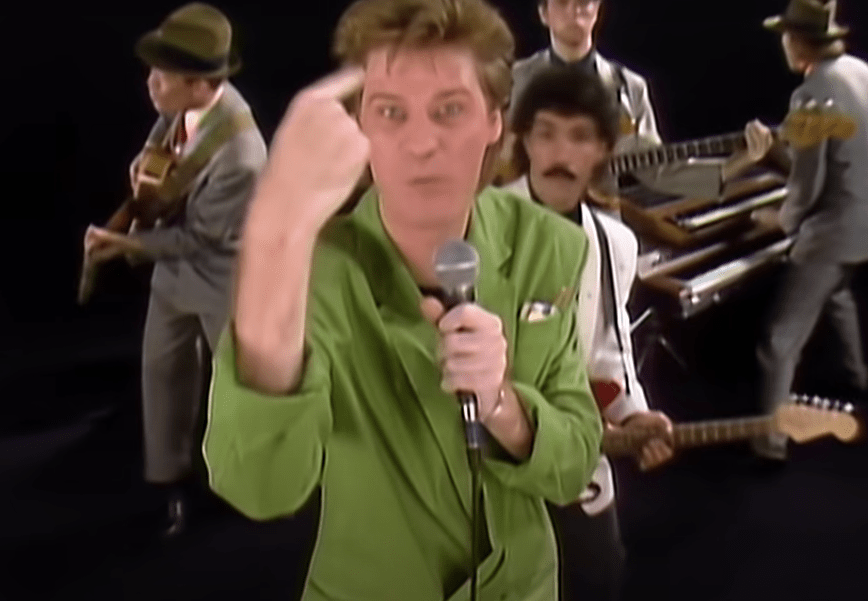
In Conclusion: I See You, You See Me
HOPE: I look back at my 1980-81 self with both utter bewilderment and extraordinary empathy. And I like to think that’s a pretty universal assessment when it comes to all of our teen years. I don’t know that pop music provided answers to all my existential questions back then but it sure as hell kept me going through the sometimes black days and confounding desires. When I would listen to these albums back then, they made me feel oddly brave and special, like some singularly majestic creature from another universe. I know that sounds hyperbolically nuts but how could you not feel that way when “Edge of Seventeen” was playing in your bedroom at earthshaking volume? How could you not think, “I am awesome right now”? Sure it may have only been within the confines of the room but that was the only place I could relax and let my imagination run wild, where I was the coolest kid going. As insecure as I felt, all that music filled my heart with consolation and possibility and that is still how I feel when I hear a lot of it…which means if any of you are around me when “Private Eyes” starts playing, I can’t promise I won’t lose it in some manner (crying, screaming, other) and potentially embarrass us both no matter where we happen to be.
Know what else ? The realization that there was a kid on the other side of the world at the same time as me whose favorite albums and songs meant so damn much to them is just the coolest.
MATTHEW: Yes! This conversation has been a happy convergence of parallel universes. The music connects us across time and space—I know, that sounds terribly corny, like a lame Coldplay lyric—but it’s true and wonderful and necessary. And by us, I mean you too, dear reader.
This essay is dedicated to all you former and forever teenage pop nerds.
We think you are the coolest.

