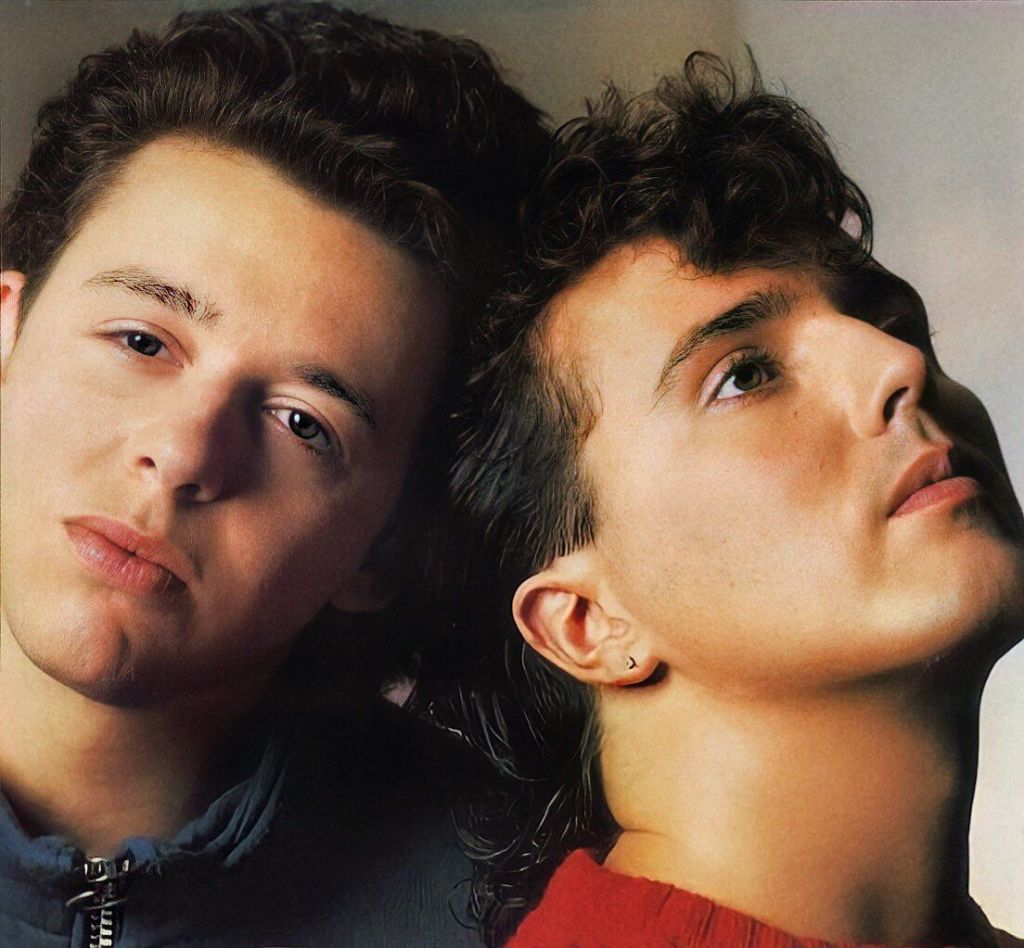
Tears for Fears were the greatest band of the ‘80s. How can we be sure? Come join Hope and Matthew aka the PuR crew, as we dissect the discography and explain.
HOPE: I could never have an impassioned conversation about who the greatest guitarist is in the history of popular music. There are plenty I genuinely like, but I have no definitive, slam-my-fist-on-the-table feelings for any one person. But a passionately irrational argument about which ‘80s band is the greatest? I am all in on that conversation. Most especially those bands that were part of The Second British Invasion, that spectacular wrinkle in time that ran from 1982 on through to the latter half of the decade, when the American pop charts were overtaken by billions of brilliantly bold and brazen artists from the UK.
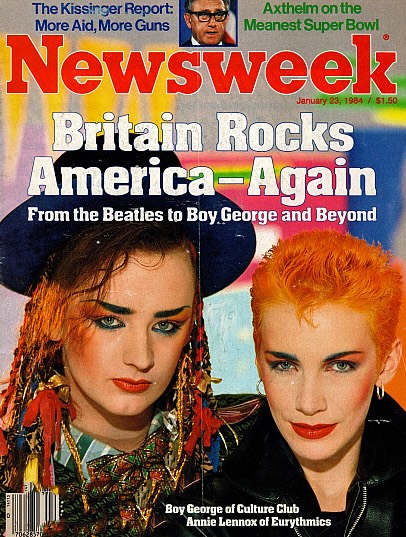
The “Second British Invasion” was pervasive enough to infiltrate the pages of a popular, mainstream U.S. news magazine. Also, don’t ask me to choose, I was in love with both of these candy-colored people.
While there were a lot of fabulously fun bands shining at that time-—Culture Club, Eurythmics, and ABC among them—NONE were bigger than Duran Duran. They were the most popular gang in school. The biggest babes with the most voluptuous videos, serving up the most pulchritudinous pop tunes and personas. They were all over the walls of my teenage bedroom, oh yes they were. I’m on the hunt, I’m after YOU.
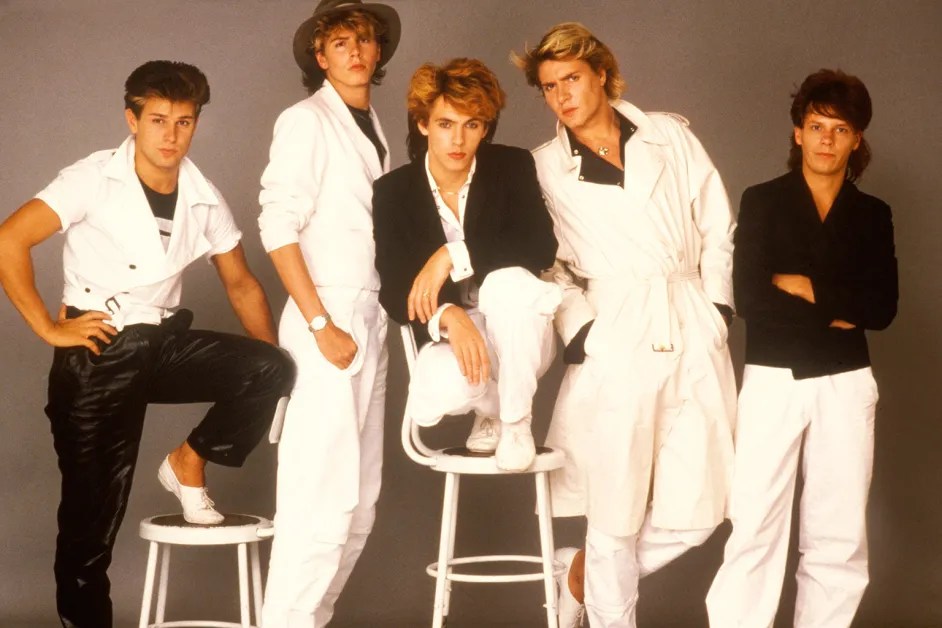
The Durans aggressively smoldering (just as important as the music)
Looking back and listening forty-plus years later, it’s clear now that Duran were as much a fabulous cultural artifact as they were a band. Remove the visuals and the mania they generated in their heyday and you’re left with only one truly great album (that’d be Rio) surrounded by a slate of just okay ones. There were some brilliant singles sprinkled over those “just okay” LPs. But they were also populated by a copious amount of mostly just charming filler.
Because we are f-ing nerds here at PuR, that got us thinking; Who was the greatest ‘80s band in terms of musical achievement, like for real? The band whose albums not only brought back memories but sounded exponentially better as years passed (and as a bonus, were miraculously still capable of making beautiful music decades past their youthful heyday)?
There were a lot of candidates, from the Pet Shop Boys to Depeche Mode to the more short-lived Smiths. On the personal preferences side, Matthew absolutely freakin’ loves the aforementioned Pets, I’m consumed with adoration for The Psychedelic Furs (the 1984 version of Richard Butler was my dreamboy), and we both worship at the Wham!-George Michael altar.
But when it came to songs, albums and sustained goodness over subsequent decades, one band—one duo—kept coming up again and again. Roland Orzabal and Curt Smith, aka Tears for Fears. Were they the ‘80s greatest Second British Invasion™ band?
Tears for Fears, which we’ll truncate to TFF since we’re gonna be saying it so much going forward, were not glamour-pusses swanning around shirtless in tropical locales in videos. They were not obvious hotties. TFF made albums for introspective, diary-writers and secret crush proprietors. They didn’t do filler. Their songs were not hedonistic. They were cerebral and gloriously, swooningly melodic. Anthemic and emotional. Gigantic and introverted. Amazing.
MATTHEW: Beautifully put. Amazing, indeed. Of all the bands that were both massively popular, yet also seemed to be making records just for me, right as I was turning from a teen into a twentysomething, TFF were—around 1983-1985—top of the list.
But TFF as the greatest band of the Second British Invasion? I love that as a provocative claim, bound to provoke spirited discussion and partisan indignation. When you first said that, Hope, I was skeptical. Partly because I do indeed love the Pet Shop Boys. But also because TFF had only one hit album in the US during those Invasion years—their sophomore masterpiece, Songs From the Big Chair. As we’ll see, although their debut hit the #1 spot in the UK right as the Invasion was peaking, it was DOA in the USA. And the third album took so long to make, the Invasion was history by the time it was released. So among the fifty or so British acts that are potentially associated with the Invasion, are TFF with that one hit album really the greatest? Mmmm.
And yet … that 1985 album was so massive, it continues to resonate forty years on. Its hit singles have never gone away. You pointed me to recent streaming numbers, and those for the songs from Songs are crazy high—more than any other Invasion band (aside from Wham! but only if combined with George’s numbers). “Everybody Wants to Rule the World” seems to be everywhere these days. It has achieved the rare status of being truly timeless (can’t you imagine it still being played centuries from now?). And it isn’t even the only track from Songs still being widely played (surely that whole album will still be in the air centuries in the future!). Another point to support your claim: Invasion bands like Duran Duran went on to produce a patchy catalog, while others like Culture Club, Spandau Ballet, and the Thompson Twins soon faded away. But TFF created an astoundingly consistent catalog. Yes, it’s very small, and only half the duo made two of the seven albums. But it’s still fantastic from start to finish. We can agree on that—even if we argue over which albums were the most fantastic. So, let’s get to arguing!
BREAK IT DOWN AGAIN: Just a note on the format of this essay. Matthew and I are going to be taking turns shouting our TFF assessments, and our names will appear before our respective comments. The peak chart positions in the UK and US for each album are listed beneath their titles. We are going to rate each album individually as we go (on a classic 1-10, hate-to-love scale).
MATTHEW: That means just those seven studio albums, but don’t worry, you completists, we will also chat briefly about the live and compilation albums, including the hybrid oddball that came out in 2024. There’ll be plenty of opinionating on that and all the albums. Will we agree on what is the best and worst? I have a feeling that we may not.
The Seven Studio Albums
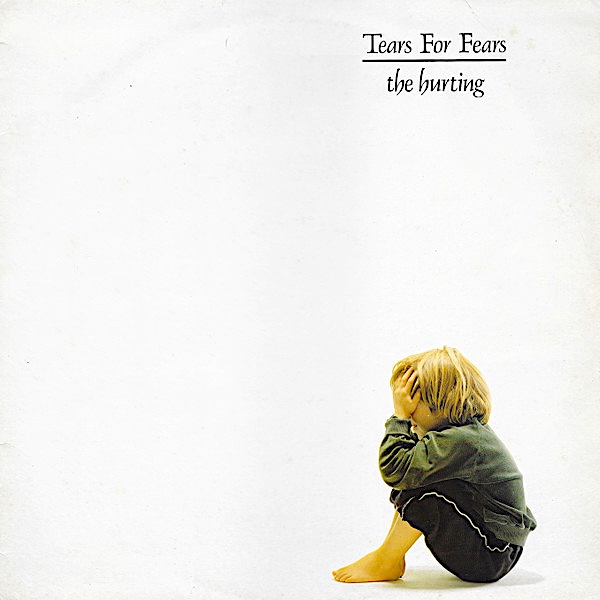
The Hurting (1983)
UK: 1. US: 73.
HOPE: Roland and Curt’s coming together as young teens over a shared interest in the work of psychologist-psychotherapist Arthur Janov (aka the creator-promoter of primal scream therapy) has been well-documented. Nearly every review and breakdown of their history, and of their first album in particular, cites this fact, and yes, I too am doing it at this very moment. It’s an undeniably crucial part of the TFF origin story (It even inspired their band name). But it’s important to remember that Roland and Curt were also young lads who freakin’ loved pop and (especially) rock music. While Janov’s theories of emotional exorcism held a fanatical fascination for them, so did bands like devil-loving, Long Island rock gods Blue Oyster Cult, rock shockmeister Alice Cooper (Curt fave) and the Peter Gabriel-helmed Genesis (Roland loved the Foxtrot album as well as King Crimson’s Discipline LP).
In 1979, the UK chart was officially infiltrated by “the sound of the future”… or, to be more specific, by synthesizer-wielding, robot-fetishizing, early-Ultravox-loving Gary Numan. His first solo single, the wholly electronic, “Are Friends Electric,” crazily, defiantly, went all the way to number (freakin’) ONE. In the process, it made the songs in the pop chart surrounding it sound very old indeed. It was a thrilling sonic slap to tradition, and a major influence on TFF’s initial musical direction. To paraphrase what Roland has alluded to in a number of interviews, who needed a band when a synth could play every part?
The (reductive) equation goes something like this: Arthur Janov + childhood trauma + eclectic rock fandom + the burgeoning sound of synthpop = The Hurting.
Unlike their eighties pop contemporaries Culture Club and Duran Duran, TFF’s first album The Hurting isn’t fun. There’s no equivalent to the former’s playful-joyful “I’ll Tumble 4 U” or party-porny “Girls on Film”. No,The Hurting is firmly rooted in your lonely teenage bedroom, being looked down upon by posters of worlds-away pop/film idols, whilst rain beats gently against your window, sigh (I see you, former and current teenagers).
The Hurting oozes lyrical pain from its every pore. “Torture,” “dying,” and “failure” all get namechecks. Its most musically upbeat track is called “Suffer the Children.” But here’s the thing, it is absolutely,100% a pop record, bursting with nifty hooks and memorable choruses. While the lyrics can sound comically angsty at certain points (“Will I ever love again?”), the melodic sophistication is undeniable. Roland composed all the tracks in his late teens/early twenties and it’s sick how good he was from the start.
MATTHEW: Yes, Roland’s gift for melodies has always been stunning, and it was evident from the start. You can hear incipient melodic hooks straining to burst forth in the album before The Hurting—made by Roland and Curt’s first band, Graduate, when they were still teenagers. Titled Acting My Age (1980), it is really not very good, but it shows Roland’s pop potential and lacks the dark child-abuse theme of The Hurting. Which begs the question: was the TFF debut a UK smash because of that theme, or despite it? And what of its failure in the US? Look at the contrast between its UK and US chart placings! In one of the most creative years in British pop/rock history, packed with future classic albums, this startlingly original debut from a new boy-duo hit #1, settling into the UK album chart for 65 weeks—in a year that happened to be the peak of that Second British Invasion. So, surely the album was a shoe-in for reaching the Top 40 in the US, if not higher? After all, a smidgeon under two years later, the follow-up album would reach #1 in the US. So what went wrong stateside with The Hurting?
There are many answers to that question to do with marketing and touring. But those aside, I think that you, Hope, put your finger on the key feature of the album: it combines catchy, melodic pop with agonizingly dark lyrics, a dissonance that was familiar to young British audiences but far from mainstream in the US. After all, less than a year before The Hurting was released, and six months before the hypnotic “Mad World” became TFF’s first UK hit single, Japan’s melodious but gloomy “Ghosts” reached #5; and neither that song, nor any single by Japan, ever charted in the US (forgive the plug here: see my recent book Ghosts: Journeys to Post-Pop). So, in the end, no wonder.
But here’s the twist. I can see US radio station programmers dismissing Hurting singles as being bummers, based on superficial and partial listens, lacking the time or inclination to give the album some time. For this is an album that needs time. And in time it did find an audience in the US—aided, of course, by the massive success of Songs from the Big Chair—and that appreciation has steadily increased over the decades. Yet I suggest that was not just because American listening tastes became more sophisticated or were liberated from dependence on radio. I think it was also because the album is, in the end, not so grim.
Sure, the lyrics don’t become any less dark just from repeated listens. But they lose that impact through familiarity, and especially when they fade into the background in a packed pub or rowdy club setting. Then the melodies and rhythms come to the fore, and all you hear are great pop songs. And the album is packed with great pop. Am I saying I danced in clubs to “Pale Shelter” and “Change”? You bet I did. Awkward teenage dancing in the kinds of clubs in Oxford, London, and Tokyo where kids like me could dance to songs like that (I’m talking about grungy student bars and very un-hip clubs, so forgive the obnoxious placename-dropping—it’s just where I was in those years). So, bad dancing, but dancing nonetheless, carefree gyrations with smiles on our faces to lines like the opening to “Suffer the Children”—”It’s a sad affair, when there’s no one there, he calls out in the night”—lines which me and my friends even sang out loud while grinning and grooving! And yes, we also danced to “Memories Fade”—which was not one of the four singles, but still stands out as one of TFF’s most compelling songs.
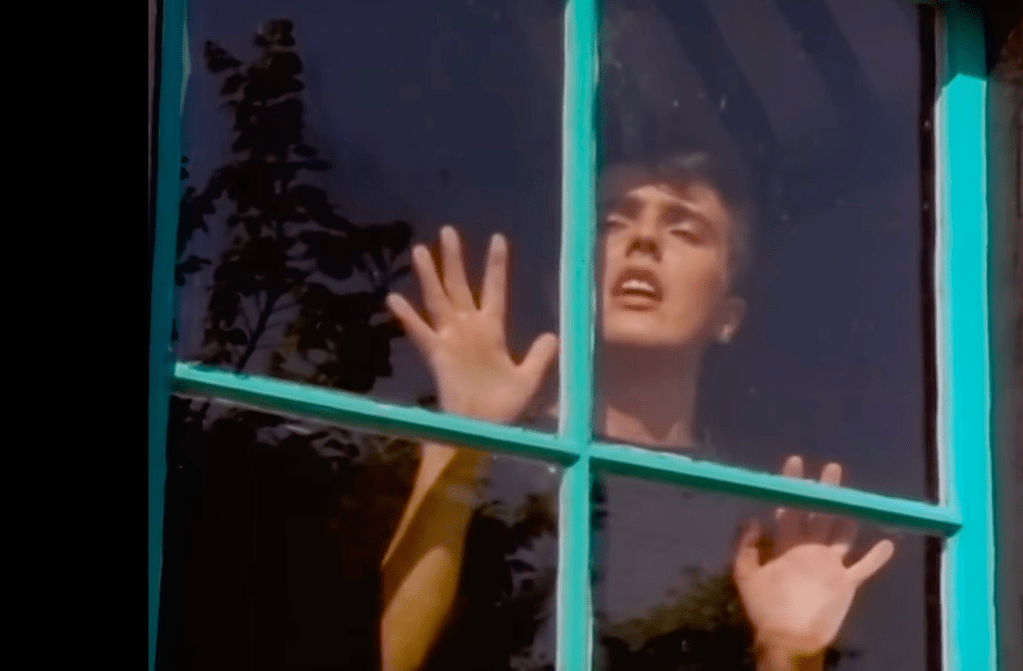
“And I find it kind of funny, I find it kind of sad, the dreams in which I’m dying, are the best I’ve ever had”. Curt angst-ing out in the “Mad World” video.
HOPE: Oh man Matthew, I am so sorry we never got to dance together as teenagers to “Pale Shelter” or “Change”. It’s not too late though. Maybe someday we can hit one of those Gen X ‘80s club nights I’ve heard about and humiliate ourselves (with reckless abandon of course). Shit, even talking about it thrills me, but I digress.
So, The Hurting was played on U.S.radio … but only on a select few, highly curated, big market stations focused specifically on New Wave like KROQ in Los Angeles and my teenage lord and savior WLIR/WDRE in New York (which is where I heard TFF for the first time). What was pop in the UK—with its more broadminded, forward thinking charts—was regarded as “alternative” or “new wave” in the US. My teenage memory insists that it was the success of Human League’s “Don’t You Want Me” that opened the floodgates in the minds of mainstream radio programmers. It definitely felt like some kind of sonic turning point (the charts were a Kenny Rogers-Air Supply-REO Speedwagon-West Coast aka Yacht Rock playground at that point). Human League sounded like the future.
Anchoring The Hurting are three classic singles, all of which feature Curt on lead vocals and boast beautious, barnacle-like choruses. All hail to “Change”, “Mad World” and “Pale Shelter”—whose falsetto I’ll have all day. Oddly, despite all that, my first favorite song off this thing was one of the deep cuts, the bouncy, bloody, and bangin’ “Watch Me Bleed.” I was particularly taken with its “for one so young, I feel so old” line when I first heard it as a ‘80s teen. I quite literally thought, “that’s me, that’s how I feel” and played the song repeatedly on my precious Sony Walkman as I trundled to school (I’m not laughing at you teen Hope, you sensitive plant, I’m laughing with you).
For such a dark piece of work, The Hurting is—gonna use a fake word here—ridiculously singalong-able, ideal for old or burgeoning New Wavers wanting to harmonize on a road trip or have a dance to. There aren’t any weak tracks. Even the “filler” is good, from the title track to the anthemic, sax-y ”Memories Fade” to the Peter Gabriel-esque “Start of the Breakdown” to the OMD meets Depeche vibe of “The Prisoner”, to the moody Roland-vocal-showcase “Ideas as Opiates.” The Hurting served as a brilliant preface for what was to come, aka true pop heaven.
MATTHEW: I totally agree with you about “Watch Me Bleed.” For that to be your first favorite song on the album isn’t so odd, Hope. After all, you—like me, and no doubt like you, dear reader—were a pop-music-obsessed youth, innately and deeply capable of receiving and feeling the emotional impact of pop, especially pop that so deftly delivered feelings in the genre’s lyric-melody-rhythm package.
However, I am going to quarrel with you a little about filler. I think 8 of the 10 tracks on The Hurting are absolutely killer, time-tested angst-pop dark-yet-danceable gold. But the fourth track on each side (that’s “Ideas as Opiates” and “The Prisoner,” tracks 4 and 9 for you streamers and CD players) mar the album. They’re better as interesting, experimental B-sides (“Ideas” started out as the B-side to “Mad World,” and “Prisoner” was on the flipside of “Pale Shelter”). Without them, the album would be a 10/10 serving of—to borrow your phrase, Hope—true pop heaven.
HOPE: You know, as I sit, contemplate and re-listen, I find myself agreeing with you in regards to both “Ideas as Opiates” and “The Prisoner”. They are decent enough songs, but I recognize that they aren’t in the same league as the rest of their Hurting groove-mates. I think listening to the album as a whole for this essay, after decades of cherry-picking clouded my judgement, meaning, the two tracks weren’t as unspecial as I remembered them to be…but that doesn’t make them special.
Rating: HOPE: 8/10. MATTHEW: 8/10.
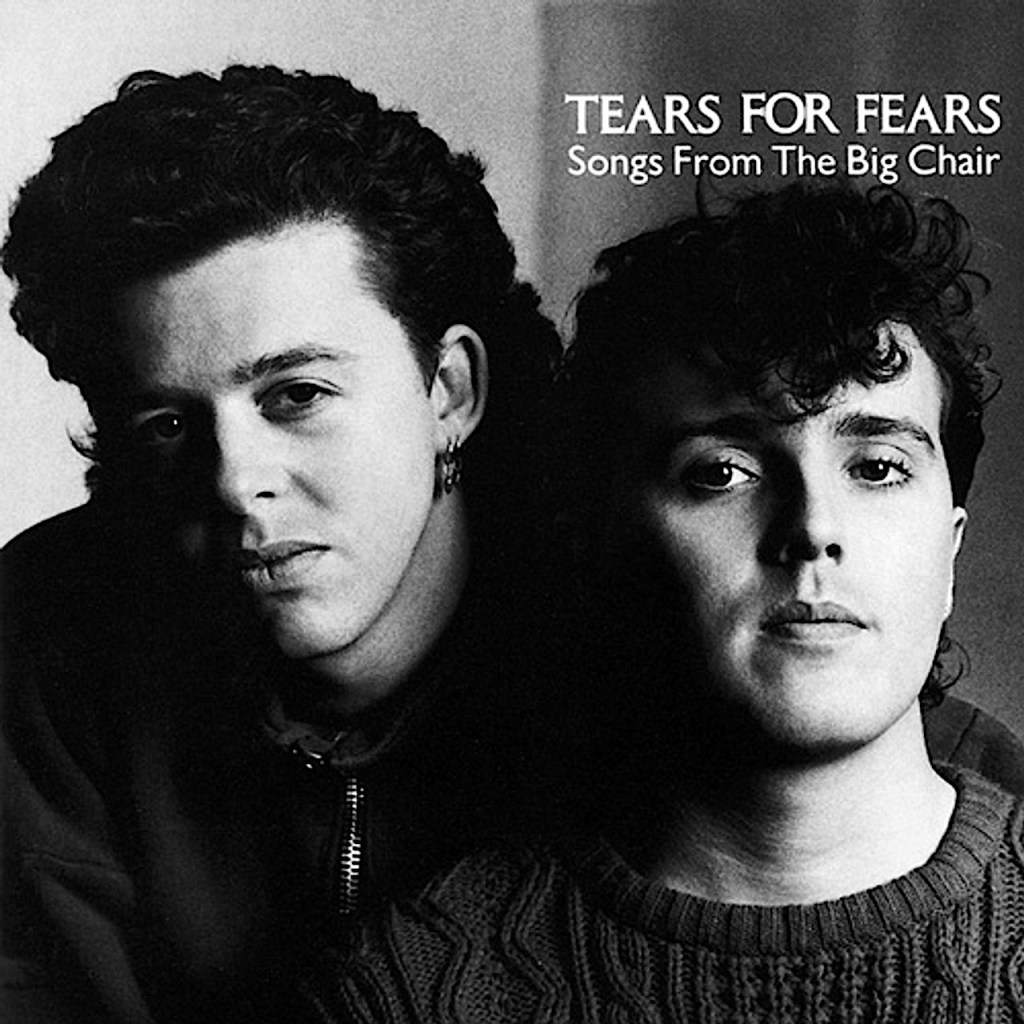
Songs From The Big Chair (1985)
UK: 2. US: 1.
MATTHEW: I have a feeling that we are going to differ here, Hope, right from the start of our discussion of Songs from the Big Chair (hereafter SFTBC?). And some readers will feel the way I do, others will be with you. What am I talking about? “Shout”! I never get tired of it. It has thrilled me for forty years. I’m still happy to hear it come on the radio or in the grocery store, but it deserves more than that: Ingest or hold in your hand your stimulant or relaxant of choice, cue up this album on a great-sounding system or in your best cans, and play it loud as f–k! “Shout” is a plea for help, a call to arms, a celebration of personal power, with music that is so visceral, so sublimely simple yet intricately constructed, that it can still give me goosebumps and bring tears to my eyes. And you absolutely need the full 6’31” album version (the UK single edit is a travesty, the US single edit a crime), in order to really appreciate the way the song builds to its epic climax. It is chorus-forward, without a traditional verse-chorus structure, underpinned by a synth-drone and hook upon which layers of vocal and instrumentation are steadily added. Roland has called it a mantra, and as such it is one of my very favorites, with incredible drumming (by Chris Hughes, who also produced it—among his best work ever) and great solos (I think that is Roland’s guitar and Ian Stanley on the Hammond and Prophet-5). It’s so damn good that you fear for the rest of the album. Will this be one of those records on which one #1 smash success fatally overshadows the rest of the album?
HOPE: True confession: as you guessed, I’m not really into “Shout.” Yes, it is one of TFF’s most beloved tracks, and was the lead single and album opener on SFTBC (yes, let’s call it that). And I wholeheartedly acknowledge that it is a sturdy, generational stadium anthem and a crucial part of this short king of an album. But even back in the day, when I was obsessively listening to SFTBC, I would skip over it (an easy turntable move to navigate as it was the opening track) and begin my journey with track two, the sublime, angsty, and sax-y wonder that is “The Working Hour.” My reasons for breaking up with “Shout”? It’s a tale as old as time. I just played it too damn much before the album came out and got myself well and truly sick of it. Once SFTBC was released I was so googly-eyed ‘n’ eared over the rest of the album, I commenced with my lifelong ritual of skipping it, in order to ogle and drool over the hot new babes.
Sorry “Shout”, it’s not you, it’s me.
MATTHEW: Wow! We agree so often that it is refreshing when we don’t. So, you have been skipping on to “Working Hour” all these decades. Fair enough. That second track is far from being a let-down. As you say, it is a sax-y wonder, and a supreme one at that. Its sequencing after “Shout” is genius—a gorgeous, moody, meandering journey, six and half minutes just like “Shout” and deserving of every second of vinyl space—into the most poppy track on the album. That, of course, is “Everybody Wants to Rule the World,” as catchy as “Shout” but more poptastic and less mesmerizing (both were US #1s, and “Everybody Wants” was by the 2020s Spotify’s most streamed ‘80s song by any artist). “Shout” is an anthem to accompany an uprising, a revolution, whereas “Everybody Wants” is something that Minions™ could sing. I don’t mean that as an insult, or as a way to damn it with faint praise! Its use at the end of Despicable Me 4 (an animated film you’d be forgiven for never seeing) was the best part of the movie, and a perfect reminder that this is a family-friendly singalong pop song that suits so many occasions. And it also serves as a poppy step away from the dark psychological ponderings that reach out from The Hurting to touch both “Shout” and the fourth and final track on this extraordinary Side A of SFTBC, “Mother’s Talk.”
This video has 41 million (freakin’)views.
HOPE: Lord, I miss short albums. Where it felt like every track seemed well and truly fussed over. Where it was hard for a song to make the final cut. Where the whole LP was the equivalent of a wedding day and all elements had to be freakin’ perfect because you know, this was it (so to speak). From the songs included, to the cover, to the sequence in which singles were released, everything had to be right.
Songs From the Big Chair is eight songs long. Eight. And every single one is a little work of art, a beautiful bride built to stand the test of time. Well, mostly. I mean the two-and-a-half minute “Broken” is mostly there to usher in and escort out a greater song, but it’s still a propulsive little thunderbolt in its own right.
I didn’t have Minions™ on my “Shout-outs within TFF essay” bingo card. And I’m never gonna see Despicable Me 4 but what you say is true! “Everybody Wants To Rule the World” is an anthem for all ages. The fact that it was partially inspired by the U.S.and Russia’s then ongoing battle for world supremacy otherwise known as The Cold War (1947-1991), doesn’t diminish the joyful positivity it exudes i.e. it’s transcended its initial inspiration and morphed into an all-celebratory party tune (or, as it was most recently employed in the film Marty Supreme, as a peculiarly life-affirming, baby-cradling anthem). While the chorus and intro get all the glory, the song’s most magical moments are, in order of magnificence, the sunshine-strewn, singalong guitar solo by TFF touring band man Neil Taylor, and that clever little vocal embellishment by Curt that follows in its immediate wake, where he sings “Saaay that you’ll nevernevernevernever need it”.
The last track on Side A , “Mother’s Talk”, is the rockiest, balls-iest, Depeche-Mode-iest song TFF had produced up to that point in their career. It sounds like a couple of songs stitched together to make one big piledriver and for me, always brings to mind Art of Noise’s iconic 1984 earworm “Close (to the Edit)” when I hear it (Ed note: I just stopped writing to revisit that synthetic monster’s unforgettable video. It’s still brilliant).
MATTHEW: I like that—“Mother’s Talk” as one big piledriver of a song! One could say the same of all thrilling 23 minutes of Side A, the best vinyl side of the TFF catalogue, ending with the same rhythmic energy as it began, a 4-hit piledriver! (To be pedantic, 5 of the album’s 8 tracks were hit singles, 3 of them from Side A.) And the set-up is perfect for the opening song of Side B, the gorgeous “I Believe.” Thus far, the album is perfect. Does it continue that way? For me, close, but not quite…
HOPE: Oh, “I Believe” sounds so good after the clamor of “Mother’s Talk.” The song, as well as Roland’s lovely and sensitive wailing performance of it, were inspired by musician Robert Wyatt (who also received a little fanboy style dedication on SFTBC’s sleeve). That approbation led me to the record store where I bought my first Robert Wyatt album. The verdict? Let’s just say I wasn’t sonically mature enough to appreciate Wyatt’s keening vocal style and meandering tunes at the time.
MATTHEW: Totally agree on Wyatt. I too was led to him by TFF (and others I liked, such as Elvis Costello), but it would be many years before I was mature enough to appreciate him. However, I could appreciate “I Believe”—both the album original and the live version released as a single. I also loved “Head Over Heels,” the high point of Side B, don’t you think?
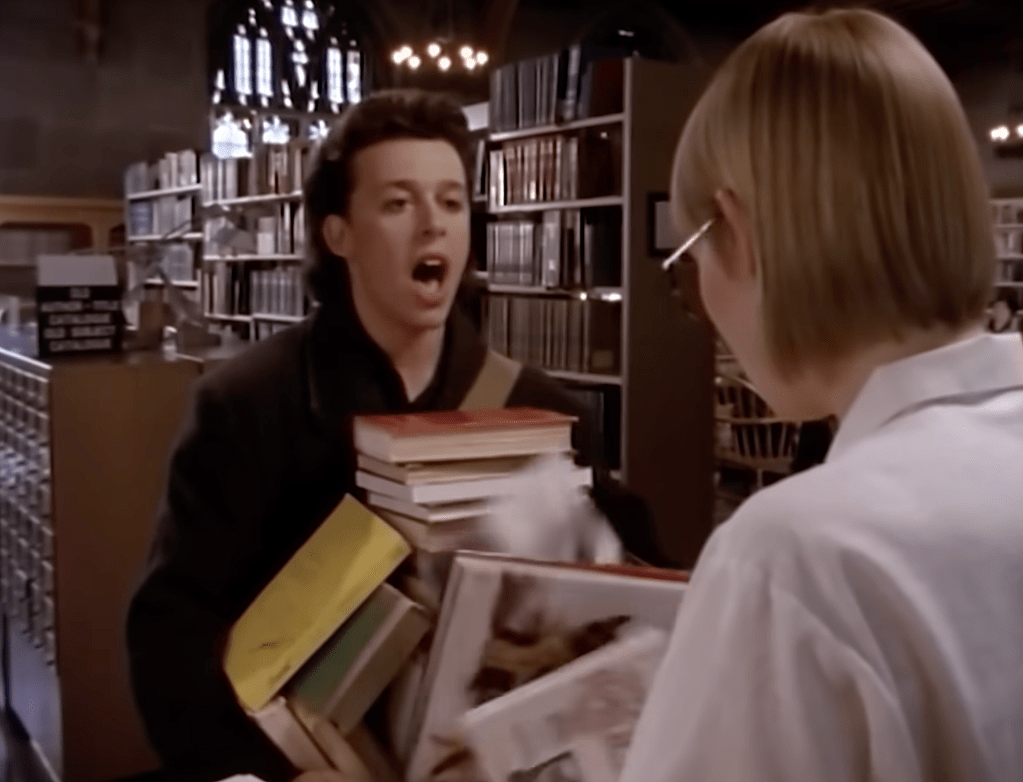
I wanted to be with you alone, and talk about the weather…
HOPE: Oh yes. Yes, yes, yes. Sigh. “Head Over Heels” is the greatest TFF song ever. Unrequited love, familial disappointment and one lustrous U-turn of a hook. A video that takes place in a library, the architectural equivalent of a secret crush. All of it and everything. It is one of the top five greatest songs of the ‘80s. Right, Matthew, right?!
Lastly, I just want to offer a reverential bow to the hypnotic, ambient beauty “Listen”, one of five co-writes on the album with key TFF keys man Ian Stanley, just for being so dreamy. But I digress. “Head Over Heels” is the best TFF song, yes?
MATTHEW: Yes and no! “Head Over Heels” is way up there as one of the best TFF songs and 80s pop songs. So I won’t go quite as far as you, Hope, but it certainly holds its own against the massive hits of Side A, an exemplar of how brilliantly TFF can mix lyrical heartache and melodic hook. And I think the short “Broken” works really well as the bridge into “Head Over Heels.” And the reprise of “Broken” is great too, until … the faux live ending. Why is the song ending live? It makes no sense, undermining this side of the album’s intimate atmosphere—which “Listen” must then have to work hard to regain. For me, “Listen” should have been a B-side. It is overly long (filling a third of Side B), an anticlimactic closer, lacking the impact to successfully bring us back to where “Head Over Heels” had taken us. Yes, “Listen” is dreamy (and I’m a fan of TFF B-sides and instrumentals), but for me that pointless and confounding applause at the end of the “Broken” reprise is where this powerful piledriver of a pop album flies (or floats?!) off the tracks.
HOPE: I’m okay with that faux live bit and how it fades into “Listen”! To me it’s just a fun little flourish, like that screaming fan bit on The Beatles Sgt. Pepper album between the title track and “With a Little Help From My Friends”. Songs From the Big Chair ends like a film, a big boom followed by calm meditation aka “Listen”, where you contemplate what happened and readjust to the real world.
MATTHEW: Yes, I see your point, and I’m aware that my annoyance over the “Broken” live ending is odd (as odd, no doubt, as my irritation over similar issues on later TFF albums). And my disappointment over “Listen” is likewise irrational—considering how much I generally like moody and experimental tracks by pop artists. Is it that the album is so perfect up to that point, that I hold it to absurd standards? Is it that “Listen” is one of eight tracks yet comprises ⅙ of the whole album? Or will I wake up one morning, put on SFTBC, and realize that “Listen” eases us out of the album in just the right way? Maybe! But meanwhile, buckle up for my opinion on the difficult sequel to SFTBC …
Rating: HOPE: 9/10. MATTHEW: 9/10.
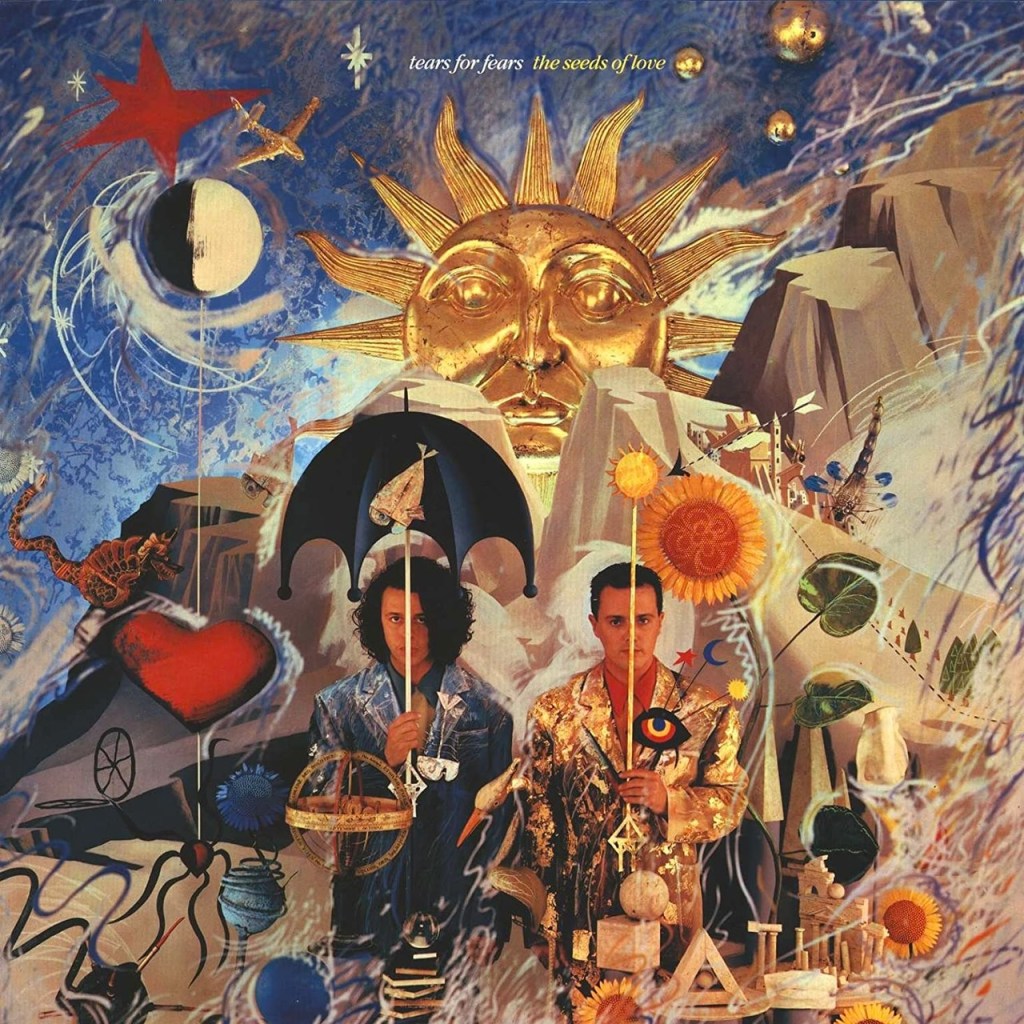
The Seeds Of Love (1989)
UK: 1. US: 8.
HOPE: “Man, I never slept so hard, I never dreamt so well”. God, I love The Seeds of Love. I believe it to be TFF’s artistic pinnacle. It’s their most lyrically and sonically dense album but it’s also their most poetic and playful. And while it mostly speaks of passionate emotions stirred up by humanity as a whole as opposed to another person, it is still a ridiculously romantic record.
On Seeds, political hypocrisy, inter-band hatred, and the impending apocalypse are bumps in the road of some epic love affair with the world itself. Sure, the overall instrumentation and arrangements are bloated as fuck but they never mask the gorgeous overall melodicism. And yes, it’s kind of angry in parts. But it hasn’t given up. It desperately wants things to get better. When I listen to Seeds, I hear hope (just to clarify, I don’t mean nerd-ass me, I mean the actual feeling known as hope).
MATTHEW: Haha. When I listen to Seeds I think of you, Hope, because I know how much you love the album. And I want to love it as much as you do, but . . . back in 1989, I felt conflicted—and I still do. I was blown away by “Sowing the Seeds of Love” when it came out in the summer of ‘89, a month before the album. We TFF fans had endured what was in those days a troubling and agonizingly long wait (4 and ½ years between Songs and Seeds), but the lead single seemed to make it all worthwhile. The combination of catchy pop hooks and intricate production, somehow both simple and complex all at the same time, remains stunning—the pinnacle of TFF creativity, probably (for me, at least) their single best song. The long multipart bridge is alone a thing of glory. Hope, in the past you’ve asked of albums by other bands if a record was their Pet Sounds? Well, “Sowing the Seeds” struck me as TFF’s “Good Vibrations.” (Not an original observation, I am aware.) Both are whole-albums-in-one-song, promising to presage a dazzling set of similar creations. Of course, that did not happen with the Beach Boys. But did TFF fulfill that promise? I’m glad it did for you. For me, not quite.
HOPE: Been waiting for this. A band we both love that hits each of us in a (mostly) completely different way. It’s so hard to align classic, critically acclaimed pop songs and albums from the ‘60s and ‘70s with those of the ‘80s, a decade that has never been taken seriously in such matters. Which is why I love your connecting “Good Vibrations” to “Seeds”. That fascinated me, it made sense! Of course, I know people who would completely recoil at that idea (I can feel them bristling right now). And of course, for me, the indulgent, the passionate Seeds of Love full-length LP more than met expectations.
It’s impossible to talk about Seeds without acknowledging the “P” word: Yes nerds, I’m talking about “Prog (rock).” Seeds can occasionally seem and sound kinda Proggy. There is a faint scent of early ’70s Yes and Genesis emanating from its pores…meaning the average run-time for a song on the album is six (staggering) minutes…meaning it is home to a few hefty instrumental passages…meaning it isn’t remotely sexy. And like any Prog album worth its salt, in order to really experience it properly, the album requires that you listen to it in sequence. Or at least Side Two does, aka tracks 5 through 8. Shed your cool-guy/gal cynicism at the door! Pull on your (imaginary) Sgt.Pepper jacket! Grab your (also imaginary) sword! Drop the needle (yeah, I just did that) and close your eyes!…which brings us to Side One…
MATTHEW: You won’t find much argument from me on Side One. For me, four of the eight tracks on Seeds are incredible, indispensable TFF creations, and three of them are on Side One. In addition to the sort-of-title track, the opening and closing tracks to the side (“Woman in Chains” and “Advice For The Young At Heart”) are not only stunning and beautiful, they represent forward leaps in terms of content and style. Curt recently commented on how production on The Hurting was “pretty tiny,” with Songs showing “a leap in production values that continued with The Seeds of Love.” But what really stands out on Side One is not only the further complexity of the production but the increasing sophistication of lyrical theme and song construction.TFF are seldom associated with the rather cringey sub-genre term “sophisti-pop,” but isn’t this sophisti-pop at its best?
HOPE: “Sophisti-pop” has always sounded like an insult to me, implying as it does that something is both excessively slick and smarty-pants. In the context of a review, I always took it to mean “well-dressed but ball-less” (if you will). Roxy Music’s beauteous Avalon album or Spandau Ballet’s True are prime ‘80s examples…but damn, that term “sophisti-pop” feels covertly dismissive to my cynical ears.
Fast forward: Here’s Roland and Oleta doing “Woman In Chains” live in 1995. An extra bow of reverence to Oleta’s vocal here because, good lord.
HOPE: Oh, Side One of Seeds! It is immaculate! Starting the album with “Woman In Chains”, an extraordinary power ballad about ingrained misogyny that features a non-bloke TFF outsider on co-lead vocals with Roland—the then unknown American soul singer Oleta Adams—was a bold move. It was a mission statement as well. For all its prog-iness, Seeds is brimming with the essence of something that is never associated with Prog or TFF prior to this album: women. The album is positively brimming with estrogen. Five of the album’s eight songs were co-written by singer-pianist Nicky Holland. The wondrous aforementioned Oleta appears on four tracks total and plays a gigantic vocal part on two of ‘em. Seeds is fueled by Girl Power.
Also, I have to shout(!) out one of TFF’s underappreciated and most magical powers, aka Roland’s gorgeously soulful whine of a voice. Seeds is home to the most insane vocal runs, dramatic swoops and craziest falsettos he’s ever done (to this day). The vocal interplay between he and Oleta on the beautifully bitter big boy ballad, “Badman’s Song” still blows me away, oh man.Their voices are so in sync that half the time it’s impossible to tell where he ends and she begins. For years I confused who was singing which verse in certain songs, so similar in timbre were the two (true).
“Sowing the Seeds of Love” is The Beatles’s timeless pop chant “I Am the Walrus” with a sunshiney chorus in place of the original’s gloomy, eerie drone. It’s also the most uplifting, imaginary anti-Margaret Thatcher-marching parade song ever. “Advice For The Young At Heart” is by far the sweetest, most shimmery song on the whole album and the most prototypically Tears for Fears-ish soundwise (kinda like “Everybody Wants to Rule the World’s” mature older sibling). It’s also the only song on the album to feature a Curt Smith lead vocal…in fact, he feels like something of a peripheral presence on Seeds, with only a single songwriting credit and one solitary lead vocal to his name. Turned out trouble was brewing, but as I was so excessively besotted with the album upon release, I missed this concerning little nugget completely, I never thought “where the hell is Curt?” Did you Matthew?
MATTHEW: I absolutely did back then and I still do. Curt has one co-writing credit (“Sowing”) and one vocal (as you say, “Advice”). I never had a problem with the roles played by Oleta Adams or Nicky Holland on the album, and I appreciate them even more now. You are right about the marriage of Oleta’s and Roland’s voices (stunningly smooth) and Holland was clearly crucial to the album being finished—and being the evolutionary step forward that it is. And yet I miss Curt. I miss him on the next two albums too, and I came to think of Seeds of Love as the first of a trio of Roland solo albums under the TFF name. Is that unfair?
Probably. But there’s more that is probably unfair (and won’t be popular with readers who agree with you, Hope). I mentioned above that for me half the album is superb—the sublime trio of “Chains,” “Seeds,” and “Advice,” from Side One, and the gorgeous “Famous Last Words,” which just edges out “Goodnight Song” as the best TFF album closer ever. So, what about the other four songs? None are filler, none are songs I skip. But from the very start, I missed Curt, I missed the privileging of melody over jazzy jamming, and I missed the pop punch that I had come to expect of TFF. I’m no longer annoyed by what I once perceived as the self-indulgence of “Badman.” And I am no longer mystified by the two “Knife” songs, whose pop (and even hit) potential seemed tantalizingly close yet unrealized. I now value them for what they are—steps deliberately far away from Big Chair and towards the next two Orzabal-as-TFF albums. But I cannot ever get over the many years of disappointment. Well, maybe I will eventually!
HOPE: Maybe I’ll help you get there. Because Side Two of Seeds is my official favorite side in the whole TFF discography world. Which is, admittedly, kinda weird. None of its four occupants were hits.Their lyrics are ridiculously overwrought. All the tracks are stuffed to the gills with stuff (sax, singers, soul). Yet, I’ve got nothing but love for these bloated pop beauties. From “Standing on the Corner of the Third World” (Quiet/Loud) to “Swords and Knives” (Plush and windy, birth and death) to “Year of the Knife” (Gigantic heartbreak locomotive w/a fabulously screeching vocal by Roland) to perfectly dreamy bluster-bomb “Famous Last Words” (Apocalyptic love theme), decades have passed but my love for Side Two has never subsided. I don’t even consider these tracks to be four separate entities. No, when I listen to ‘em, they just sound like one big crazy-ass song.
MATTHEW: And those should be our final words on Seeds of Love!
Rating: HOPE: 10/10. MATTHEW: 8/10
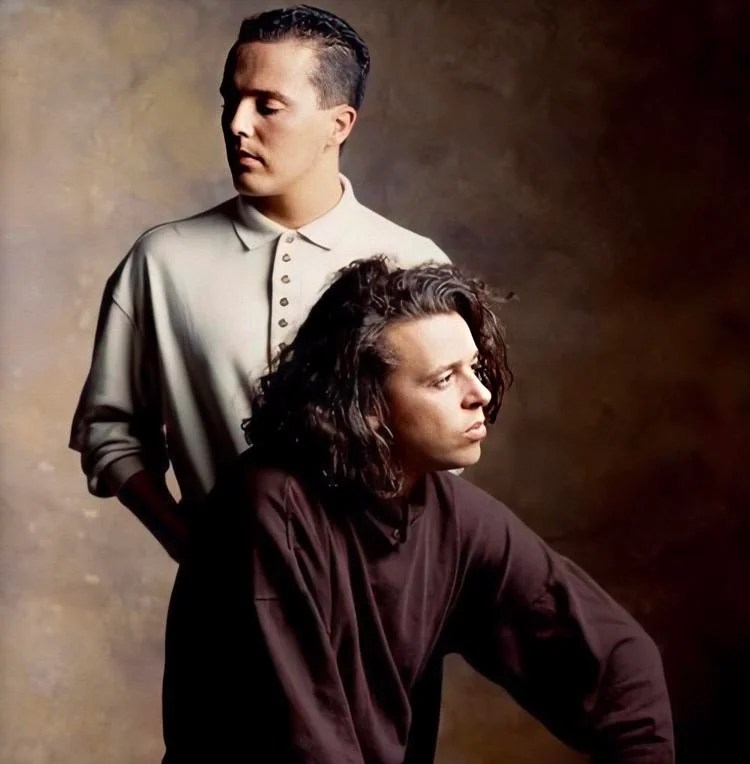
Uh oh.
Start of the Breakdown: Seeds of Love took roughly three years and cost millions of pounds to record. All the initial album recordings that had been done by the legendary UK production team of Clive Langer and Alan Winstanley were scrapped and redone. During that time, key Tears stalwarts Ian Stanley (keyboardist & co-writer) and Chris Hughes (producer & co-writer) left the (band) fold. It was a bumpy road that got a helluva lot bumpier once the tour in support of the album concluded.
That’s when Curt Smith decided to quit Tears for Fears.
And Roland decided to keep it going without him.
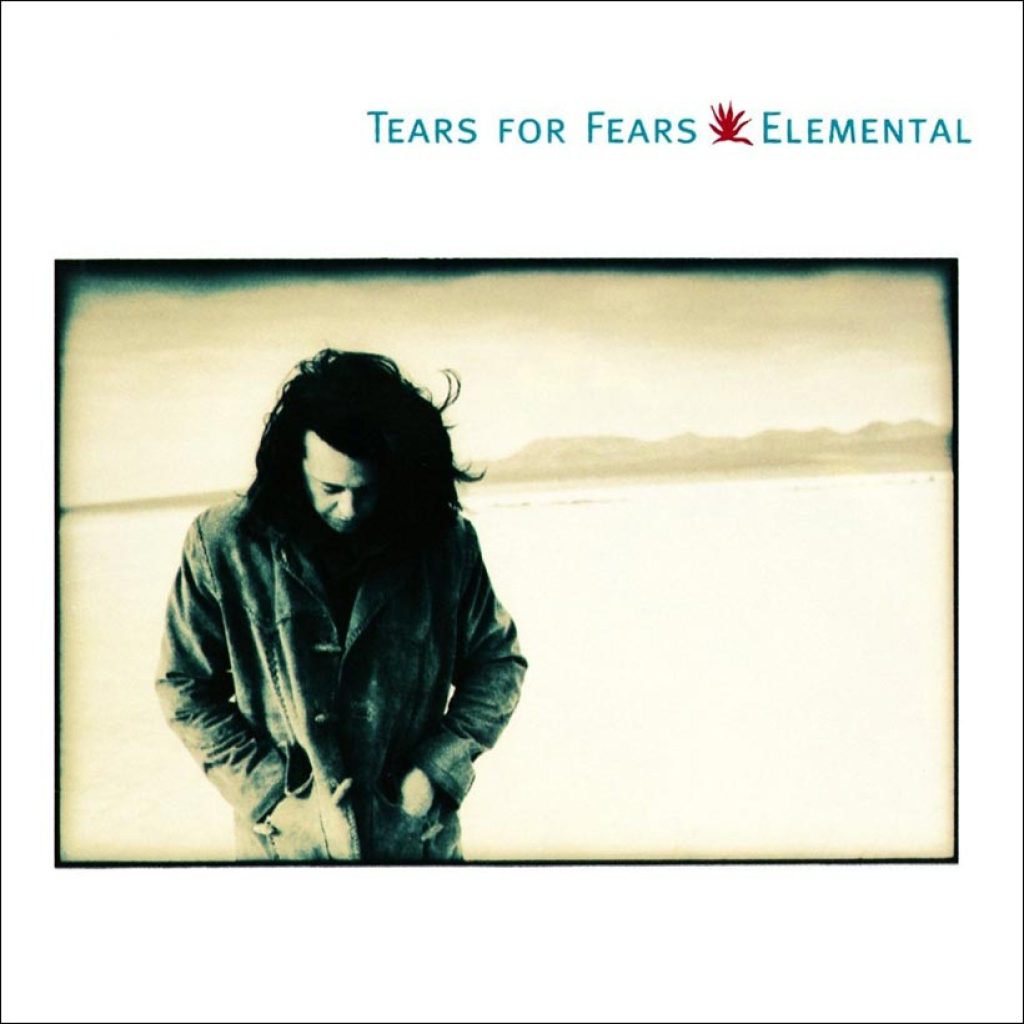
Elemental (1993)
UK: 5. US: 45.
MATTHEW: Wow, this album begins well! The opening trio of songs are so good. Orzabal power pop at its best. I’ve always loved these 15 minutes that comprise “Elemental,” “Cold,” and “Break it Down Again” as a sequel of sorts to the hits of the previous albums, a reassurance that Roland could still write slamming pop songs. That anthemic “stone cold!” outro to “Cold” is the kind of bonus hook that I cherished on the first two albums—and on the best parts of Seeds. But … I still missed Curt. And perhaps Adams and Holland too. Because Elemental drops off after that, as it slips into sounding less Orzabal-as-TFF and more just solo-Orzabal.
HOPE: The first half of the ‘90s were a particularly bad time for the ‘80s. After a decade of synthesizer domination, guitar-led sounds made a comeback (hello Grunge and Britpop). Apparently, synthpop had been an embarrassing phase and now it was back to business. With a few possible exceptions (Cure, Smiths, R.E.M., perhaps Depeche) ‘80s pop could only be mentioned in hushed tones. As I was working in an HMV megastore at the time, I speak from painful, personal experience. To admit you still spent time listening to Culture Club or The Thompson Twins in the ‘90s was to expose yourself as being resolutely uncool and stuck in the past. All of which is to say, in 1993 the prospect of a new Tears for Fears album, a Curt-free one no less, wasn’t a highly anticipated event.
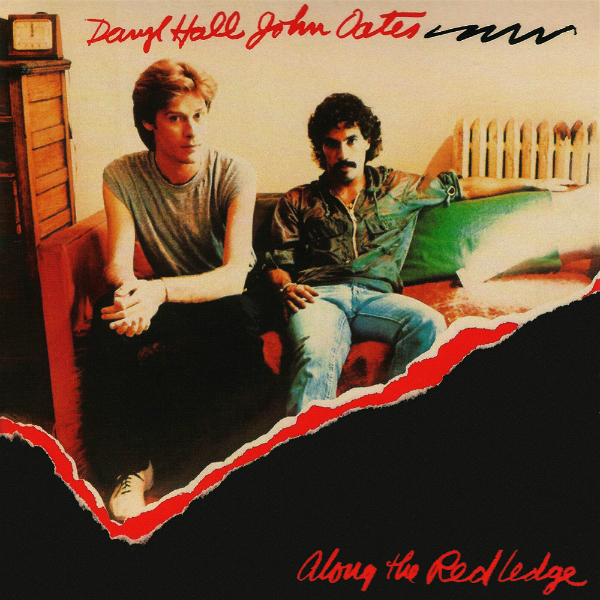
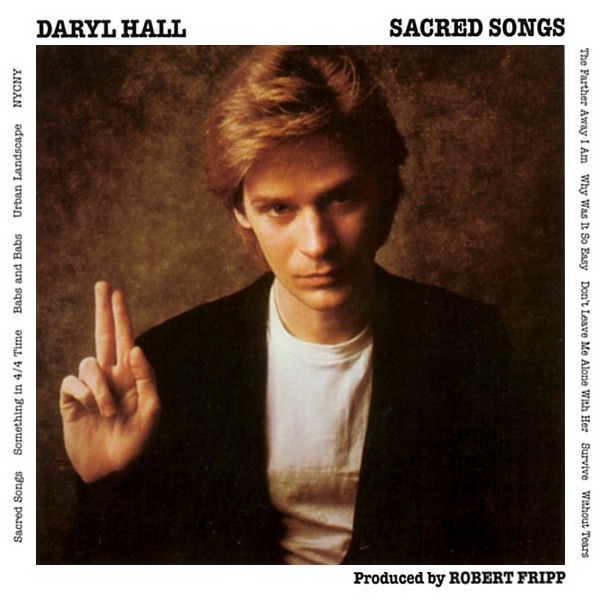
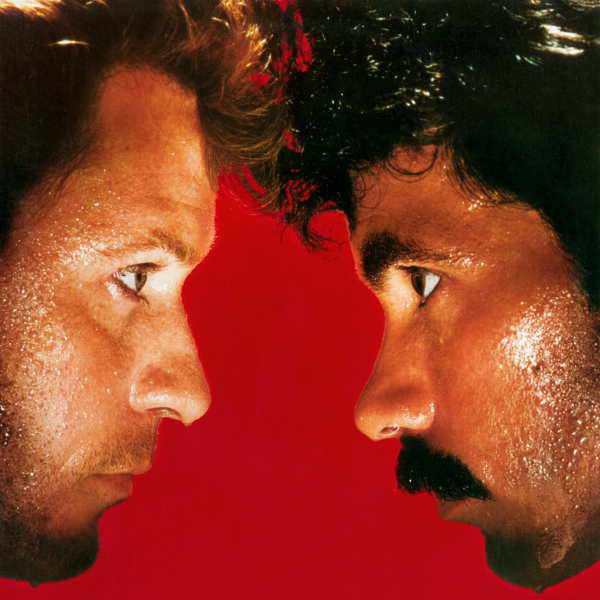
To make matters worse, Roland was now openly dismissive of Curt’s contribution to TFF, and implied that he’d thought of him more as a hired hand than an equal partner. In an interview with Entertainment Weekly upon the album’s release, Roland said “The relationship I had with Curt was like that of a producer to an artist…I’d help him get his vocals right and even write his songs for him. It wasn’t really a shared thing.” Oof. Welcome to the official rough patch of TFF (it reminds me a lot of Daryl Hall’s similarly brutal description of John Oates’s contribution to Hall & Oates in his 2007 interview with Pitchfork. In that conversation, he stated that he and John were “not an equal duo and never had been. I’m 90% and he’s 10% and that’s the way it is”. Double oof).
Nine of Elemental’s ten tracks were written with old friend Alan Griffiths who had been with the band The Escape with Seeds of Love collaborator Nicky Holland back in the ‘80s. The album is okay…ish. There is significantly more filler than had ever appeared on a TFF LP before (literally half the songs). Oh, there are some patches of sunlight, like booming, declarative fun boy “Break it Down Again” (“Here we go!”) and shimmery closer “Goodnight Song” which sounds like an actual, vintage TFF song. And “Cold” has a fabulous little hook stuffed inside its chilly bones. But there isn’t much to embrace after that.
MATTHEW: Right. And the moments of anti-Curt spite, combined with the album’s weaker middle, didn’t help TFF’s reputation, especially in the US (where it would be another three decades before a TFF album broke the Top 40, while “Break it Down Again” would prove to be their last US single to even break the Top 100). I don’t think any of the middle five songs of Elemental are bad, and I like the closing pair of “Brian Wilson Said” and “Goodnight Song” (which is lovely and, as you say, sounds very TFF!). But some of those middle five come close to B-side territory (I’m looking at you, “Gas Giants”) and are weaker, for example, than “Laid So Low” (a UK Top 20 hit single a year before this album, recorded for TFF’s first hits compilation). For me, Elemental is, like Seeds, half great and half good but slightly disappointing. Ok, far more disappointing for me than Seeds, and for you they are obviously at opposite ends of the TFF catalog spectrum of quality. So, do we agree that, in the end, this is the least successful of the seven studio albums?
HOPE: Oh yes, I agree with every word of that! That “middle five,” as you dubbed them, are unmemorable apart from Roland’s mean I-hate-Curt-themed “Fish Out of Water” which is memorable for reasons that have zero to do with song quality. It’s all strictly B-Side stuff. And yes, “Laid So Low”, which we’ll get to in detail shortly, dwarfs every one of those middling tracks and maybe everything else apart from “Break It Down Again.”
Rating: HOPE: 5/10. MATTHEW: 6/10
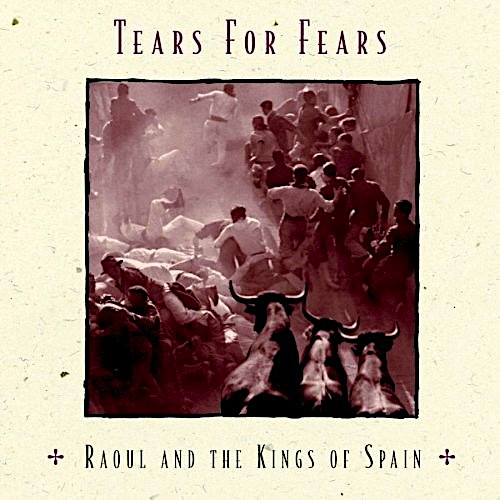
Raoul And The Kings Of Spain (1995)
UK: 41. US: 79.
HOPE: Roland’s second collaborative effort with Alan Griffiths, Raoul and the Kings of Spain is a far better record than its predecessor. While there are a handful of rockier tracks present, including the booming title track that opens the album, the loud boys are not the songs that shine brightest on Raoul. No, it’s the sensitive souls. “Secrets”, with its colossal chorus and the heartbreaking “Me and My Big Ideas” (the latter a duet with the still brilliant Oleta Adams) are THE two greatest ballads in the history of TFF. Have I ever daydreamed about Celine Dion or Whitney Houston covering these tracks in the pop fantasyland that exists inside my head, complete with dramatic key changes in the final verse of each song? Oh hell yes I have. One tiny step below “Secrets” and “Me and My…” are “Sketches of Pain” and the noble “I Choose You”. Both are beauties.
MATTHEW: On those two ballads (“Secrets” and “Me and My…”) we agree, and for me too “Sketches of Pain” and “I Choose You” are enduring beauties. So do we agree on the whole album? Maybe? For me, that handful of amazing songs, too often overlooked, are gems nestled into a brilliant, lamentably-forgotten album.
Does every band have a “most underrated” album? It’s a fun category, so let’s say yes—and might this be that album in the TFF catalog? It not only has a series of fantastic Roland compositions that could’ve been huge singles, but it is strong from start to finish. From the opening guitar riff, this album rocks. It is packed with signature TFF elements— Roland’s powerful vocals, his irresistible melodies, and his angst-tinged lyrics (this may be his most personal record). And this is very much a ‘90s album, despite TFF’s ‘80s association, fueled not by synths but by propulsive drumming and guitar work. Even the superbly soaring “Secrets” (oh yes, one of the great TFF hits that never was) is a rock-pop power ballad. And that Roland/Oleta ballad (I’m back to “Me and My…”) surely stands as tall as their Seeds of Love collaborations (another hit single in a parallel universe)!
So why did the album flop (no hits, lowest charting, second poorest selling, doing well only in continental Europe)? It was partly that 1995 was a low-point for artists labeled as “80s.” Even lower than 1993, when Elemental came out, as you noted earlier, Hope. Being neither Britpop nor grunge, TFF were so yesterday. Hardcore fans knew better, of course. But not enough people heard the album or its singles to get that this wasn’t a re-tread by has-beens but top-notch pop-rock, new and compelling. The title track squeaked into the #31 slot in the UK for a week; in the US, the only single to chart at all was “God’s Mistake,” and it stalled at #102. Part of the problem was the last-minute label shift from Mercury (the label for the first four albums) to Epic—who failed to promote the album and its singles and then promptly dropped the band. That dumbassery left this gem out in the cold. It has never been released on vinyl, and its tracks are excluded from all TFF compilations. Grrrr!
HOPE: In regards to the more rocking tunes present on Raoul, the title track, and “Sorry” are the champs, the most compelling and memorable of the harder stuff. But they are nowhere near as brilliant as the ballads. And those ballads are the main reason why this LP should get more love and attention than it’s been afforded. So I’m with you. Raoul is the most underrated album in the discography.
MATTHEW: There have been times over the years when I’ve thought this was the best TFF album of them all. The album is so good that, for me, there’s no filler at all. If I had to pick a least favorite track, I’d pick “Don’t Drink the Water.” Remove that and you have a blissful ballad pairing of “I Choose You” with “Big Ideas.” But the B-sides are so strong that there is no shortage of substitutes for “Water”; in fact, “Until I Drown” totally deserves to be upgraded. And “Queen of Compromise” was justifiably on the original unreleased Mercury version of the album.
Do I still miss Curt? Absolutely. “He just does something to a song,” as Roland recently said of Curt (admitting that “the two biggest songs in our catalogue, and the biggest earners for me, are ‘Mad World’ and ‘Everybody Wants to Rule the World,’ and that’s Curt singing them”). I wish they’d remix and reissue the Raoul album with Curt’s vocals added. And make it a double vinyl album with the B-sides as bonus tracks on Side 4.
HOPE: I suck, which is to say, I don’t think about Curt’s absence when I listen to this album. But I love your fantastical proposal. For me, Raoul sits just outside the top three TFF LPs ever (aka Hurting, Chair and Seeds). Also, you just triggered that “what if” reflex: If “Water” and “Humdrum and Humble” had been left off and replaced with handsome B-side’s “Until I Drown”, “Queen of Compromise” and the extremely Tears for Fearsy “All of the Angels” on the official 1995 version of the album, Raoul would be at least tied for third on my list.
Rating: HOPE: 7/10. MATTHEW: 9/10
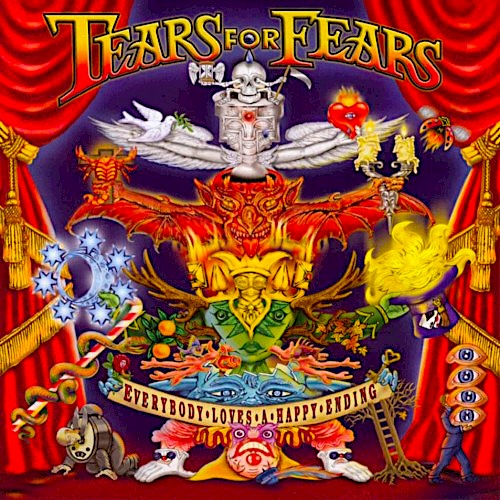
Everybody Loves A Happy Ending (US 2004 / UK 2005)
UK: 45. US: 46.
HOPE: Roland and Curt reunite! Tears for Fears are two again! But is this album better than either of the two Roland-only excursions that preceded it? Hmmm…
MATTHEW: I have a feeling we are going to disagree on this one, Hope. Because I absolutely love this album! “Make love your destination,” indeed. Finally, a Roland-and-Curt sequel to Seeds. Or is it more like a sequel to the Roland-only Elemental and Raoul, but Curt-enhanced? If you, dear reader, think that my adoration for Raoul and Everybody Loves a Happy Ending (ELAHE?) is a bit odd, you’re not alone. Neither were hits. They are the bottom of the TFF sales barrel. Both received mixed reviews. Hope will, I suspect, understand where you are coming from. But if, like me, you think they are hugely underrated and unfairly ignored works of pop genius, you’re not alone either. What the hell, I might as well own it: this is my favorite TFF album! Yes, I said it.
Ok, I’m being hyperbolic and provocative. I’m not claiming that ELAHE is the best TFF album? It isn’t the enduring pop masterpiece that is Big Chair. It isn’t the creative reach-for-the-stars that is Seeds. It lacks the thematic coherence of Raoul. And, to be less giddy about it, I’ve ranked it below Big Chair, sharing the second-favorite spot with Raoul. But I do maintain that ELAHE is an artful and compelling collection of a dozen catchy and expertly assembled pop songs. With all its lyrical and musical references to their influences (especially The Beatles, for which critics gave the duo flack), and to their own past albums, this is in a way the ultimate TFF album.
HOPE: While I think you are crazy, and I mean that with love Matthew, I also appreciate and lovingly respect your passionate declaration! Who among us nerds (you reading this, us here) hasn’t experienced irrational, inexplicable love for the “wrong” album? The one that wasn’t successful or showered with acclaim? The one nobody talks about? Sometimes the rules just don’t apply. Sometimes, something just freakin’ hits. You fall in love with a discographic dark horse (so to speak) and you want to tell the world!
So here’s the deal, there are parts of ELAHE that I completely adore.
The bright-as-the-blazing-sun anthem “Secret World” is one of my favorite TFF songs of all-time (it is effing fabulous). The album’s first single, “Closest Thing to Heaven” is a mammoth pop monster, with a giant claw of a hook (also fabulous). There are moments of genuine melodic wonder sprinkled along the way, like the simultaneously slick-yet-grungy “Killing With Kindness”, which sounds like some weird TFF approximation of a Smashing Pumpkins song, and the wonderfully messy Beatle-pastiche/sonic son of “Sowing the Seeds of Love”, “Who Killed Tangerine”. Coincidentally (?) those four songs are the loudest, most bombastic tracks on the album. They are also the best, most memorable ones. And their beautiful bigness makes the rest of the tracks sound very small indeed.
“Call Me Mellow”, “Size of Sorrow”,”Quiet Ones” and ”Who You Are” are like a singular fluffy cloud. They are pleasant, not powerful. They waft as one, nothing stands out. The rest of the album’s residents—“The Devil”, “Ladybird”,”Last Days on Earth” and the title track—don’t even hold up to the songs comprising the aforementioned fluffy cloud. It’s not that they are bad, they just don’t stick or stand out.
Now comes the math. While ELAHE is better than Elemental as a complete listening experience, only four of its 12 songs truly deliver the goods. Using that metric (translation: four great songs vs. eight okay ones), ELAHE doesn’t qualify as a great album. Okay Matthew, let me have it!
MATTHEW: That’s very restrained and fair, Hope. Especially compared to some of the mixed reviews the album received upon release. But while I understand why those critics found the intricate and layered production to be a mess, I only hear fascinating connections and delightful details. Likewise, I understand your 4-great-vs-8-ok verdict, and it makes sense to me, but I still hear 11 great or really good songs vs only one that is just ok. Only one? Well, honestly (and happily) yes! That’s “The Devil,” which I’d drop if I was in some parallel fantasy universe in charge of prepping the TFF catalogue for re-release—or, in the case of ELAHE, original release—on vinyl. At over 54” it is too long for vinyl anyway, so removing that track puts the album just under 51” and thus in vinyl range. Still, I hear the audiophiles saying I’d need to cut one more track. And you’ve given us seven options, Hope. But here’s my point: I enjoy the album so much, and I hear it so consistently packed with irresistible hooks and melodies, that I couldn’t decide. The first five tracks are too good to mess with. For example, check out what happens 2’18” into “Who Killed Tangerine”: a superb, anthemic bridge that returns for the last two minutes of the song, just begging to be heard live with thousands of fans chanting “It’s not over!” And a vinyl Side Two might begin with the indispensable “Quiet Ones,” although “Secret World” is so damn good it should probably kick off Side Two. But then it probably should have been a Top Ten smash everywhere —because, as you say Hope, it is effing fabulous! TFF pop at its best. Hell, pop music at its best. And the album doesn’t even drop off after that: “Killing with Kindness” is epic, indeed, another anthem awaiting a stadium-full of fans. “Ladybird” is as singalong-good as the album’s two singles, and “Last Days on Earth” might be up there with the best TFF album closers.
HOPE: ELAHE will always be a cherry-picking affair for me. I am wholeheartedly in alignment with you on one thing though: It would be wickedly cool to hear a whole arena of TFF nerds scream-singing along to “Who Killed Tangerine”.
Rating: HOPE: 6/10. MATTHEW: 9/10
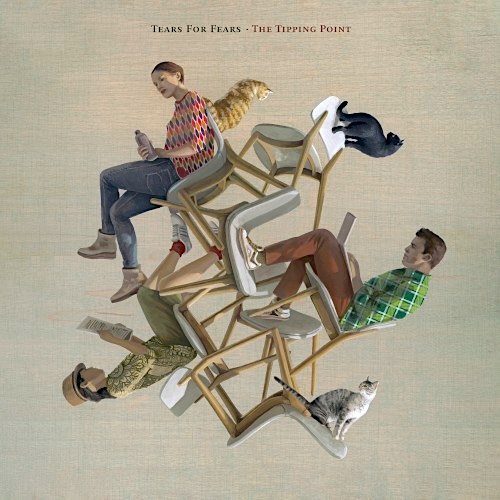
The Tipping Point (2022)
UK: 2. US: 8.
HOPE: The Tipping Point is a total bottom-loader. None of the first five tracks move me. The latter five tracks on the other hand, well, they’ve got something going on girl. Let me put it this way: if Tipping Point were an EP featuring just those last five songs, I’d rate it eight out of ten at least.
MATTHEW: You know how you never forget the first time you hear certain songs? Usually it happens when you are doing something mundane, like driving to work or making dinner. I was doing yardwork when I first heard “No Small Thing,” the opening track of The Tipping Point. I was stunned. I just sat on the front step playing it over and over. It seemed to draw upon all the previous albums, lyrically and musically, to create something so viscerally compelling. That ending! Such a fantastic example of TFF’s particular blend of pop and rock. So your reaction, Hope, so different to mine, is a fascinating case of how two people who so often are on the same musical wavelength sometimes hear very differently. And your reaction also prompts this question: do I find the whole album as good as its first song?
Well, I absolutely agree that the second half of the album has something going on. It is held together by very good to great songs, built around the middle track, Orzabal’s “Master Plan,” which is to my ears a TFF classic, worthy of a spot on any Essentials list. But my reservations about the first half don’t extend to all five tracks, just the fourth (“Break the Man”) and fifth (“My Demons”). They’re not terrible, but they don’t grab me the way so many TFF songs do. Do you agree, Hope? Perhaps many fans wouldn’t agree, and Curt and Roland surely wouldn’t — as both were singles and included in the setlist for the album’s tour.
HOPE: Totally agree on both “Break the Man” and the sub-Depeche Mode “My Demons”! They sound formulaic. But then, so does the title track…and while I appreciate the sweaty, robustness of “No Small Thing”, the melody on that one doesn’t quite hit. But once track six arrives, the Peter Gabriel meets “Woman In Chains” epic “Rivers of Mercy”, a door opens (Fun Fact: It’s Roland’s fave tune on the album). What comes after that is kinda beautiful.
MATTHEW: Yes, “Rivers of Mercy” is gorgeous. And there’s lots of “kinda beautiful” moments in this second side/half of the album. I confess that after Songs for a Nervous Planet came out in 2024 (we get to that album below), I made my own version of Tipping Point: I replaced “Break the Man” and “Demons” with the far superior “Astronaut” and “The Girl I Call Home,” which sit so well with the second five Tipping songs. And sometimes I play with resequencing: “Please Be Happy” rolls exquisitely into “Stay,” for example.
HOPE: I concur on that last thought! “Please Be Happy”, with its heartwrenchingly personal lyrics (relating to Roland’s late wife Caroline) and exceptionally lovely Curt vocal is maybe the most Beatle-ish ballad in the whole discography. It’s mournful but there is brightness in its arrangement (Oh the strings, the strings). It definitely brings to mind “The Long and Winding Road” for me. The love notes to the Fab Four don’t stop there. Hands aloft, stadium anthem ”Master Plan” —“a dig” at TFF’s former manager— is also stuffed to the gills with winks and nods toward the lads. It even includes an actual namecheck, for God’s sake.
The album winds down with MGMT meets Goldfrapp meets Motown, “End of Night” (forgive me for that description but I swear that’s what it sounds like) and mellow, vintage-Tears-for-Fearsy closer “Stay”.
That is just one rock solid block of songs.
Okay, I need to do “A Matthew” right now! You know what would have made this album great? If two of the three of the bonus tracks that were made available only on deluxe edition/exclusive versions of the album (Hello Target shoppers!) appeared on the initial, available-everywhere release of the album. Both “Shame (Cry Heaven)” and “Secret Location” are exquisite modern day TFF songs. Evict any of the aforementioned Side A tracks, pop these two in, and Tipping becomes a great TFF album as opposed to a good one.
MATTHEW: Absolutely. There are three such bonus tracks, all worth having but not on most (or any?) streaming services (although I have all three on a CD version of Tipping Point that was neither hard to find nor costly). And I agree that “Secret Location” and “Shame” are without any doubt worthy of being full album tracks. With TFF, even the bonus tracks are good! The fact is, there is no bad TFF album, no slow decline from a never-equaled debut, no bell curve of quality, no sequence of late-in-life records whose occasional great moments merely remind us of how very good the band once was (yeah, I’m looking at you New Order, Depeche Mode, Duran Duran, etc.). Tipping Point isn’t their best, but it’s a great album. Not a great album for a band that started four decades earlier. A great album full stop (period).
HOPE: I appreciate your brutal yet honest observation regarding the other icons you list. Because I can’t help myself, I’ll just add to the pile by saying not one of them has made a song in the 21st century that is worthy of appearing in a Top Twenty list of their greatest creations (Dear Depeche Mode’s “Freelove”, while I do adore you, you handsome little demon, you will never match the greatness of your older siblings). That’s what sets TFF apart from their ‘80s peers. They have.
Rating: HOPE: 7/10. MATTHEW: 8/10
Compilations
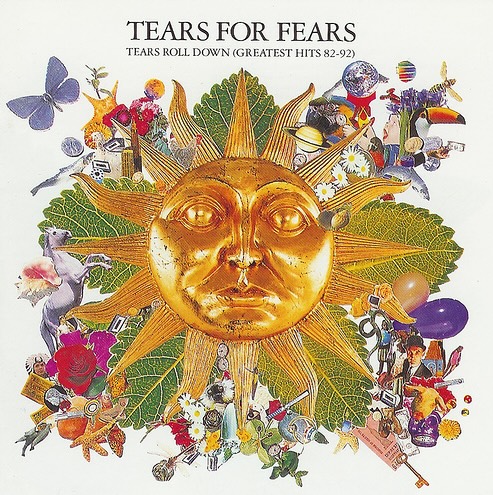
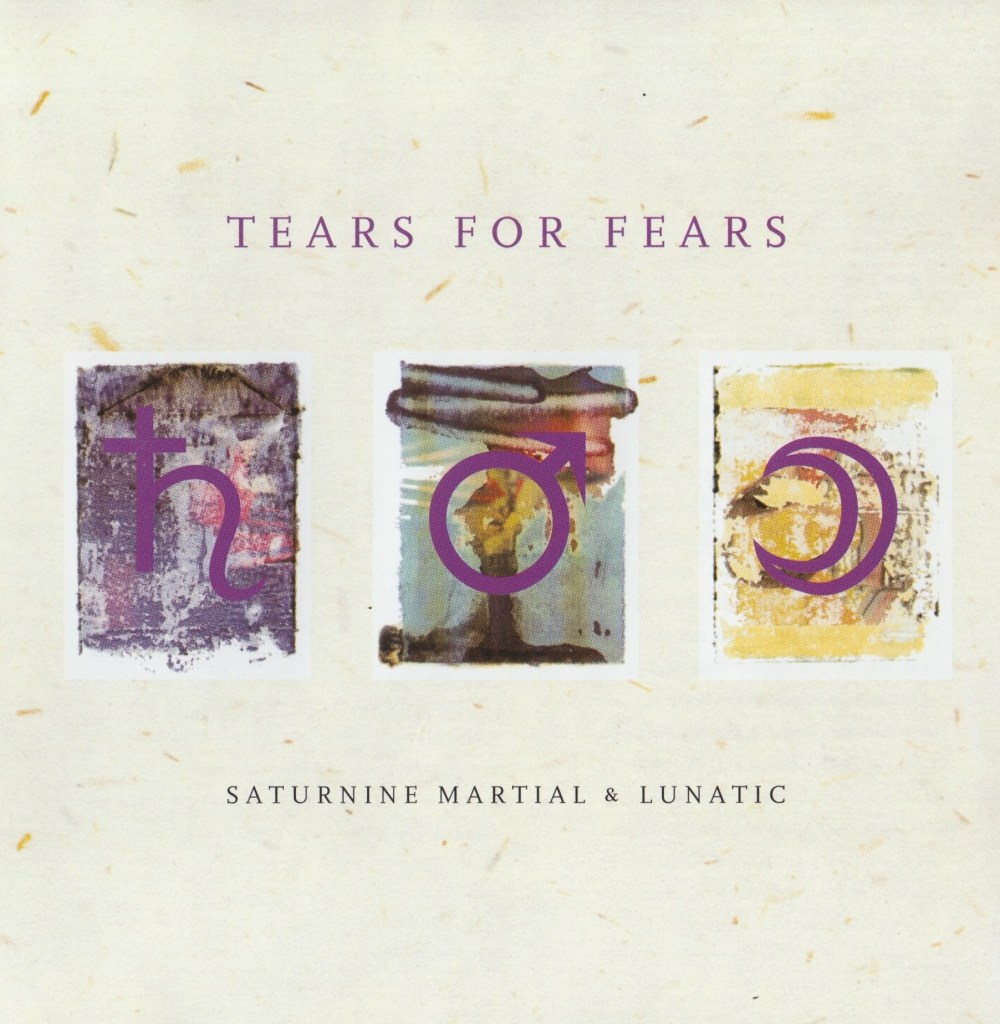
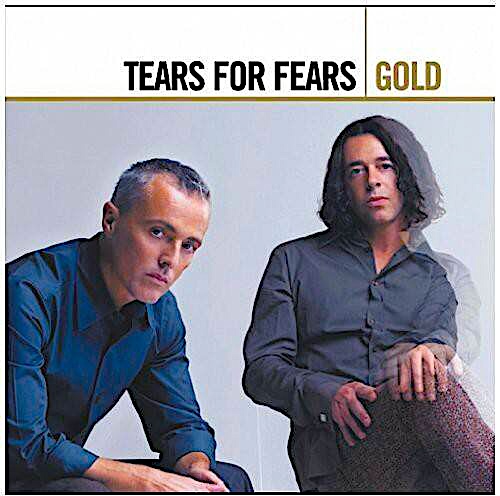
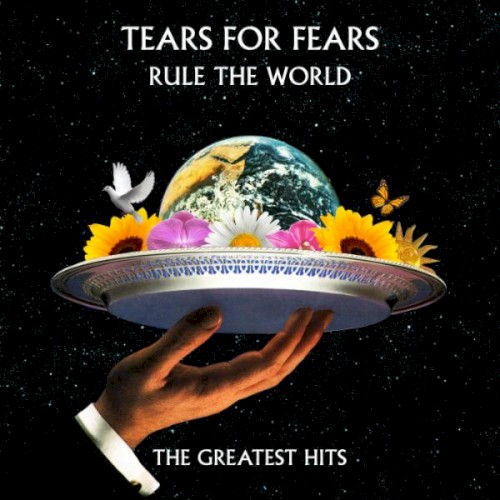
Tears Roll Down (Greatest Hits 82-92) (1992) (UK 2, US 53)
Saturnine Martial & Lunatic (1996) (Did Not Chart)
Gold (2006) (Did Not Chart)
Rule the World: The Greatest Hits (2017) (UK 13, US Did Not Chart)
HOPE: Our ability to make playlists has not rendered that old stocking stuffer/lazy listeners delight/completist pocket picker, better known as ‘The Greatest Hits’ album, obsolete. They are still pretty popular with the general public, and for a legacy artist, they often rank as their most popular albums on the streaming services…which I find disappointing (Sad Nerd). Especially in the case of TFF as there are countless deep cuts worth hearing. Sorry, had to get that out of my system.
The only thing that mattered to me about Tears Roll Down (Greatest Hits 82-92), the first ever TFF compilation, was the song the LP was named after, and its only new track, “Laid So Low (Tears Roll Down).” Home to lines like “I was humble for you” and “I wish you were my enemy”, it is beautifully bitter and hard not to hear as a goodbye letter from Roland to Curt. As for the comp itself, it’s pretty redundant at this point right?
MATTHEW: Yup. The two official “best of” options are, unfortunately, outdated and flawed. The mixes on streaming platforms are better, but they are indeed no substitute for well-curated “hits” CDs and records. The out-of-print Tears Roll Down runs through the singles from the first three albums, plus “Laid So Low”—which was, as you say, the excellent new single released in 1992 to boost this compilation (it reached #17 in Britain, the album #2). All great songs but an obsolete collection. So what about the 2017 “update,” Rule the World: the Greatest Hits? Well, it repeats 11 singles from Tears Roll Down but tragically omits that one single not on a regular album (“Laid So Low”). And both compilations omit 1983’s “The Way You Are.” Sigh! Rule the World is longer than Tears Roll Down (74” vs 59”), adding one song from each of the later three albums, plus two new songs: “I Love You But I’m Lost” (a single that failed to chart anywhere in the world, despite being the first TFF single in twelve years), and an earlier (slightly inferior) version of Tipping Point track “Stay.” So, a satisfying update? For me, not at all! What do you think?
HOPE: I’m with you. Rule the World: the Greatest Hits should have been the official gathering place for all the singles. It should be noted that there have been a bunch of other TFF compilations released apart from the two official band-approved releases we’ve been talking about. Most of them are record company concoctions with no participation from TFF themselves in terms of actual song choices. Some are exclusive to Germany, Japan, Brazil and Europe. Honestly, there are too damn many.
So after all this, which is the ideal starter kit? Well, I can’t believe I’m saying this, it’s one of the freakin’ aforementioned label-sanctioned releases. Gold, is a 2-CD set that was first released in 2006. It has 24 songs, including “The Way You Are” and “Laid So Low” plus all the obvious stuff. If you are craving a comp on CD, this is the one to track down, as it is the most comprehensive.
MATTHEW: Yes, Gold comes closest to being the ideal starter kit, as you put it, out of the twenty-two (!) additional compilations listed on Wikipedia. Most were released only in one or a few foreign markets, as you say, so Gold has the virtue of being easily found in the US and UK. But it is still a lost opportunity. It lacks three singles that are on Shout (a 2001 US-only compilation; a near-identical edition was released in Germany): “Suffer the Children,” “I Believe (A Soulful Re-Recording),” and “Goodnight Song.” And while I like that Gold includes two Raoul and four ELAHE singles, why end with so-so B-side-wanna-be “Floating Down the River,” and a random live version of “Mad World”? Grump, grump. Oh dear, Hope, are we turning into those fans that love a band’s music but complain incessantly online over what tracks are on what releases (Hope says YES)? And we are far from done yet! At least we aren’t moaning about formats! Well, for now, let’s leave it at this: We agree that the hits comps are most unsatisfactory, and that a complete double-disc collection of all the singles is long overdue. So, what about B-sides and live cuts?
Let’s take a “Laid So Low (Tears Roll Down)” break. Chew that bone baby.
HOPE: And now, the weird kid. 1996’s Saturnine Martial and Lunatic is a collection of B-Sides and rarities. Its closing track is TFF’s most peculiar and charmingly inaccessible single, “The Way You Are”, which had only been released as a freestanding entity and had never appeared on an album before this (The aforementioned Gold comp it appeared on was released a decade after Saturnine, in 2006) . I rarely listen to this exceedingly odd oddball of a song, but remain fascinated that something with such a slippery chorus and abstract arrangement was released as a freakin’ single ( FYI: Roland and Curt hate this one). But seriously, this collection requires a patience only hardcore fans are likely to muster. In keeping with the B-Side culture of the time (of the ‘80s primarily) the songs are a bit more off-the-wall and experimental than the stuff that appeared on the actual studio albums. So it ain’t for everyone. That said, there are a few straightforward, let’s call them “huggable” tunes among its 18(!) tracks. The wickedly cool, saxophone-fueled freight train, should’ve-been-a-studio-album-track “Always in the Past” and the emotive cover of Robert Wyatt’s bizarro gorgeo-sity “Sea Song” make Saturnine worth having (Ridiculous Sidebar: I love Roland’s pronunciation of “porpoise” as “por-poys” on the latter. Say it with me, “por-poys”.) And gotta give an honorable mention to “New Star” which not only sounds a hell of a lot like a latter day Simple Minds song, but curiously predicts the future sound of Oasis.
MATTHEW: Yes, Saturnine Martial and Lunatic is a 78-minute slog of an album, not for the faint-hearted, a very mixed bag, and for fans only. But of course it was not intended to be an album, but rather a convenient storage device for various B-sides and extras, and as such it is indispensable for even casual fans—worth it for a handful of gems like “Sea Song” (as you note), the paint-by-numbers copy of Bowie’s “Ashes to Ashes,” and the movie soundtrack single “New Star” (the movie being 1994’s dreadful Threesome). Although it makes me pine for that long overdue CD and vinyl release of all singles on two discs, with all the non-single extras on another disc. Come on, boys!
Live Albums
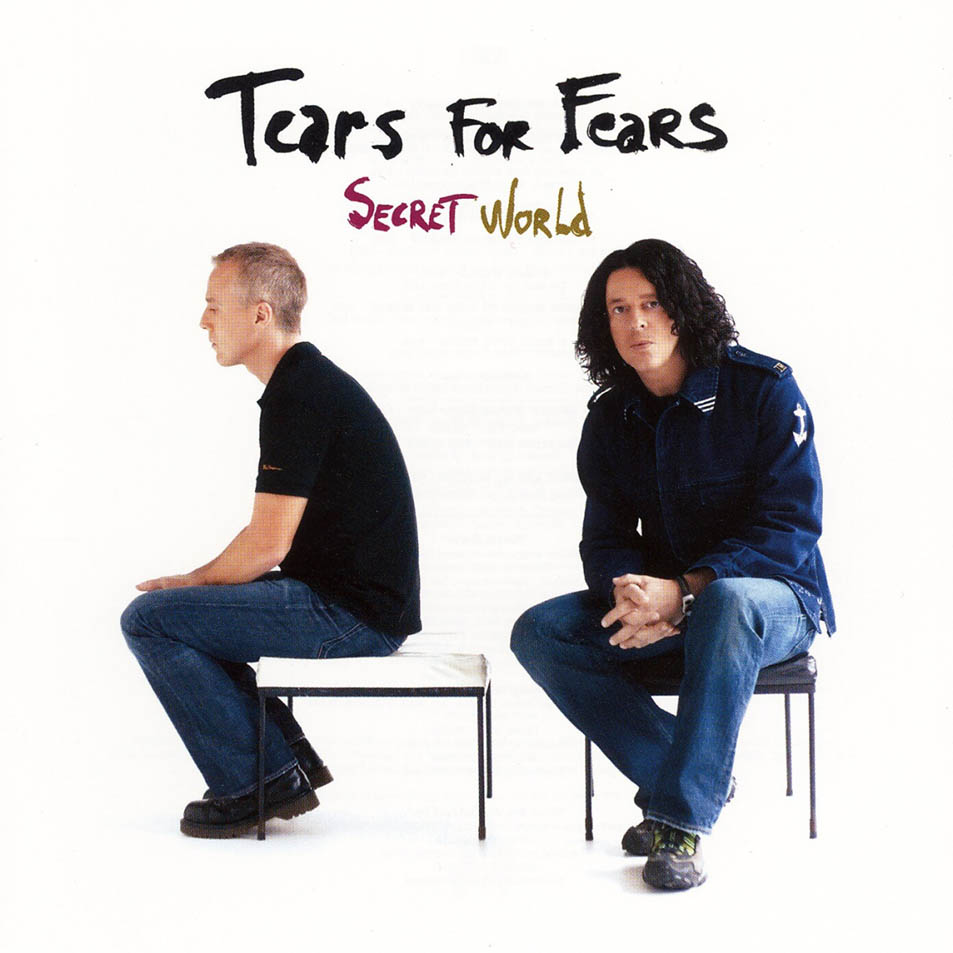
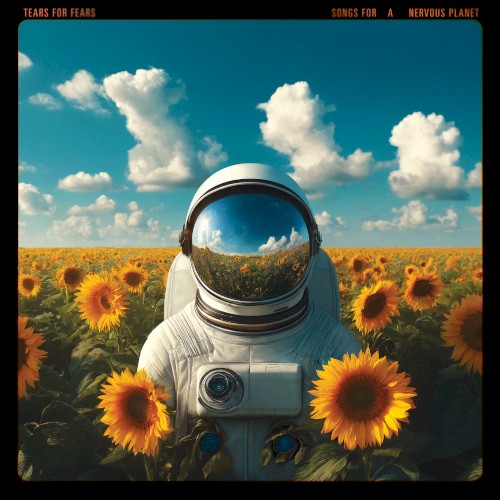
Secret World: Live in Paris (2006) (Did Not Chart)
Songs for a Nervous Planet (2024) (UK 6, US 104)
MATTHEW: Now for the live albums, of which we are only going to cover two official releases (not the bootleg or obscure ones). And in fact, the first of these is pretty obscure too. Secret World (2006) did not chart anywhere save France—where, despite it being recorded live in Paris the previous year, it only reached #106. That’s not surprising, in that it came on the heels of the band’s lowest-charting-in-the-UK album (Happy Ending or ELAHE). And it was released on a French label, as a CD+DVD only, packaged not in a jewel box but in the flimsy plastic “slim case” of the DVD era. As a fan of ELAHE, I like that a third of the nine live tracks on here are from that album. It is also fun to hear Roland speaking (quite good!) French. And the final three tracks are hits from Big Chair, with an interesting live rendition of “Shout” as the closer. The vocals on all nine live tracks are fine, but a tad shaky (in contrast to Songs for a Nervous Planet, where they seem to have been polished in production—some fans will prefer the polish, some the keeping-it-real live feel). The “Radio Edit” studio version of “Secret World” then follows on the CD, which sort of makes sense as the CD and DVD begin with the live version, and that is the name of this album. But what makes no sense at all is what follows: the above-mentioned “Floating Down the River,” and “What Are We Fighting For” (question mark missing), taken from the 1998 solo Curt Smith album Mayfield (to which we briefly return below). It is also fine, nothing more than that. But what really annoys me is the mixing of live and studio bonus tracks, which feels random and unthinking—weder Fisch noch Fleisch, a great German expression, literally “neither fish nor flesh,” that describes unsatisfactory compromises. Give us a full-length live album or give us an updated full-length compilation of B-sides and extras, but don’t tantalize us with a half-arsed hybrid of both!
From Songs for a Nervous Planet, here’s the live version of “Secret World” featuring a hat tip to Paul McCartney and Wings’ “Let ‘Em In”. It is a real chocolate-covered cherry, which is to say, it’s good.
MATTHEW: I’m still ranting here. Because the other live album is Songs for a Nervous Planet (2024). And it’s great. Nothing to rival studio versions, but an enjoyable variant on them. And yet there’s a catch, similar to what annoys me about Secret World. Imagine this: your band is experiencing an extraordinary comeback, with your first album in two decades going Top Ten in the UK and US, your tour so successful that a live album is being prepared, and the creative juices are flowing so well that you have four new songs, half of another studio album! So, you release the live album (maybe with a live version of one of the new songs, included as a teaser), then take half a year to write and record four to six more songs, and release a sequel to that comeback hit. Right? Oh no. The TFF lads decided instead to shove those four new studio recordings onto the front end of the live album. WTAF?!
HOPE: I am ambivalent about the TFF live recordings.The experience of seeing TFF live is, like a lot of bands, far more compelling than hearing a live recording on a plain old piece of vinyl/CD or streaming service. Secret, is simply a document of what TFF were sounding like on their 2005 tour. Nothing more, nothing less. The two “new” songs tacked onto the end of it are kind of ho-hum.
In regards to (freakin’) Songs for a Nervous Planet, I share your irritation Matthew. It’s a confusing hodge podge that doesn’t work as an album. And get this, until you pointed out that TFF had mixed live songs with new studio tracks like this before (on Secret World), I hadn’t even remembered that this concept wasn’t a new, random thing for them. At first I wondered if my dislike of Songs for a Nervous Planet’s layout in particular was justified. I mean, I love Genesis’s Three Sides Live from 1982 and that LP features, yup, three live sides (recorded at various shows no less) and fourth side of studio tracks. So why did I worship that oddly constructed concoction and feel frustrated with TFF’s similar layout? Well, I think I accepted the Gens mix of live and studio because it was a “heyday album”, meaning when it was released they were still very much a contemporary band. It had vitality and topicality. It felt like an intentional assemblage. Songs for a Nervous Planet does not. It feels like a hasty marketing decision.
MATTHEW: Sadly, yup. Part of my annoyance over the structure of Planet is that those four new songs are good. More than that, “Astronaut” and “The Girl That I Call Home” are great, and I really like “Say Goodbye to Mum and Dad” too. All three made it onto a playlist of 33 TFF faves I made last year. And they would have anchored a new studio album nicely. Take the best of those Tipping Point “bonus” tracks we mentioned and you’re over half way to an album. Easy for me to say, I know, and I’m not downplaying the inspiration and perspiration that goes into turning Roland’s genius into studio recordings. But still. Aaargh!
HOPE: Concurring! “Astronaut” deserved a better showcase. Also, songs about feeling like an outsider and wanting to live in another galaxy rule.
MATTHEW: Absolutely. “Astronaut” deserved better. It is incredible that almost half a century after Roland and Curt started a band together (the pre-TFF band Graduate), they can still deliver a pop song so strong and memorable. How about a retrospective singles compilation that begins with “Astronaut” and goes backwards, including every single—all forty (I think!) of them—ending with “Suffer the Children.” Or maybe ending with “Elvis Should Play Ska”?
HOPE: Yeah, but no. Better to end where TFF began, at “Suffer the Children.” Sure, “Elvis Should Play Ska” would take us back to the first Orzabal and Smith single, as it was the only 7” release from Acting My Age, the 1980 album by their first band, the quirky, okay-ish, mostly Mod-style five-piece Graduate. But it is a total outlier (to me) and bears no sonic relation to TFF. It’d be disruptive.
The other thing is that while the English Beat-esque “Elvis Should Play Ska” did hit the top ten in Spain, it isn’t that great a song. Plus it only received minimal love in the UK, peaking at sad, old #82 in the pop chart in 1980. All that matters is that the following year, Graduate broke up and formed TFF.
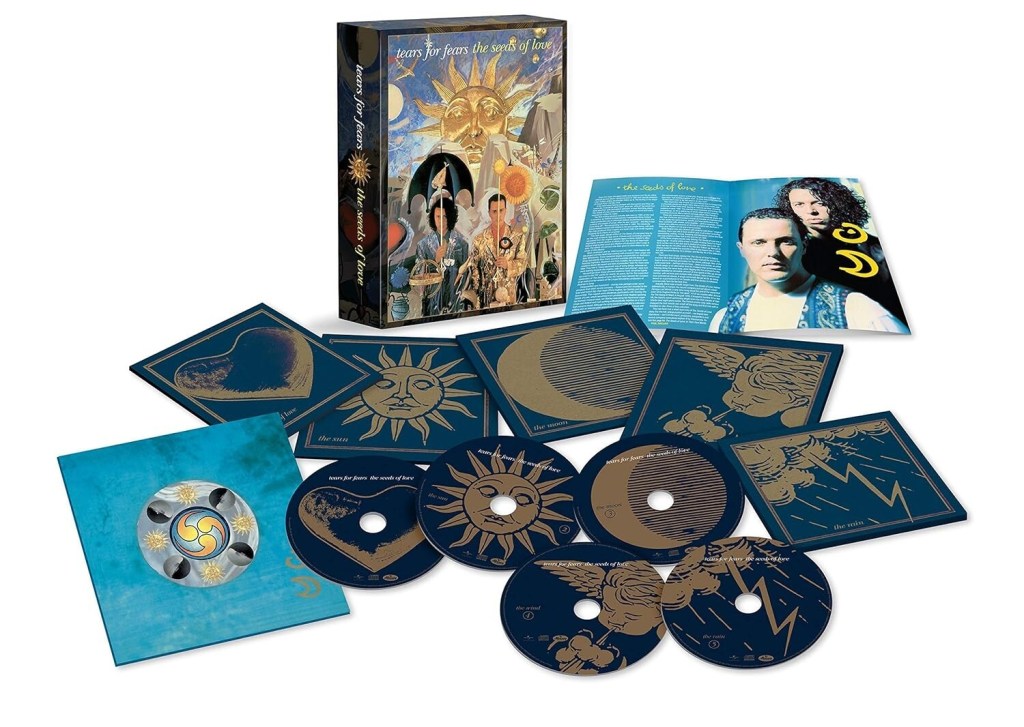
P.S.!!! Both Songs from the Big Chair and Seeds of Love received the Super Deluxe Box Set treatment (in 2014 and 2021 respectively). Each were reissued as multi-disc sets featuring demos, B-Sides, alternate mixes and live stuff (you know the drill). It’s a lot. Maybe even too much.
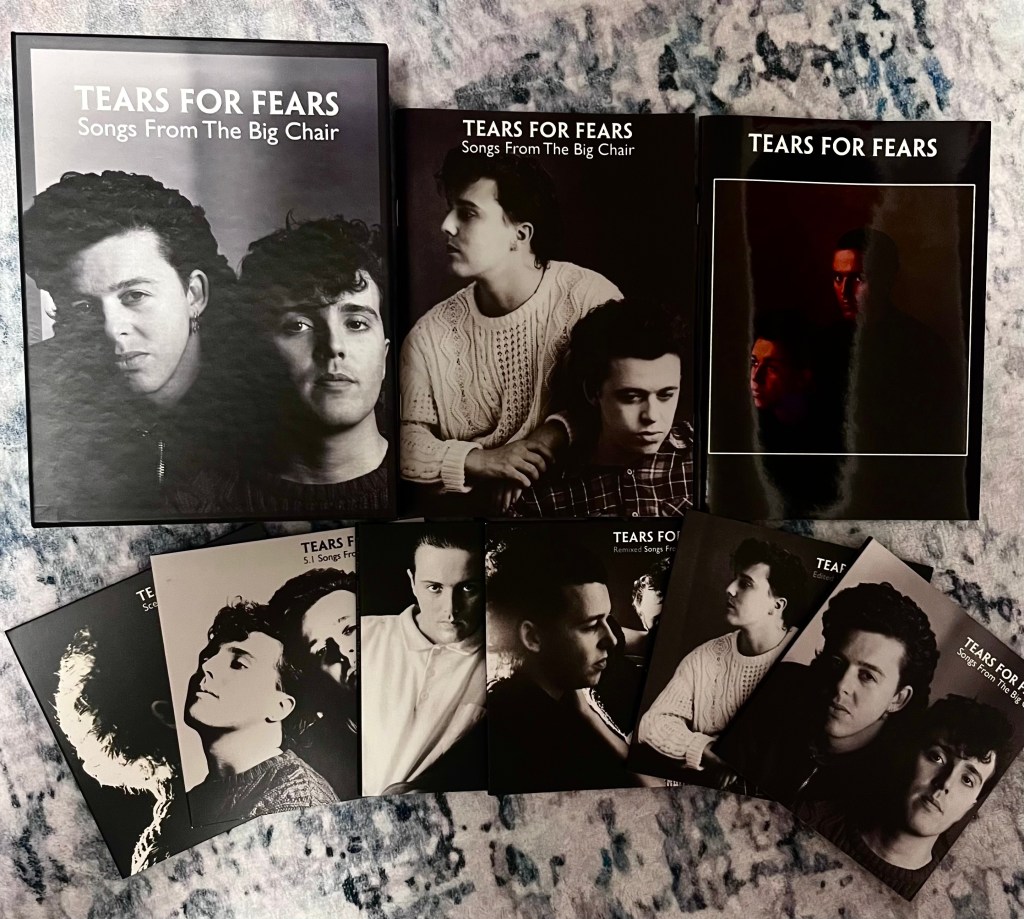
Before I took this picture, I hadn’t touched the Songs From the Big Chair box since the day I got it in 2014. Our first in person meeting after months of anticipation was electric. The box was fulsome and pretty. Then it was over.
When it comes to these exhaustive collections, not just these TFF ones, but those by any beloved artist, the most exciting moment is not listening to any of the contents. It is in fact the potential of experiencing something you’ve heard 3000x as new again and the actual unboxing. Those are the exciting parts. The moment when it first gets announced and you see there are unreleased songs in the tracklisting! Oh yes! The feeling when the box arrives and that massive shrinkwrapped monster is in your actual hands! Then comes the awed fondling of their handsome packaging and glossy booklets. You don’t simply have these Super Deluxes so much as you freakin’ possess them. Despite it not being a remotely sexual experience, it is all distressingly horny. Alas, those feelings of excitement are fleeting.
There are some interesting things on both the SFTBC and Seeds boxes but nothing revelatory. I found the demos on the latter to be intriguing listens initially (one in particular, more on that below). But the story ended the same as always.The day after I received the boxes, read their contents and loaded the music into the digital library, I was done with ‘em. They were filed on the shelf with their well-groomed brothers and sisters forever.
Solo/Outside projects
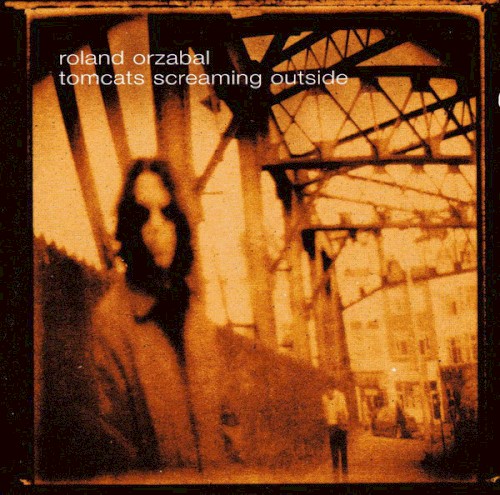
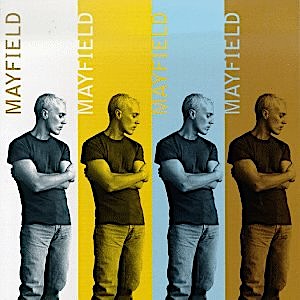
MATTHEW: Here is where we round up the various other projects into which Curt and Roland have put their creative energies. Graduate came before TFF, but what came after the 1990 split? Roland, of course, soon made two albums under the TFF banner. A third was also written and recorded, to be likewise released as a TFF album. But when Roland and Curt patched things up and reunited in 2000, Roland put out Tomcats Screaming Outside in 2001 as the only album released under his name. It did not chart. (I imagine that had Curt been involved, the album might have acquired a better name.) Meanwhile, Curt released a series of four solo albums. Soul on Board (1993), a flop in the UK and not released in the US, has long since been disowned by him. Mayfield (1998) was released under the band name Mayfield; it was re-released in 2000 as Aeroplane, with six extra tracks (which confusingly were released as an EP in the US also titled Aeroplane), and re-released again with an additional track in 2011. Halfway, Pleased (2008) and Deceptively Heavy (2013) complete the four. So what do you think of all those solo projects?
HOPE: Hmmm. Like most TFF-heads, I approached every solo excursion with hope! I mean, I bought every one! It wasn’t the hope that the albums themselves would be great but rather that there’d be one insanely fabulous new song to fall in love with forever. But of course nothing ever hit as hard as TFF. To be fair, there are a few fine things on the aforementioned LPs… just not enough to consider any of these records underrated, hidden gems as a whole. The two tracks that come closest to being “wows” on Roland’s Tomcats, are the U2-ish, anthemic “For the Love of Cain” and the moody “Day By Day By Day By Day By Day.” Curt’s lovelies are with his band Mayfield, specifically the swoony “Aeroplane” (best lyric: “All I want is a wet dream, ice-cream”. Hot.) and the mystical “Trees”. These are really nice songs, but they are not enough to lift the albums themselves out of just-okayness.
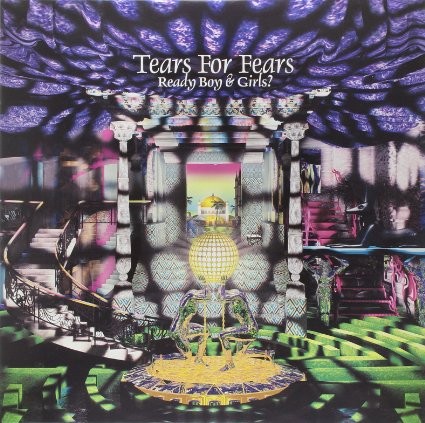
Which brings us to this weird aberration. After ten years of not recording as a duo, Roland and Curt reconvened in 2013 and recorded a messy cover of Arcade Fire’s “Ready to Start”. That song plus two additional covers of songs by Hot Chip and Animal Collective made up a three-song EP called Ready Boys & Girls that was made available for Record Store Day in 2014. It was well-intentioned but the tracks included seemed hopelessly dated even then.
MATTHEW: For me, all these albums are dispensable extras of interest only to hardcore fans. As mentioned when we talked about The Hurting, the Graduate album is a curiosity for anyone wondering what came before (but that didn’t even come close to the brilliance of The Hurting). As for the solo projects, I suspect there are some real fans of those albums, but I find they only send me fleeing back to Tears for Fears. Not because they are bad; they all contain valuable moments, even a gem or two (as you detail). But because they echo (or anticipate) TFF material without being as good as TFF records. And in the end, none of these albums are great. And as you say, the three covers on Ready Boys & Girls are from the years right before that 10” vinyl EP came out in 2014, and it is a must-have only for the most dedicated completists.
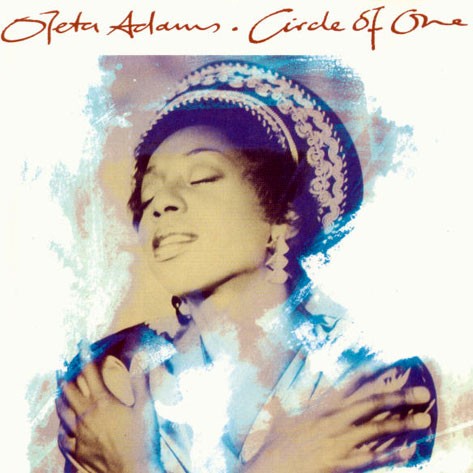
HOPE: One last thing! We need to acknowledge some of the wondrous work Roland did with other artists. First and foremost, he produced (w/David Bascombe), wrote (a few songs) and played (a bit) on former TFF bandmate Oleta Adams’s 1994 album Circle of One. It is a slick, lovely, gospel-flavored, jazz-seasoned LP for grown people and Oleta sounds like a freakin’ angel throughout. 36 years have passed and “Rhythm of Life” (Composed by Roland and Nicky Holland!) and “Get Here” remain as gorgeous as the day they were recorded.
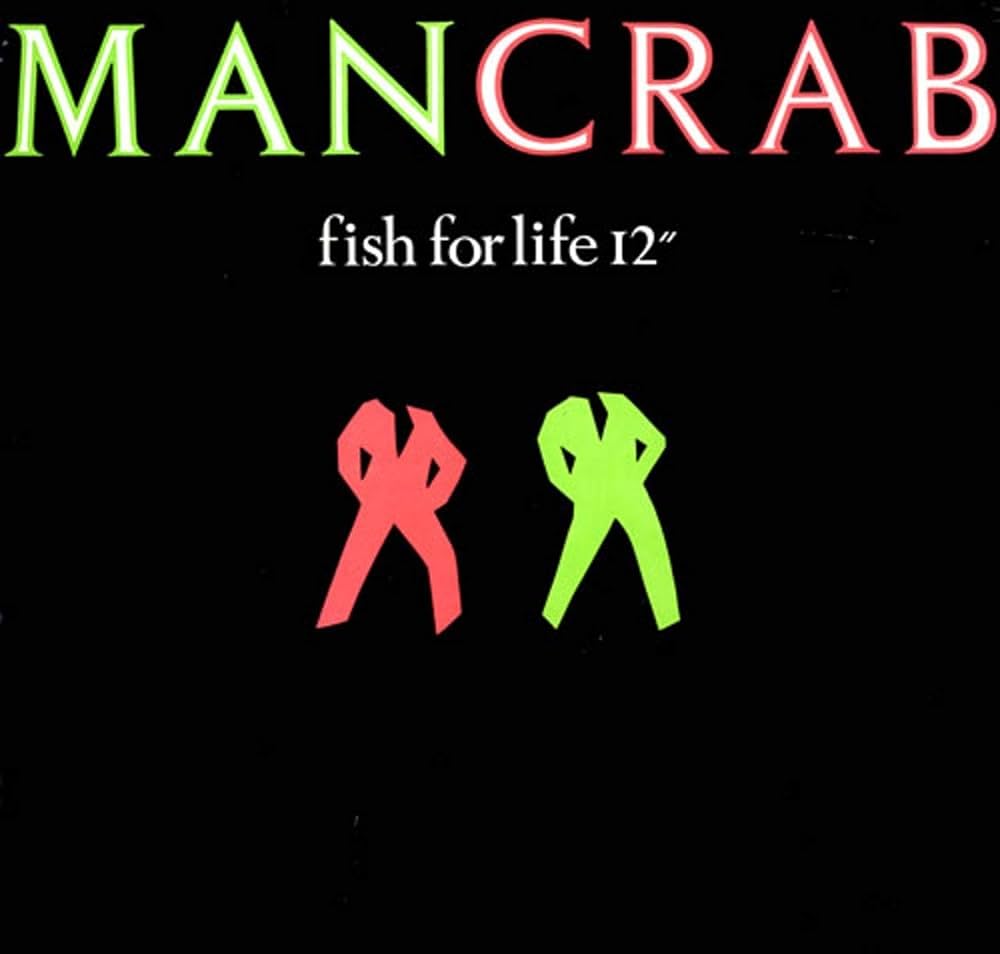
Mancrab were a duo consisting of singer Eddie Thomas and former TFF stalwart Ian Stanley. Their one and only song “Fish for Life” featured on the 1986 soundtrack of Karate Kid II (“Daniel-san, never put passion before principle”). It was written and produced by Stanley with Roland and sung by Eddie Thomas. It sounds exactly like a Tears for Fears song. If you didn’t know it was Mancrab, you’d swear on your life it was a freakin’ TFF record. It is a proper tune with a proper chorus. It was an all-star member of my favorite driving mixtape in ye olde ‘80s and if TFF had actually performed it, it’d absolutely be in my top twenty Tears tunes. Fish for Life!
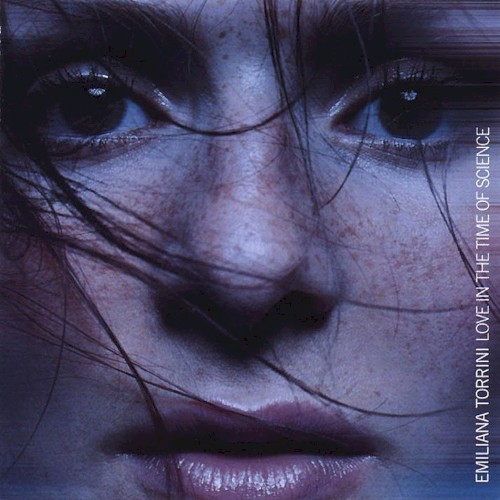
In 1999, Roland (and Alan Griffiths) produced Icelandic singer-songwriter Emiliana Torrini’s Love in the Time of Science album. They also wrote its two best songs: the sleek, stringy and sad “Wednesday’s Child” and the epic Bjork-meets-the-Beatles ballad “Baby Blue”. Both are worth seeking out.
These fours walls may not be seventh heaven but this song sure is.
MATTHEW: You’re so right about that Mancrab song! I’d love to hear it sung by Roland with Curt on backing vocals—it would sound like an outtake from late-80s TFF studio sessions. They should record it for the next album, thus giving Ian Stanley (unsung hero of early TFF albums) some royalties (online rumor has him living as a farmer in Ireland). I agree too that the Oleta Adams album is gorgeous and holds up well. Likewise, that debut Emiliana Torrini album, which I only discovered when she sang a Thievery Corporation track, and she’s long been my favorite Icelandic artist (yes, that’s tongue in cheek, and a dig at Bjork!). Again, how about Roland and Curt recording some of these songs they’ve written for others, or at least just collecting them together? I’d rather hear “Baby Blue” or “Fish for Life” than that overplayed “Mad World” cover, wouldn’t you?
HOPE: Oh man, a compilation album of TFF songs they gifted to others sung by TFF themselves? I would LOVE that. The demo for “Rhythm of Life” actually featured on the super deluxe version of Seeds of Love and Roland’s vocal on it is straight-up soul girl. ‘Tis beautiful. Oh hell, just listen to it here.
I never got into the, yes, overplayed Gary Jules’s cover of “Mad World”. It’s fine but as far as TFF covers, I’ll take Japanese Breakfast’s spare, breathy version of “Head Over Heels” over that any day (Hear it here).
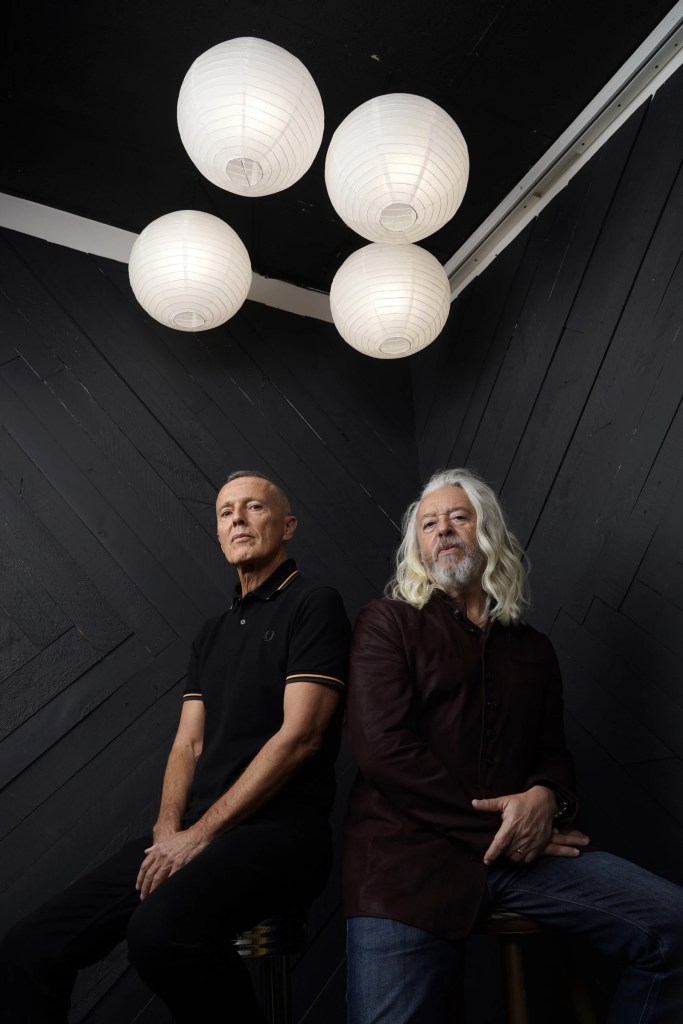
Curt And Roland being all elder statesman-ee in 2022.
In Conclusion
When Matthew and I decided to focus on Tears for Fears for this discographic breakdown, I wondered how we should frame it. And the first thing that came to mind was how despite their immense success, Roland and Curt were never showered with the same reverential love and respect as ‘80s contemporaries like Depeche Mode and The Cure. They simply weren’t as cool or, dare I say, poetic. They weren’t regarded as eccentric geniuses like Kate Bush or as masterful pop icons like George Michael. And okay, they didn’t inspire the insane sexual fervor that Duran Duran did. They were just a couple of magical nerds who created brilliant songs.
To be honest, this piece wasn’t so much about answering the question ”Who is the greatest ‘80s- era band” as it was, “hey, these blokes are as great as any one of these anointed heroes”. That “anointed” is literal. See, every single one of the aforementioned artists has been inducted into the (freakin’) Rock and Roll Hall of Fame. TFF have never even been nominated.
Okay, that place is a motherfuckin’ mess, but still.
I guess all we know is that after 40 plus years of existence, that moment when the verse turns into the chorus on “Head Over Heels” still has the ability to leave us all reeling no matter how billions of times we’ve heard it. The possibility of new TFF recordings still inspires hope that your next new favorite song is right around the corner. And that opening guitar riff on “Everybody Wants to Rule the Rule”? It still has the power to ignite a million ecstatic endorphins in every mammal who happens to be within earshot of it. Somewhere in the world right now, it’s doing that very thing. And it’ll keep on doing that as long as this giant dustball is spinning. Tears for Fears, cheers, cheers, cheers.
Ranking the Albums!
HOPE
The Seeds of Love (10/10)
Songs from the Big Chair (9/10)
The Hurting (8/10)
Raoul and the Kings of Spain (7/10)
The Tipping Point (7/10)
Everybody Loves a Happy Ending (6/10)
Elemental (6/10)
MATTHEW
1–Songs from the Big Chair (9/10)
2=Everybody Loves a Happy Ending (9/10)
2=Raoul and the Kings of Spain (9/10)
4=The Hurting (8/10)
4=The Seeds of Love (8/10)
6–The Tipping Point (8/10)
7–Elemental (6/10)
Ten Favorite Songs!
HOPE (in alphabetic order)
Famous Last Words
Head Over Heels
Laid So Low (Tears Roll Down)
Listen
Me and My Big Ideas
Secrets
Secret World
The Working Hour
Woman in Chains
Year of the Knife
MATTHEW (in alphabetic order)
Astronaut
Closest Thing to Heaven
Cold
Head Over Heels
Pale Shelter
Rivers of Mercy
Secrets
Secret World
Sowing the Seeds of Love
Woman in Chains


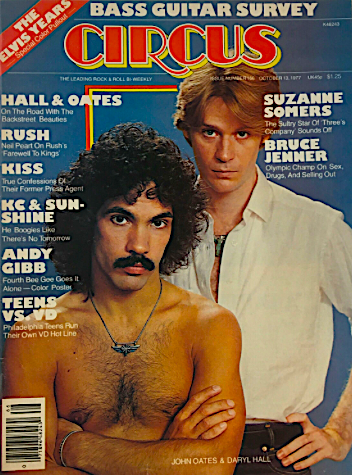
 John Sex, Jean-Michel Basquiat and Keith Haring in 1987. I swear this will make sense in a minute.