
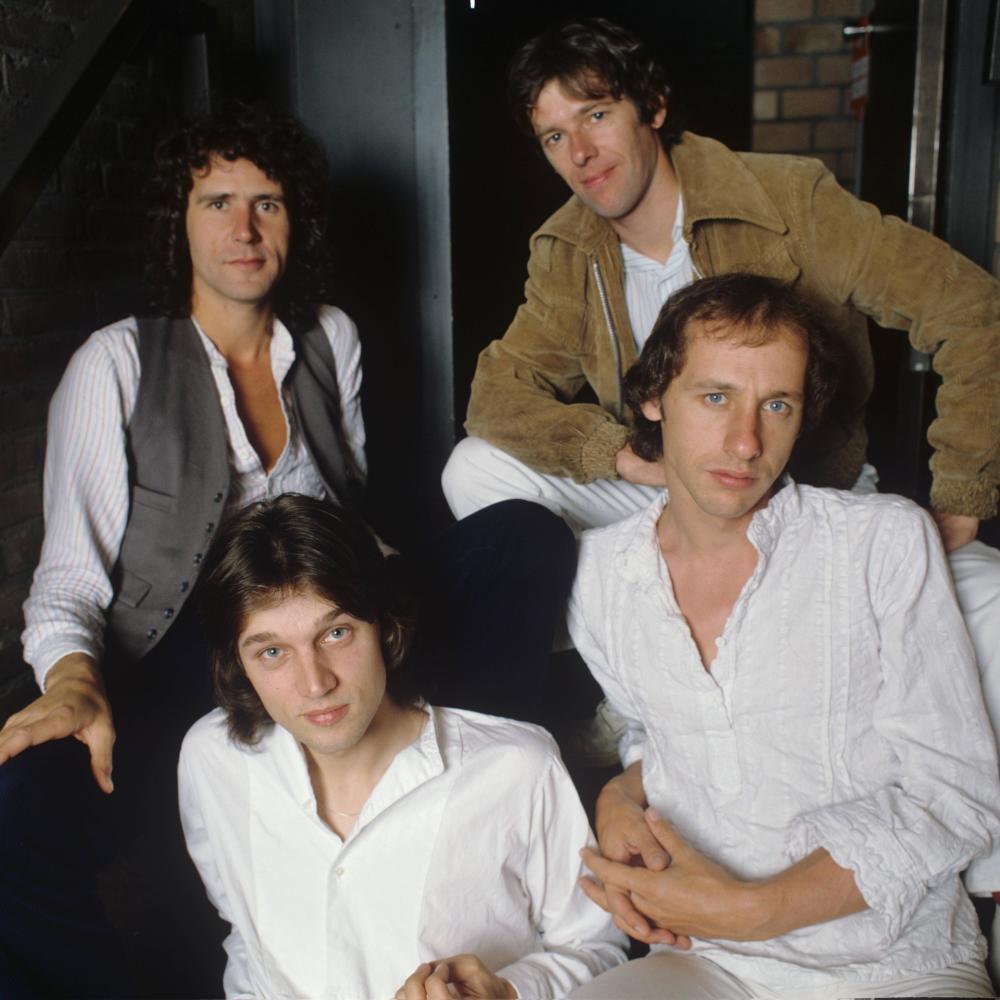
Matthew Restall, author of the brilliant Blue Moves book in the 33 1/3 series & I (Hope) have a running list of artists whose respective catalogues we want to break down (figuratively) because our commitment to nerdiness is boundless. Welcome to the latest installment of this madness, This Is My Investigation where we will attempt to rumble through and rate the discography of dad rock kingpins Dire Straits. Wheels on…
The Game Commences: Just a note on the format of this essay, Matthew and I are going to be taking turns offering up our Dire assessments and our names will appear before our respective comments. Our album rating system is the classic best of 10, the pinnacle being 10 (it’s brilliant ), the bottom being 1 (it’s terrible). Our opinions will diverge at points from both each other and maybe the world at large but we are united in appreciation of the behemoth known as Dire Straits.

Here’s Mark Knopfler shredding, just because…
MATTHEW: With a catalogue of only six studio albums—and not a single one of them bad—Dire Straits may seem like an easy band to chat about and rate (hey, we just wrote 16k words rating the entire Macca catalog so we deserve a break! Read that here). And maybe that would be the case, were our opinions matched by those of most record-buyers and music critics—who helped make one of those six records, Brothers in Arms, responsible for a third of the band’s 100 million worldwide album sales. But they don’t. So there.
HOPE: I have a weird relationship with Dire Straits. They aren’t one of my all-time favorite bands…but I do genuinely like them. So, true confession; I am not a guitar aficionado. Not an axe girl. Which is to say that while I’m appreciative of great playin’, elongated solos generally aren’t my thing. Fact is Mark Knopfler’s virtuosic skills have never been the most appealing thing about Dire Straits for me nor the magnetic force that made me want to listen; it’s always just been the songs themselves. I like their cinematic moodiness and how the average running time of a typical track is a fulsome five minutes allowing for complete headphone immersion. Put simply, I like how you can get lost in them. That’s what I like about Dire Straits.
The Albums

Dire Straits (1978)
MATTHEW: Dire Straits (1978, UK #5, US #2, Top Ten in nine nations, #1 in two of them, sold 10m): 8/10. Deceptively simple and solid, this stunning debut is crafted to be so timeless that at the peak of the punk-vs-disco era, it simply sounded right, and still sounds right today. There isn’t a duff track on it, and arguably not even a duff note. Side B—“Sultans of Swing” to “Lions”—is an amazing 22 minutes, brimming with restrained energy. It was cued as Side A on most cassette editions, including the one I flogged into submission the year it was released. I was then 14 years old, torn between The Sex Pistols and ABBA (how was it possible to love both? Was something wrong with me?!), and therefore relieved and grateful for an album that offered refuge from the “cool” minefield. Neither too edgy nor too poppy, but still hip and tuneful, Dire Straits was safe but not dull. It only gets 8/10 from here because in retrospect, and compared to what followed, its safeness seems relatively…well, safe. The potential of all its influences and elements is incipient here, yet to be explored and developed—from the elements I love, such as prog-rock long-form rock jams and moody blues-based ballads, to those I don’t (but others do), such as rockabilly and country.
HOPE: Dire Straits (1978): 4/10. Bluesy, dusty and endlessly twanging Dire Straits is built to soundtrack both lengthy journeys across desert highways or slow walks through either saloon or pub doors. But okay, I find this album a bit samey (Hey Matthew, is that the same as “dull”?). On the upside,“Wild West End” possesses an appealingly horny charm, its laid back ogling offering a more romantic spin on the sentiments expressed in Pete Townshend and Ronnie Lane’s more sinister observational anthem from the previous year “Street In The City”(listen here). And “Lions” has the sweetly appealing gait of a Thin Lizzy deep cut. But of course the undeniable star of the album is “Sultans of Swing”, the band’s signature song and eternal sonic specter (literally, as its infectious guitar figure haunts a solid handful of other DS songs in the discography)…still, as cool as those three tracks are, I just, can’t, quite, latch, onto the rest.
Communiqué (1979)
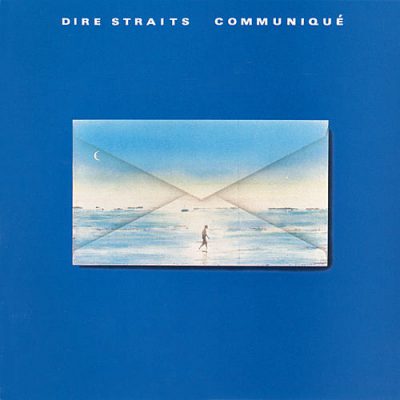
MATTHEW: Communiqué (1979, UK #5, US #11, Top Ten in eight nations, #1 in two of them, sold 7m): 9/10. Along with millions of others on both sides of the Atlantic, I was primed by my love of the first album to either be disappointed by the sequel (ooh, just not as good?) or thrilled by it (another great album so soon?). For me, it was the latter: I thought this was a brilliant sophomore album, and from the very start I loved it even more than the first; I still do. Without a “Sultans of Swing” to overshadow the album, it struck me as having more balance, a sibling to the first album, for sure, yet hinting ever so slightly at a musical development that—little did I know in ‘79—would be fully realized in the two albums to follow. Recorded in Muscle Shoals, as the last album before Mark’s brother David quit (he left during recording sessions for the next one), the album has a warmth of tone unique to the band’s catalogue. In retrospect, the tendency to rank this at the bottom of the catalogue is mystifying; some critics seemed to see the lack of a hit single (“Lady Writer” failed to repeat the success of “Sultan”) and the album’s release on the heels of the debut as signs that this was a second-rate rush-job.
Listening to the two albums now, I see zero drop in quality. In fact, the more I listen to them together, the more convinced I am that Communiqué is the better of the two, an evolutionary step forward in song-writing. I see why you find some of the debut album boring, Hope (even if it doesn’t bore me), but I think there’s nothing nondescript in this one. There’s a tension here both in the story-telling (Knopfler is a troubadour at heart) and in the guitar-picking laid-back groove that runs from the opening lick of “Once Upon a Time in the West” to the blissfully soporific lilt of “Follow Me Home.” And in the middle, the menacing masterpiece that is “Where Do You Think You’re Going?” Unlike you, Hope, I adore a ridiculously long guitar jam, and I wish the minute-long solo that ends this song was more like ten minutes (even if the change in tempo disturbingly suggests that the narrator has gone from threatening to actually chasing; oh yes, this is narrative pop-rock at its best!).
HOPE: Communiqué (1979): 4/10. These early albums feel like a journey to get to the next place, developmental in a sense. The western film theme/pub sound is still fairly dominant here which is to say my favorite track is the (slightly) weirdest one, namely the closer, “Follow Me Home” (crickets, lapping waves, sinewy, subtle and dark, yeah, I’ll have that). And “ Where Do You Think You’re Going?” possesses a pretty nifty riff and a nice snarling vocal from Knopfler…but both this and the self-titled album are just not sticky enough for me, not melodically memorable and are ultimately a little too meandering to inspire endless listening. There are a few genuinely good tracks on each but to my ears they both wither in the wake of what came after. P.S. My inner musical conspiracy theorist believes that Gordon “Sting” Sumner brazenly pilfered the guitar figure from “News” for “Fragile”.
Making Movies (1980)
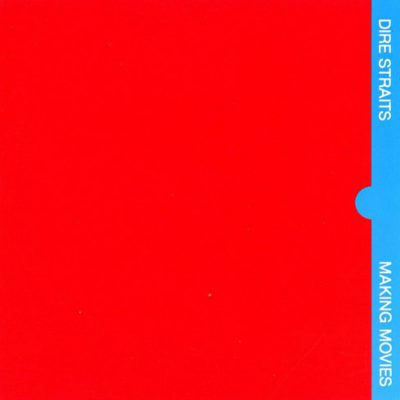
MATTHEW: Making Movies (1980, UK #4, US #19, Top Ten in six nations, sold 7m): 8/10. I adored this when it came out, and I have often returned to it for the same reason: it is a bigger, brighter, more melodic version of the formula from the first two albums. The addition of keyboardist Roy Bittan (from the E Street Band) feels like a natural step forward, and is it my imagination that there is a hint of Springsteen/E Street on here? On a different day, I might rate Making Movies a 9. Today, it’s an 8/10 because I’m bothered by something that has periodically nagged at me for forty years: isn’t this a concept album about lost love, five great songs over 30 minutes, but with two misfit tracks at the end to bring it to 38”? It’s infuriating because that first half-hour is sublime, an evolution of that troubadour style into poignancy and beauty. Stick to the first five tracks, all classics, and skip the last two clunkers.
HOPE: Making Movies (1980): 9/10. Unlike the previous 2 albums, there are no songs on Making Movies that would work to soundtrack a Western duel. No, this album is fueled by more modern day machinations…in other words, meet the new Dire Straits featuring less twanging and more grooving. The album is a perfect intermingling of wistfulness and desire ( and okay, a handful of horniness) and so yes, it could rightfully be characterized as Springsteen-esque. My first interaction with this album came not via beloved evergreen epic “Romeo and Juliet” but with the now iconic video for “Skateaway” starring the late Jayzik Azikiwe as Rollergirl (watch below). Not only did I think she was simultaneously one of the coolest and hottest humans I’d ever seen, I found the song itself intoxicating and appealingly weird, unpredictable and groovy. It also features one of my absolute favorite Knopfler scenery chewing talk-singing vocal performances. But to be clear the four songs that surround it are equally sweet ( need to call out that coda in “Romeo and Juliet” with its “you and me babe how about it?” because yes, it just plain rules). The last two tracks, “Solid Rock” and “Les Boys”, are straight up sub b-side scraps and so, in my heart, Making Movies will always be a handsome, top down five song EP.
Love Over Gold (1982)
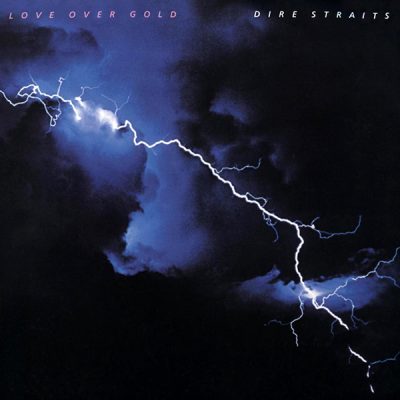
HOPE: Love Over Gold (1982, UK #1, US #19, Top Ten in eight nations, #1 in five of them, sold 8m): 7/10. Why do I sort of love Love Over Gold ? Allow me to oversimplify and generalize : 1-It sounds good in the rain, 2- There are only five songs, each of which are five minutes plus, making it ideal for complete aural immersion, 3- As such the whole thing feels very cinematic, epic and widescreen making it a fine soundtrack for lengthy daydreaming sessions. “Telegraph Road” is both fist-pumpingly melodic and tear-jerking poignant…and for a song that is the musical equivalent of War and Peace in terms of length (14-plus minutes!), it still feels like it’s over in a heartbeat. Oh “Private Investigations”, I think you are very beautiful, standing under that streetlight, all monumental and majestic, full of resignation and sadness. But hey, hey, not ignoring you “Love Over Gold”, you are also ravishing and lovely especially your literally three minute rainswept instrumental outro/coda. Sidenote; to this day I still get a kick out of hearing the seeds of “Private Dancer” the future megahit Knopfler wrote and gifted to Tina Turner in the song’s chorus.
Why do I only sort of love Love Over Gold i.e. not full on?…well there are two tracks I’m not nuts about namely the album closer “It Never Rains”, a just okay, kinda perky sub-standard Springsteen-style song and, ugh, “Industrial Disease”. I’ve tried to rationalize its inclusion by reminding myself that The Police did this kind of thing on all five of their otherwise immaculate studio albums i.e. including at least one genuinely cringey “comedic” song amongst the stellar ones. The half full mentality says the cringers ultimately make the better songs shine even more brightly…but when an album is only five songs in length and two of them are not great, their presence becomes painfully magnified. This is why my love for Love Over Gold will always have a heart-shaped asterisk next to it.
MATTHEW: Love Over Gold (1982): 9/10. Why do I unabashedly love Love Over Gold? Sometimes one is lucky enough to experience love at first listen; and that’s how it was with this record. I can still remember the first time I heard “Private Investigations”: I was listening to BBC Radio 1 in my mother’s MG, flying between the hedgerows along a tiny country road, and Tony Blackburn played the song twice in a row, because it was that good, and he didn’t care that his program manager was yelling at it him; then he said, if you like this song, you’re going to love the other track on Side A, its over twice as long! Old Tony was right. That’s the epic “Telegraph Road,” of course, and I’ve not stopped playing their combined 21” (Side A on the record) for almost four decades. The whole record is masterful.
Well, except perhaps for Side B’s “Industrial Disease,” which hinted too strongly (for my tastes) at the retro-rockabilly virus that would infect the later albums. At first, I skipped it, to go straight to the bliss of the title track and “It Never Rains.” But then I caught one of the final concerts of the Love Over Gold tour—in London in the summer of 1983—and “Industrial Disease” was great played live (as you can hear on Alchemy; see below). That helped me to see how the song serves a useful purpose, as a sort of lightweight relief in the middle of the wonderful but arguably earnest prog-rock pretentions of the two tracks before and two tracks after. That said, I’ve never completely embraced its inclusion on the album. As you note, Hope, there are echoes of “Private Dancer” in this album’s title track, making rather confounding Knopfler’s rationale for giving to Tina Turner what would become the title track to her comeback album. Wouldn’t the song have been a great way to start Side B of Love Over Gold, instead of “Disease”?!

Brothers In Arms (1985)
MATTHEW: Brothers in Arms (1985, UK #1, US #1, #1 in ten nations, sold 31m): 6/10. At 30 million units sold, and one of the ten best-selling albums of all time in the UK, this is their biggest record by far, typically cited as their best. But while it has some great tracks—like the beautiful title song—it is marred by intolerably artless and irritating tripe like “Walk of Life,” which turned me off the band for so long they’d broken up by the time I forgave them. Apparently, the producer wanted to toss “WoL” in the B-sides bin, but he was overruled by the band; if he’d had his way, he wouldn’t have been forced to edit down every track on Side A except “WoL” for the vinyl version, which only added insult to injury. The offending single is preceded by “Money For Nothing,” which is a classic example of an overexposed song: it is a brilliant rock/pop single, I understand why it remains so popular, and I don’t skip it when I’m playing the album; but I would be fine with never hearing it again.
“WoL” is then followed by “Your Latest Trick,” the fifth (!) successful single from the album, and a wonderful example of that soft rock style that would characterize Mark Knopfler’s solo records (and indeed the B-sides were both Knopfler solo recordings). I love the trumpet and sax licks by the Brecker brothers. And that is the thing with Brothers: it lurches between the annoying and the sublime, the overexposed and the timeless. Instead of a further step towards prog-ish, blues-rock theatricality, this was a step sideways from the theatre to the arena. I realize that this is a treasured artifact from the childhood or youth of millions, but for me this was always less compelling and coherent than any of its four predecessors, all of which I always preferred.
HOPE: Brothers in Arms (1985): 5/10. Goodbye adventurous idiosyncratic weirdness, hello expensive stadium-ready sleekness. It’s disappointing that Brothers, an album nowhere near as good as its two predecessors, and the most sonically polite and plush release in the entire Dire Straits discography, is the album that has come to define the band. I wholeheartedly agree with your three points Matthew; the title track is lovely, “Walk Of Life” is literally tripe and “Money For Nothing” has absolutely worn out its welcome. As for the rest, “Your Latest Trick” with its “sexy sax”, the swaying palms of “Why Worry”, the faux Peter Gabriel vibe of “Ride Across The River”, the positively Clapton-ish (ugh) “So Far Away” are not a patch on painterly, riveting tracks like “Private Investigations” or “Skateaway” or “Love Over Gold”. Lastly we need to address the elephant in the room, namely the legendary Knopfler headband, immortalized in glowing neon glory in the “Money For Nothing” video and whose ascent as key cultural artifact peaked right about here. Along with the Mercury and Oates mustaches, MJ glove, ZZ Top keyring and Madonna’s giant crucifix necklace, it is unquestionably one of the ‘80s most iconic pop accoutrements, in other words, #knopflersheadband.
On Every Street (1991)
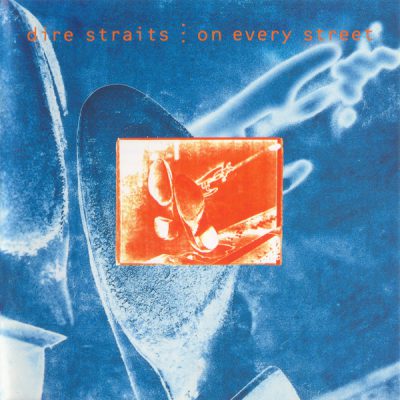
MATTHEW: On Every Street (1991, UK #1, US #12, Top Ten in nine nations, #1 in eight of them, sold 9m): 6/10. The success of Brothers in Arms kept the band touring so heavily that it essentially broke them up (they were officially “inactive” or disbanded, depending on what you read, from 1988 to 1991). This therefore sounds more like a Mark Knopfler solo album for that reason; sadly, that means none of the prog-ish ambition of the early 80s, but more of the country incipient on the late 70s ones, with a touch of the retro-rockabilly that infected the 1982-85 material. Still, aside from two of its five singles—“Heavy Fuel” & “The Bug”—being as annoying as the two big hits on Brothers, this is a fine swan song, intricately crafted and played; I completely ignored it at the time, not bothering to give it a chance for over a decade, but I’m glad now that the band had one last go of it (I love “Planet of New Orleans,” for example).
HOPE: On Every Street (1991): 3/10.There’s an old scrapbook-of-memories vibe to this album; it sounds like a sentimental tribute to younger days. I like the bones of the title track (tune, words) but the woodwind infusion feels intrusive and the overall orchestral feel brings to mind trawling grassy mountain tops with a walking stick as opposed to roaming the lonely city which to my ears always feels at odds with the lyrical sentiment. The retro-rockabilly tracks, the self-consciously noirish blues of “Fade To Black” as well as the Eddie Cochran/Roy Orbison flavored throwback “Ticket To Heaven” are also lacking that intrinsic mystical something for me. In conclusion On Every Street is pleasant and tasteful and features the usual virtuosic musicianship…but it’s missing all the epic weird, romantic storytelling and dirtiness that made the first four Dire Straits albums if not all equally awesome, compelling and listenable.
MATTHEW: Some readers will have called me a crazy fool for ranking Communiqué over Dire Straits, and others will throw their arms up at my ranking On Every Street even with Brothers in Arms. But as I go back and forth between the two, I cannot escape the conclusion that the latter two really are very close to being as good as each other—and, incidentally, very close in quality to Mark Knopfler’s best solo album (that is not a film soundtrack), 2000’s Sailing to Philadelphia.
HOPE: You know what I’ve always kind of wished, that more women artists would cover Dire Straits songs. I love the idea of turning certain tracks sideways and yeah, just think it would sound so damn cool. While there’s been some “Romeo And Juliet” action ( most notably by Indigo Girls, listen here) there hasn’t been much coverage in relation to the deep stuff. Would love to hear a little “Private Investigations” for one…go on girl(s).
MATTHEW: Yes! Brilliant idea! (But not including Tina Turner’s “Private Dancer.”)
Live Albums, Compilations and Side Projects


MATTHEW: There are also three live albums worth considering. Here they are, in order of their release, which also happens to be how I rank them, from must-own to don’t-bother. Alchemy, 9/10, (1983 concerts, 1984 album, UK #3, US #43, Top Ten in eight nations, #1 in one of them) is one of the best live albums of all time, with a stunning 10-minute version of “Sultans.” This would be the album to take to the Desert Island if only one from the band were allowed. Drawing heavily on Making Movies and Love Over Gold, Alchemy comes close to rendering both redundant. The CD version (remastered in 2001) is preferable to the LP one, because it includes “Love Over Gold” and none of the edits and fades necessitated by vinyl. I give it 9 instead of 10/10 because I always thought the use of “Going Home”—the Knopfler solo hit from the Local Hero movie soundtrack—was an odd way to end the album; and, when it was reissued, why not include from the outtake bin the full “Portobello Belle,” an edit of which appeared on the 1988 Money For Nothing hits compilation?
Ok, maybe I’m nit-picking. And maybe I’m over-compensating for my personal connection to these live versions, because I was almost at the Hammersmith Odeon concerts where they were recorded. Instead, I saw them at the Dominion (also an old London theatre) a couple of nights earlier. Half the audience left after the encore (including my girlfriend), but then the band came back out with Phil Lynott (of Thin Lizzy) and played an amazing half-hour second encore. (My memory of some details may be fuzzy; if you were at the London gig where Lynott joined Dire Straits—not the legendary Rainbow Theatre one in ‘79, but this Love Over Gold one—let us know!)
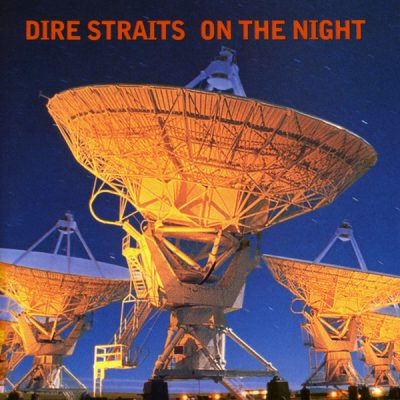
On the Night, 7/10 (1992 concert, 1993 album, UK #4, US #116, Top Ten in eight nations, #1 in two of them), on the other hand, is somewhat pointless, because Alchemy is better, and this begins by showcasing three weak songs that were late-period hit singles (unfortunately, in my view, but fortunate for Knopfler’s bank balance)—“Calling Elvis,” “Walk of Life,” & “Heavy Fuel.” That said, the 10-minute version of “Elvis” is far superior to the studio version, and the rest of the album is pretty awesome. In all their incarnations, Dire Straits were a superb live act, and so it is great to have these concert versions of late-period classics like “Brothers in Arms” and “On Every Street” (which obviously weren’t yet written when Alchemy was made).
The third concert album, Live at the BBC, 5/10, (1978 concert, 1995 release, UK #71, did not chart US), strikes me as being for fanatics only (and I’m clearly not fanatic enough). It comprises decent live versions of six tracks from the debut album, but not to the standards of Alchemy; one so-so song written by both Knopfler brothers that was never studio recorded because it evolved into the far better “Lady Writer”; and an early version of “Tunnel of Love” (played live in Germany in 1980, despite the album’s title, so an odd misfit).
There’s also a 1996 live set, but it was only released as part of a 1998 “best of” compilation, so see our paragraphs on comps albums below.
HOPE: Alchemy, 7/10, (1983 concerts, 1984 album). Back in ‘83/84 I was eagerly attending exactly the sort of shows you might expect a teenage girl to see. Duran Duran. Culture Club. Psychedelic Furs. As you can probably imagine the crowds at these events were as hyped up as living breathing humans could possibly be, totally high on pop music and lust and screaming their freakin’ heads off. In the context of things, that behavior made total sense, the whole experience felt sugary, hot and exotic. Which is why when I first heard Alchemy I was a little taken aback at how expressive and vocal the audience was. The whistling, the hooting, the clapping. I was fascinated that people could get as worked up over a Knopfler guitar solo as I would get watching Simon LeBon “dance” or Richard Butler “twirl”.I was mystified that they could love something that didn’t involve “pin-up-ability” so intensely ( I clearly had some growing up to do). But to this day, that’s what charms me most about this album, I mean just listen to how completely invested and loved up the crowd is during “Telegraph Road”; it’s really kind of beautiful. I adore this version of “Romeo And Juliet” (the instrumental coda is particularly swoon-worthy)…and especially dig how it segues into “Love Over Gold” which then leads on into “Private Investigations”. The three greatest Dire Straits songs played consecutively and the unabashed, spoken out loud love on display ?…yeah, I’ll take it.
As far as On the Night, 4/10 (1992 concert, 1993 album) goes, it seems like a completely superfluous release. It’s nowhere near as embraceable as Alchemy and the damage inflicted on “Romeo And Juliet” by my personal nemesis, the aforementioned dreaded “sexy sax” is criminal. On the whole, things are just a bit too slick, shiny and stadium and I would definitely categorize it for fans only…as I would Live at the BBC, 3/10, (1978 concert, 1995 release), an archival curio which as Matthew says is “decent” but not remotely compelling.


MATTHEW: Finally, what of the compilation and hits albums, and Mark Knopfler’s solo output? There are three compilations, the first of which, Money for Nothing (1988) is worthless save for one track: half its tracks are edited down, with the full-length originals all superior; only the live version of “Portobello Belle,” left off all versions of Alchemy, is worth accessing here—for hard-core fans. The compilation was replaced in 1998 by Sultans of Swing: The Very Best of Dire Straits, which made the same error, with 6 of its 16 tracks edited down. Half of its tracks are from the last two solo albums, mostly the singles that—in my view—aren’t the best songs on those albums. So, again, worthless. But (a big but), there were deluxe editions in ‘98—with a second CD, containing 7 tracks from a 1996 Royal Albert Hall concert—and in 2002, when a DVD was added to that second CD. The live set cannot match Alchemy, and is similar to On the Night, so it’s not bad and certainly not worthless—but really of interest to serious fans only.
The third and so far latest compilation is Private Investigations: The Best of Dire Straits and Mark Knopfler (2005). The addition of solo numbers is interesting, but beware of the single CD and vinyl versions; yet again, these contain some edited versions, and are thus also worthless. To make room for solo songs (four on the single CD version), the first two Dire Straits albums are ignored beyond “Sultans.” The 2-CD version is better, although it likewise ignores the first two albums, and includes the inferior edit of “Private Investigations”—sadly ironic, considering the album’s title. It offers 9 solo tracks, and they are a reasonable introduction to Knopfler’s 22 albums outside Dire Straits—that’s nine solo albums, from 1996 to 2018 (so far), nine film soundtrack albums, from 1983 to 2016 (again, so far), and four collaborative albums (two in 1990 and two in 2006—a studio and a live album with Emmylou Harris). Note that roughly a third of all those were made before Dire Straits dissolved, with most of that early work being soundtracks. There isn’t therefore a clean break between Knopfler’s Dire Straits, solo, and soundtrack work (his best soundtracks are arguably the 80s ones, during peak Straits years); nor is there one in terms of styles. We haven’t rated the non-Straits albums, as they are a different species. But there is DNA overlap. As a generalization, the solo albums are singer-songwriter records in the related genres of country and British/Irish folk music. The best of them—for me, that’s Sailing to Philadelphia (2000) and The Ragpicker’s Dream (2002)—come closest to Straits albums at times, but never that close. And when they do, they sound more like the late-period Straits songs that anticipate Knopfler’s solo work. I think that’s called Dirony. (Sorry!)
If there must be a “best of” compilation, I’d prefer it be 3 CDs, the first all Straits, the third all solo work, with the middle CD mixing the two with some of the songs that overlap in style—-like “Fade to Black” from the final Straits album, and solo gems like “What It Is” from Sailing to Philadelphia, and “Terminal of Tribute To” from Tracker (2015). I’d want on that third CD the Sailing title track, plus “Hard Shoulder” from Get Lucky (2009), and “A Place Where We Used to Live” from The Ragpicker’s Dream (2002). Heck, how about a 4th CD of live tracks, and a 5th of soundtrack pieces. But such a 3-CD (or 4 or 5!) compilation doesn’t exist, so you might as well buy the no-frills Dire Straits Studio Albums box set, a $30 bargain, put on your red head band, and start drinking Portobello Road gin (yes, it’s Knopfler’s brand, complete with a mini red headband on the neck); after a few Local Hero G&Ts, you may see the virtue in also buying Alchemy and a handful of Knoppy’s solo and soundtrack albums. Now that—to cite a track from his Princess Bride soundtrack—is “A Happy Ending.”
HOPE: I concur with Matthew’s points in regards to the compilations! Dire Straits were never a singles band and are just so ill-suited to that type of overview (square peg meet round hole). The ideal way to experience a Dire Straits song is within its natural habitat surrounded by its actual herd via the actual studio albums (with Alchemy serving as the mike drop at the end).
As far as the Knopfler solo stuff, it’s a true mixed bag and admittedly I’ve never latched onto any of the albums as a whole…but there are a couple of tracks within them I find particularly exquisite: The infectious and sticky portraiture of “The Scaffolder’s Wife” from the Kill To Get Crimson album (2007) and the aforementioned and beauteous “Hard Shoulder” which sounds like both an earthbound spin on “Wichita Lineman” and a tribute to old chestnut “Don’t Let The Sun Catch You Crying” at the same damn time.
Album Ranking Summary
MATTHEW:
9/10: Communiqué, Love Over Gold, Alchemy
8/10: Dire Straits, Making Movies
7/10: On the Night
6/10: Brothers in Arms, On Every Street
5/10: Live at the BBC
HOPE:
9/10: Making Movies
7/10: Love Over Gold, Alchemy
5/10: Brothers in Arms
4/10: Dire Straits, Communiqué, On The Night
3/10: On Every Street, Live at the BBC

In Conclusion…
And what have you got at the end of the day?
What have you got to take away?
HOPE: When Matthew first suggested we explore Dire Straits I was worried that I didn’t feel strongly enough about them to be able to appraise them fairly or accurately. But of course that crazy (inevitable) thing happened where the more I listened, the more things started to resonate, the more invested I became in the experience. And here I am digging Alchemy in a way I never have before in my life. And playing “Hard Shoulder” and imagining I’m in a ‘60s movie on a greyhound bus watching the rain beat against the window. And so there you go, you got me Mr.Knopfler, mission accomplished.
MATTHEW: Yeah, Knoppy got me too! I thought my opinions were fairly set, especially as my views on music from my teens and college-age years (1977-86) are so infused with emotional and personal associations. But in the course of our deep-diving, I have discovered anew the narrative richness of the Dire Straits and Knopfler catalogs; I’ve heard musical moments I’d missed or forgotten; and I’ve come to better appreciate both Knopfler’s genius as a guitarist and songwriter, and the talents of his band mates. If our conversation leads you to anything remotely close to that, then OUR mission is accomplished! Now where’s that bottle…

 PICKING UP ROCKS
Great rundown! The best live Straits IMO is their 1986 Sydney show, which aired on TV there but, criminally, wasn’t ever released as an official live album (it’s easy to find though, and sounds just as good as an “official” release). Also give Kill to Get Crimson another listen. As good as any Straits album, though obviously very different.
LikeLike
Thanks Ray and we are totally going to check out the Sydney show ! And yes, will give KTGC another spin 🙂 I absolutely do adore “Scaffolder’s Wife” and think I may have gotten so fixated back in the day that it blotted out the rest for me :)!
LikeLike